














- Ana Sayfa
- Blogs
- Power management
- Basic knowledge and working principle of AC to DC converter
Basic knowledge and working principle of AC to DC converter
This article will provide an in-depth look at the basic knowledge and working principles of AC-to-DC converters, explore the differences between AC and DC power, and discuss various applications, including specific types like the AC-to-DC converter 12V.
What is Alternating Current (AC)?
.jpg "Alternating Current (AC)")
Alternating Current (AC)
Alternating Current (AC) refers to a current that undergoes periodic changes in direction. In common household and industrial power systems, the direction of alternating current changes 50 to 60 times per second (depending on local standards). The alternating current system facilitates the transmission and distribution of electrical energy, as alternating current can quickly increase or decrease voltage through transformers.
Characteristics of AC Power
Periodic variation: The biggest characteristic of alternating current is that its current and voltage exhibit periodic variations. In a standard sine waveform, the current and voltage start from 0, gradually increase to their maximum values, then gradually decrease to 0, then increase in reverse to their negative maximum values, and finally return to 0, completing one cycle. This cycle repeats continuously.
Fixed frequency: The frequency of alternating current is fixed, indicating the number of times the current direction changes per second. In most countries, the frequency of the standard power grid is 50 Hertz (Hz) or 60 Hertz (Hz), which means that the direction of current changes 50 or 60 times per second.
RMS value: The RMS value of alternating current is an important parameter representing the value at which alternating current equals direct current in terms of thermal effects. The practical value calculates the power and energy in an AC circuit.
Peak value and peak factor: The peak value of AC power is the maximum instantaneous value on the waveform, while the peak factor is the ratio of the peak value to the effective value. The peak factor for sine wave alternating current is root 2 (approximately equal to 1.414).
Phase difference: In complex AC circuits, there may be phase differences between currents or voltages in different parts, meaning that the time at which they reach their maximum or zero values may differ.
Symmetry of waveform: A standard AC waveform (such as a sine wave) is symmetrical about its peak, meaning that the waveform's rising and falling parts are symmetrical.
Variable voltage and variable current: Through transformers, it is easy to increase or decrease AC power voltage, which is an important advantage of AC power systems. Similarly, the magnitude of the current can also be adjusted through the impedance in the circuit.
Three-phase AC power: In power systems, three-phase AC power is often used, which consists of three sine waves with a phase difference of 120 degrees. Three-phase alternating current has higher efficiency and stability in transmitting and distributing electrical energy.
What is Direct Current (DC)?
.jpg "Direct current (DC)")
Direct current (DC)
Direct current (DC) is a current that maintains a constant direction. In a direct current system, current always flows in the same direction. Direct current is very important in many electronic devices, such as battery-powered devices, because these devices require stable current to function properly.
Characteristics of DC Power
Constant current direction: The most significant characteristic of direct current is that the current direction remains constant. This is different from alternating current, where the direction of the current changes periodically.
Voltage stability: In an ideal DC power supply, the voltage is constant and does not change over time. This stability makes direct current very suitable for electronic devices that require a stable power supply.
No waveform variation: Unlike the waveform of alternating current (such as sine waves), direct current has no waveform variation and its current and voltage are constant.
Can be provided by batteries: DC power can be directly provided by chemical energy sources, making it particularly useful in portable devices and remote applications.
Low loss: DC power can be directly provided by chemical energy sources, making it particularly useful in portable devices and remote applications.
Suitable for long-distance power transmission: In high-voltage direct current (HVDC) transmission systems, direct current can more effectively transmit electrical energy over long distances, reducing line losses and voltage drops.
Easy to control: The control of DC power is relatively simple. For example, in motor control, the speed of a DC motor can be directly controlled by changing the voltage or current.
Conversion equipment required: Although direct current has many advantages, modern power systems are mainly based on alternating current. Therefore, in systems that use direct current, converters (such as rectifiers) are typically required to convert alternating current into direct current.
AC vs. DC: A Comprehensive Comparison
Direction of Flow
AC: Alternates direction periodically, reversing polarity at a set frequency.
DC: Flows consistently in one direction without changing polarity.
Voltage Characteristics
AC: The voltage varies in a sinusoidal pattern, continuously changing from positive to negative.
DC: The voltage remains constant, making it ideal for powering sensitive electronic circuits.
Power Transmission
AC: Used for transmitting power over long distances due to its ability to easily change voltage levels using transformers.
DC: Commonly used in low-voltage applications such as batteries, portable devices, and electronics.
Conversion Requirements
AC to DC Conversion: This is necessary when powering devices that require DC power from an AC source, such as most household electronics.
DC to AC Conversion: Often needed in renewable energy systems, where DC power from sources like solar panels must be converted to AC for use in homes.
Working Principle of an AC to DC Converter
An AC-to-DC converter is designed to convert alternating current into direct current through several processes. Here's how it works:
Rectification
The first step in converting AC to DC is rectification. This process involves diodes, which allow current to pass in only one direction to convert the AC signal into a pulsating DC signal. There are two main types of rectification:
Half-Wave Rectification: Uses a single diode to allow only one half of the AC waveform (positive or negative) to pass through, blocking the other half. This method is simple but less efficient.
Full-Wave Rectification: Utilizes a bridge rectifier consisting of four diodes to convert both halves of the AC waveform into a unidirectional current. This method is more efficient, producing a smoother DC output.
Filtering
After rectification, the resulting DC signal still contains ripples due to the AC components. Filtering is necessary to smooth out these ripples and produce a more stable DC voltage. Capacitors are commonly used in this stage, as they can store and release electrical energy to smooth the variations in voltage.
Voltage Regulation
The final step in the conversion process is voltage regulation. This ensures that the output voltage remains constant, even if there are fluctuations in the input voltage or changes in the load. Voltage regulators, such as Zener diodes, or integrated circuits like the 7805, are typically used to maintain a stable and consistent DC output.
Types of AC to DC Converters
There are various types and designs of AC to DC converters based on application and requirements. For example, some converters are designed for specific voltage and current outputs, such as the common 12V AC to DC converter, which provides a stable 12V DC power supply for many in car devices and household appliances.
Rectifier
This is the most common AC-to-DC converter, which uses rectifying elements such as diodes or thyristors to convert AC power into DC power. Rectifiers can adopt different rectification methods according to specific circuit design and usage requirements, such as half-wave rectification, full-wave rectification, or bridge rectification.
Switching Mode Power Supply
This is an efficient AC-to-DC converter that uses switching transistors (such as transistors or MOSFETs) for high-speed switching operations to regulate the output voltage and current. Switching power supplies typically have high conversion efficiency and small size, making them widely used in many modern electronic devices.
Car charger
Convert AC to 12V DC to charge or power new energy vehicles.
Transformer and rectifier combination
In some cases, in order to obtain a voltage more suitable for subsequent circuit use, a transformer is first used to transform the AC power, and then the transformed AC power is converted into DC power through a rectifier.
Applications of AC to DC Converters
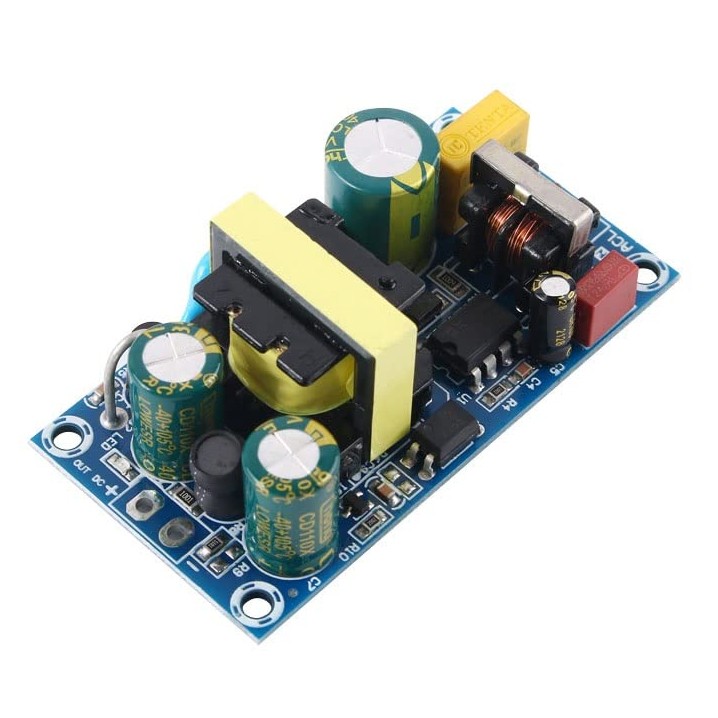
Household appliances: In the home environment, many household appliances such as air conditioners, televisions, refrigerators, etc
Industrial field: In the industrial field, frequency converters, motor control, UPS power supplies, etc
Electric vehicles and charging facilities: Standard AC to DC converters 12V and 24V are the most widely used in electric vehicles, and the internal circuits of cars widely use 12V or 24V DC voltage. AC to DC converters also play a key role in electric vehicle charging stations, converting AC power from the grid to DC power to provide charging services for electric vehicles.
Electronic devices: Various electronic devices, such as laptops, mobile phones, tablets, etc., typically require direct current inside.
Data centers and communication equipment: In data centers and communication equipment, in order to ensure the stable operation of equipment and the reliability of data transmission, it is also necessary to use AC to DC converters to provide stable DC power.
Advantages of AC to DC Converters
The advantages of AC to DC converters mainly include:
Efficient and energy-saving: AC to DC converters can achieve fast conversion between AC and DC electricity, thereby improving the energy utilization efficiency of equipment. This efficient conversion helps reduce energy waste and lower operating costs.
Strong flexibility: This type of converter can adapt to different input and output voltage levels, thus meeting the needs of various electronic devices. This flexibility enables AC to DC converters to perform excellently in various application scenarios.
High reliability: The AC to DC converter with fully digital control has high control accuracy and stability, which can effectively improve the reliability of the equipment. Fully digital control also means fewer mechanical components and longer service life, thereby reducing maintenance costs.
Good safety: AC to DC converters are usually equipped with overcurrent, overvoltage, undervoltage, and other protection functions, which can ensure that the equipment can be safely shut down or enter protection mode in case of abnormal situations, thereby preventing equipment damage or danger.
Small size and light weight: With the advancement of technology, modern AC to DC converters often have smaller volumes and lighter weights, making them easier to carry and install.
Strong compatibility: Many AC to DC converters are designed with a wide range of input voltages, which means they can operate normally at different grid voltages worldwide without additional transformers or adapters.
AC to DC converters play a crucial role in modern electronic devices, as they are capable of converting alternating current to direct current to meet the power requirements of various devices. Understanding the basic knowledge and working principles of these converters can help us better select and use converters that meet our needs, thereby ensuring the safe and stable operation of the equipment.

FAQs
Articles you may also like
Principles and applications of LDO
Working principle of field Mosfet transistor triode
A Method for Optimizing the Gate Drive of SiC MOSFETs
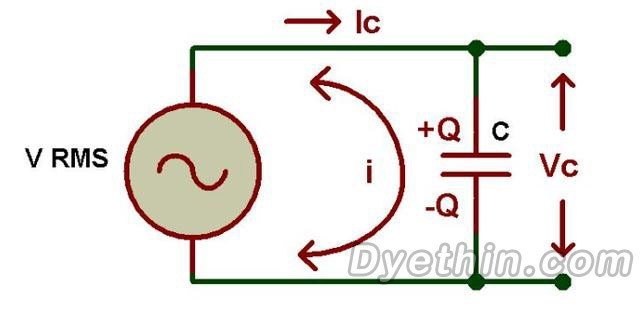
Brief Analysis of Capacitance in AC Circuit

-
-
-
-
-
-
-
-
-
stmicroelectronics
ARM® Cortex®-M0+ STM32G0 Microcontroller IC 32-Bit Single-Core 64MHz 32KB (32K x 8) FLASH 20-TSSOP