














Integrated Circuit vs Semiconductor: What Is the Difference?
Search “integrated circuit vs semiconductor” and most results somehow turn two words into three, dragging "chip" into the conversation and leaving you more tangled than when you arrived. The framing itself is the trouble. These two terms aren't rivals lined up against each other.
A semiconductor is a material. An integrated circuit (IC) is one kind of device built from that material. An IC doesn't compete with a semiconductor, it belongs to the semiconductor family.
Once that lands, the related questions get easier: where a transistor fits, why an engineer reaches for a single chip instead of a fistful of separate parts, what "discrete" actually means. Below you'll find the full hierarchy laid out plainly, the main types of integrated circuits paired with real parts you can source, and a straight answer on when discrete components still beat an IC.
Key Takeaways
A semiconductor is a material; an integrated circuit is one type of device built from it. The two were never opposites.
Carve a single function out of that material and you've got a discrete component; fuse many functions onto one die and you've got an IC.
Silicon runs the show, yet gallium nitride, silicon carbide, gallium arsenide, and germanium each earn a place where their properties pay off.
The IC family sorts cleanly by signal and job: logic, microcontrollers, analog, mixed-signal, power management, and memory.
Want a finished function in volume? An IC almost always wins. Need raw power or quick field repair? Discrete parts still hold the line. When you're ready to source the chips, you can buy integrated circuits straight from the Dyethin catalog.
The Hierarchy That Ends the Confusion
Drop the side-by-side comparison for a moment. Picture a family tree instead.
Semiconductor = the raw material itself (silicon, germanium, gallium nitride)
Semiconductor device = any working part built from that material
Discrete device: one job per package, such as a single transistor or a lone diode
Integrated circuit (IC): many components fabricated together on one sliver of silicon
Read it from the top, and the relationship snaps into place. Silicon sits at the root. Carve out one function, and you've got a discrete device. Pack thousands, sometimes billions, of those functions onto a single die, and you've got an IC. Same material, different degree of integration, and that gap is the entire distinction.
So the question hiding inside semiconductor vs IC turns out to be a gentle one: you're holding a raw material up against one of the things people build from it.
What a Semiconductor Actually Is
Hold a copper wire and a glass rod side by side. One carries current freely, the other blocks it cold. A semiconductor lives in the gap between those two, and that in-between position is the whole reason it matters.
What separates a semiconductor from everything else isn't weak conduction. It's controllable conduction. Add a trace of another element, apply a voltage, shine light on the surface, warm it up, and the material flips between blocking current and passing it. A semiconductor is defined by what you can do to it, not by how well it conducts on its own.
Silicon handles most of this work, though it's far from the only candidate. Each material brings its own strengths, which is why you'll meet several of them across a parts catalog.
| Material | Symbol | Where you'll run into it |
| Silicon | Si | The default for nearly every IC and most transistors |
| Germanium | Ge | Early transistors; now mostly RF parts and infrared optics |
| Gallium arsenide | GaAs | High-frequency RF chips, plus some LEDs and laser diodes |
| Gallium nitride | GaN | Fast phone chargers and high-efficiency power conversion |
| Silicon carbide | SiC | High-voltage power in EV drivetrains and solar inverters |
The Two Families of Semiconductor Devices
Turn that doped crystal into something with a job, and you've made a semiconductor device. Every one of them, from a diode that costs pennies to a processor packing billions of transistors, traces back to the same starting material. The types of semiconductor devices are split at a single fork: how many jobs fit inside one package. Both families are cut from the same semiconductor; they differ only in how much circuitry shares a single chip.
Discrete Devices: One Job per Package
A discrete device does one thing. One package, one function. A single switch. A single rectifier. One element that amplifies and nothing more. These are the discrete semiconductor components that fill most parts drawers: bipolar and MOSFET transistors, rectifier and Zener diodes, thyristors, the occasional IGBT.
Headlining the family is the transistor, a three-terminal part that switches or amplifies a signal, full stop. Wire a few of them together and you've built a logic gate by hand. Wire a few thousand and you've lost a week to the soldering iron. That headache is exactly what the second family was invented to kill.
Integrated Circuits: Many Jobs, One Chip
An integrated circuit folds that entire soldering job into a single die. Rather than connecting thousands of separate transistors by hand, a manufacturer grows them together on one piece of silicon, already wired, already packaged. The finished part behaves like one component yet holds a complete circuit inside.
How that's pulled off, and why it rewrote electronics from the ground up, is where we go next.
What Is an Integrated Circuit?
An integrated circuit is a full electronic circuit, transistors and all, fabricated on one small piece of semiconductor and sealed in a single package. An IC isn't a part inside a circuit; it's an entire circuit that behaves like a single part. That line answers what is an integrated circuit better than any spec sheet does: tens, thousands, even billions of components sitting on a chip smaller than a fingernail, already wired together the way the designer drew them.
Open the definition up, and you find the familiar electronic cast, only shrunk and fused: transistors doing the switching and amplifying, resistors setting currents, capacitors holding charge, diodes steering signals, and a lattice of metal interconnect tying the lot into one working unit. Dyethin sorts its integrated circuits by what that internal circuit is built to do, which is also how the next section is organized.
The idea is younger than most people guess. In 1958, Jack Kilby at Texas Instruments showed the first working integrated circuit; a year later, Robert Noyce at Fairchild made the concept practical to mass-produce on silicon. Every chip since has descended from those two demonstrations.
Types of Integrated Circuits
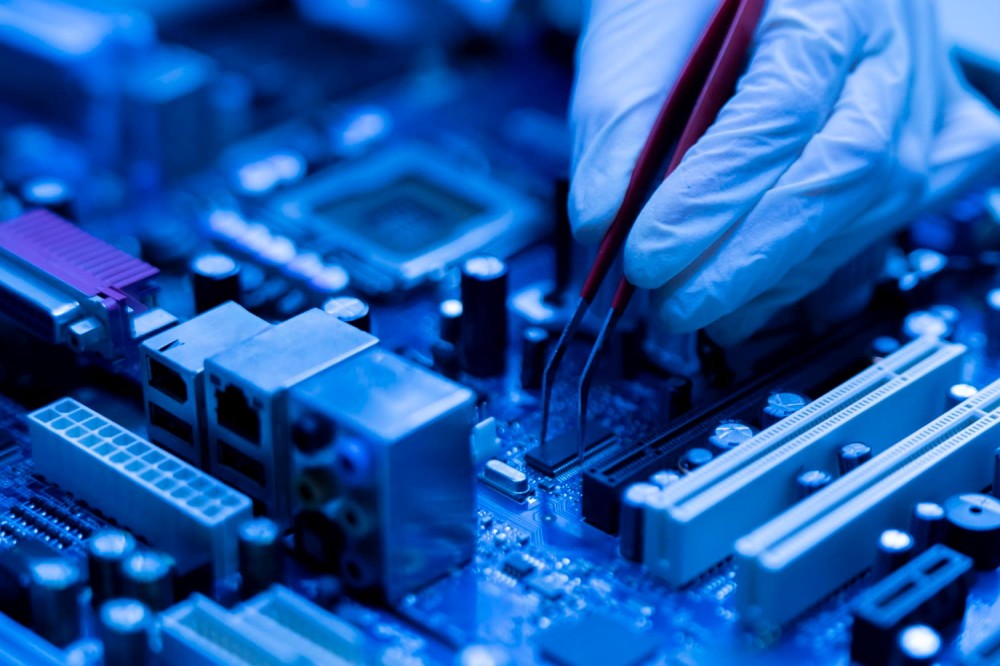
"IC" names a manufacturing method, not a single device. Sort the field by the signal a chip handles and the job it owns, and a short list of types of integrated circuits covers nearly everything you'll ever specify. Match the type to the signal and the task, and the right part number almost picks itself.
Digital and logic ICs think in ones and zeros, gating and routing signals through fixed arrangements of transistors. The plain logic gate lives here. Something like the CD4093BCM, a quad 2-input NAND gate with Schmitt-trigger inputs, sits about as close to the foundation as you can get.
Step up in complexity, and you land on the microcontroller: a whole tiny computer (processor, memory, and I/O) packed onto one die. The STM32F103V8T6 is a widely used ARM Cortex-M3 example, and the broader range sits under microcontrollers.
Analog ICs never touch a binary digit. They amplify, compare, and reference continuous voltages and currents, the realm of op-amps, comparators, and voltage references. The op-amp and instrumentation amplifier listings show how wide that realm runs.
What links those two worlds? Mixed-signal ICs, the data converters that translate between analog reality and digital logic. A DAC such as the DAC8562SDGSR, 16-bit and dual-channel, turns digital codes into real output voltages; an ADC makes the same trip in reverse.
Power management ICs (PMICs) keep every other chip fed. Need to drop 12 V to a clean 3.3 V rail? A step-down regulator like the TPS62130RGTR does precisely that job.
Memory ICs hold the data that everything else runs on, from boot code to sensor logs. The 24LC16BT-I/OT is a small 16 Kbit I²C EEPROM, the sort of part that quietly remembers your settings after the power's cut.
All of which raises the obvious question: if a single chip can do this much, why would anyone still reach for separate parts?
Discrete Semiconductor vs Integrated Circuit: Which to Use
Neither option is "better" in the abstract. The discrete semiconductor vs integrated circuit decision turns on what your design cares about most: raw power, board space, unit cost, or how easily you can fix it down the line.
| Factor | Discrete components | Integrated circuit |
| Board space | Every part needs its own footprint; circuits grow large fast | A whole function fits inside one small package |
| Cost at volume | Cheap per part, though assembly labor stacks up | Costlier to design, then pennies per unit at scale |
| Power handling | Comfortable with high current and voltage | Capped by how much heat a tiny package can shed |
| Repair | Replace the single part that failed | A fault usually means swapping the entire chip |
| Design effort | You wire and tune every connection yourself | The function shows up pre-built and tested |
So which wins, and when? Pick an IC when the function is standard, and the quantity is high; pick discrete parts when power, voltage, or field repair outweighs size. Most real boards quietly do both: an IC for the brains, discrete transistors and diodes for the muscle.
On that discrete side, the transistor is the part you'll specify most, and the trade-offs shift sharply across types of transistors, so it pays to know which one suits the job before you commit.

FAQs
Articles you may also like
Design of High Current H-Bridge Motor Drive Circuit
The working principle, key parameters, and selection of TVS
Understanding NAND Gate: The Universal Logic Gate in Digital Circuits
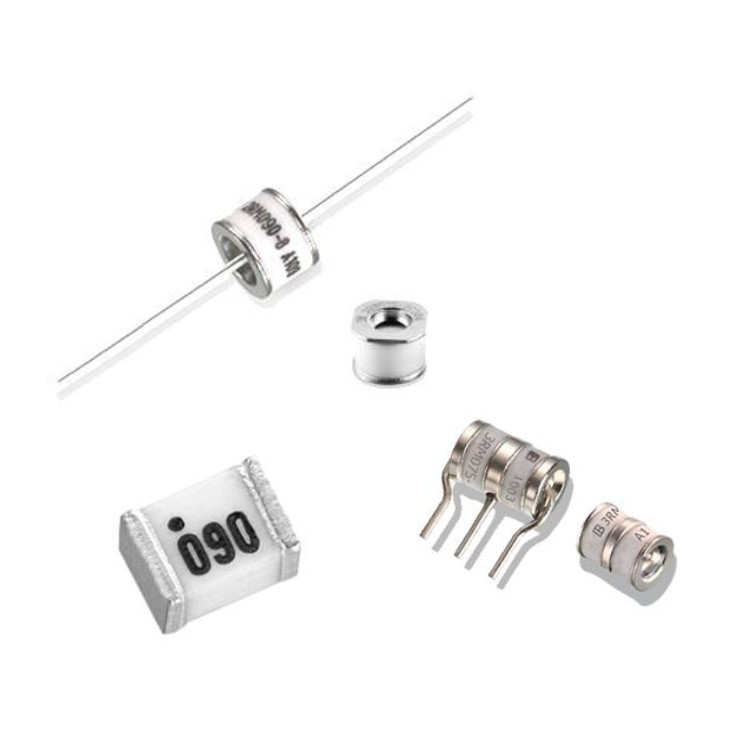
Gas Discharge Tube Symbols, Characteristics and Structure

-
-
-
-
-
cirrus-logic-inc
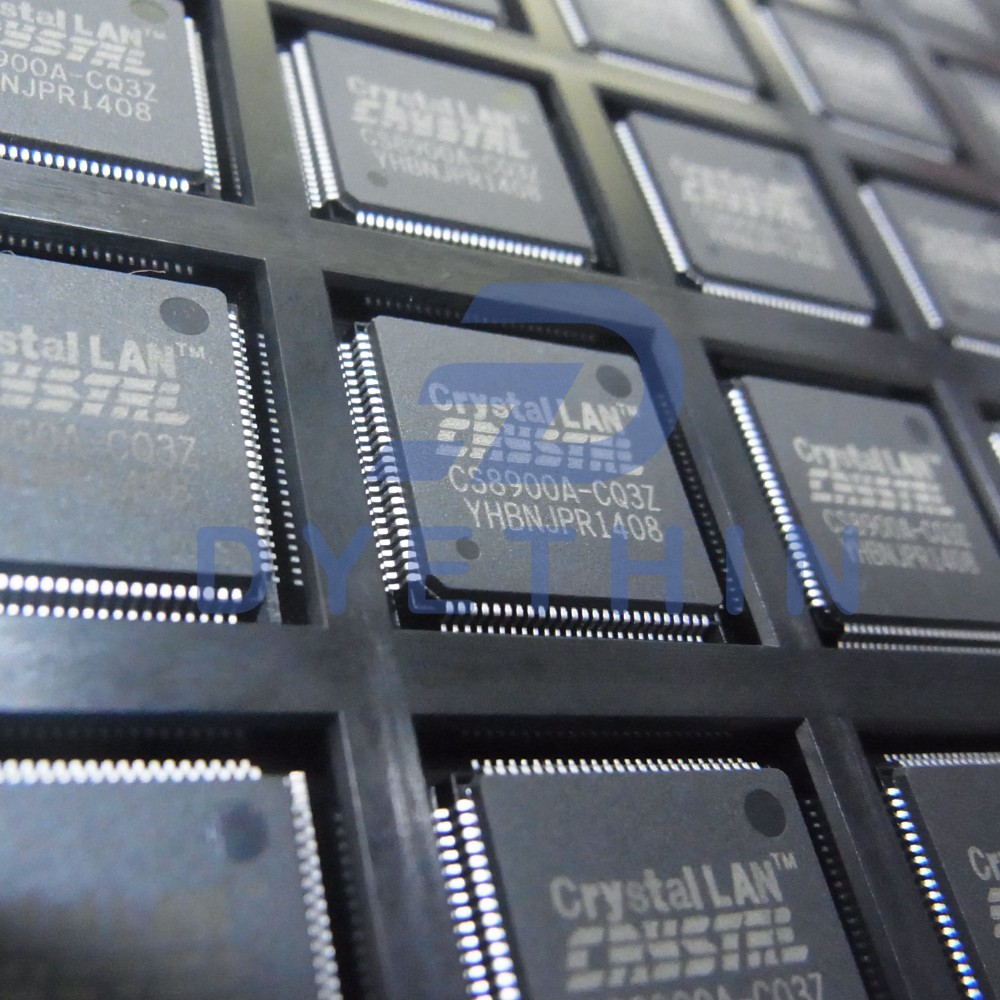
3.3V ISA-bus Ethernet controller with on-chip memory and AUI/10BASE-T I/O
-
-
-
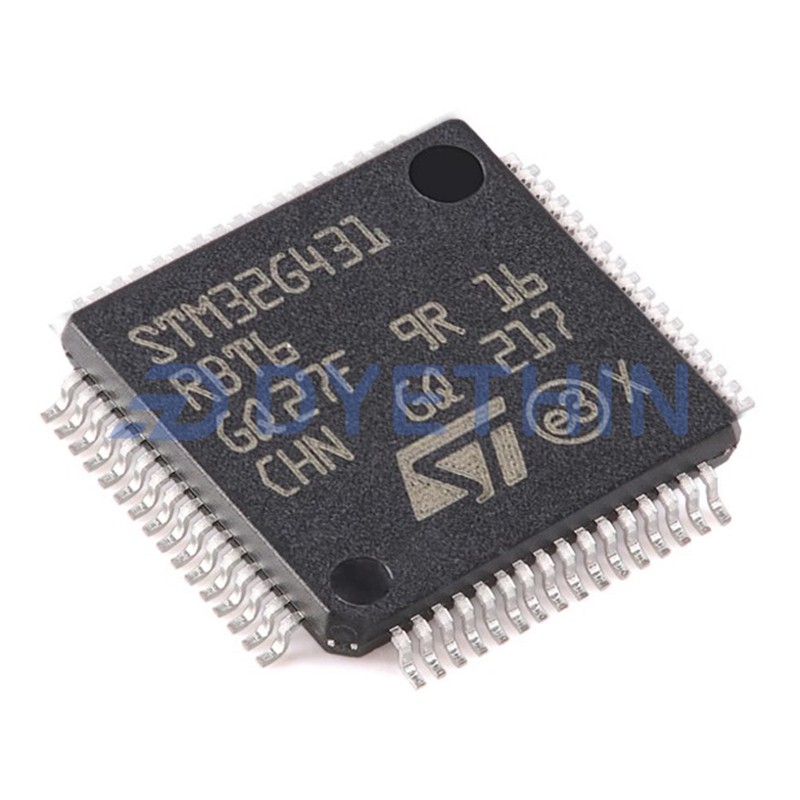
stmicroelectronics
ARM® Cortex®-M4F STM32G4 Microcontroller IC 32-Bit Single-Core 170MHz 128KB (128K x 8) FLASH 64-LQFP (10x10)
-
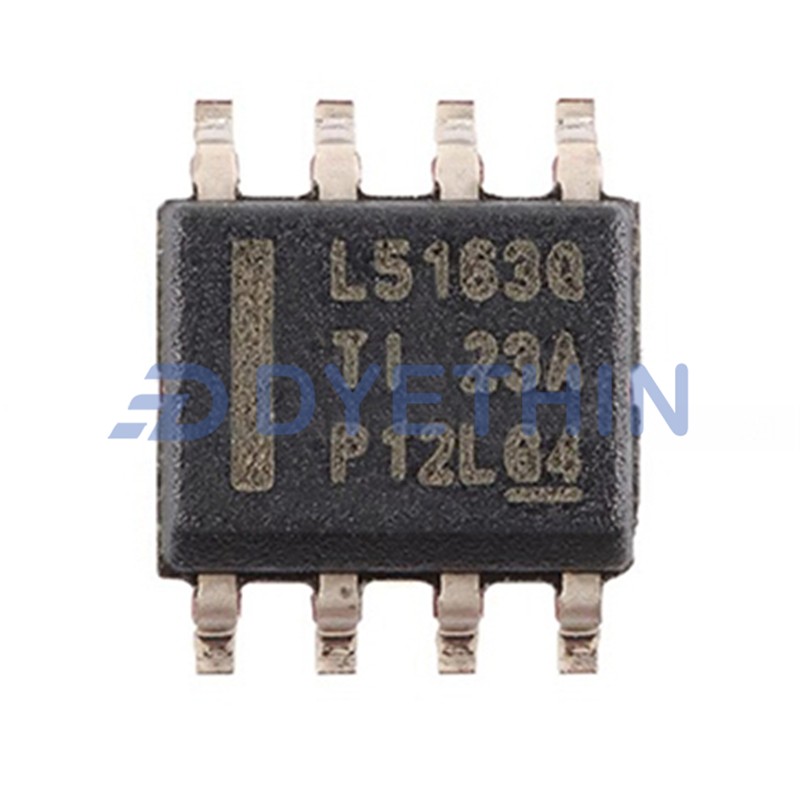
texas-instruments
Buck Switching Regulator IC Positive Adjustable 1.2V 1 Output 500mA 8-PowerSOIC (0.154", 3.90mm Width)