














- ホーム
- Blogs
- Simulation Technology
- SMD Resistor Size Chart
SMD Resistor Size Chart
Hardware engineers often need to use an SMD resistor size chart for circuit board layout because understanding the sizes of different SMD resistors helps optimize the board layout and improves the circuit's power handling capability and stability. This article will help you choose the right SMD resistor size in various application scenarios through detailed dimension tables and selection guides.
What is an SMD resistor?
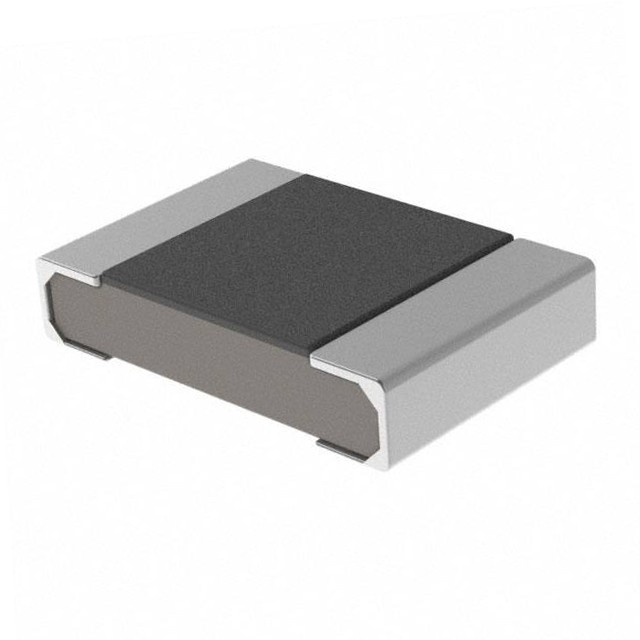
Surface Mounted Device (SMD) resistor is a very common part used in most circuit boards on products. By directly welding on the PCB's surface, the circuit's high-density integration is realized.
Role of SMD Resistors
SMD resistors play an important role in circuits such as current limiting, voltage dividing, filtering, etc., and are indispensable components to ensure the normal operation of circuits. Their high precision, small size and low-cost characteristics make them an indispensable part of circuit solutions.
Why Understand SMD Resistor Dimensions
Understanding the dimensions of SMD resistors is critical to circuit design. Correct size selection affects circuit performance and relates to PCB layout and manufacturing efficiency. Therefore, familiarizing yourself with SMD resistor size chart is an essential skill for electronic engineers.
Basic Concepts of SMD Resistor Dimensions
What is an SMD package?
SMD packaging refers to encapsulating components, such as resistors, into shapes and sizes suitable for surface mounting. The package type directly affects the component's mounting, soldering and performance.
Meaning of SMD Resistor Size Numbering (e.g. 0402, 0603, 0805)
The size number of SMD resistors is usually expressed in four digits: the first two indicate the length of the resistor (unit: inch × 100), and the last two indicate the width of the resistor (unit: inch × 100). For example, 0402 indicates that the length of the resistor is 0.04 inches, and the width is 0.02 inches.
SMD resistor size and power, the relationship between resistance value
The larger the size of the resistor, the higher the power it can withstand. Resistance value is also not directly determined by the size but by the production process and materials.
Common SMD Resistor Size Chart
Introduction of main size specifications:
0201: Ultra Small Resistors for applications with very high space requirements.
0402: Commonly used in space-restricted devices, such as cell phones and smartwatches.
0603: The most commonly used medium size, widely used in a variety of electronic devices.
0805: Suitable for higher power applications, such as power supply modules, LED driver circuits, etc.
1206 and above: for high-power circuits, such as industrial control, automotive electronics and other fields.
SMD Resistor Size Chart
The commonly used SMD resistor size chat is shown in Figure 1
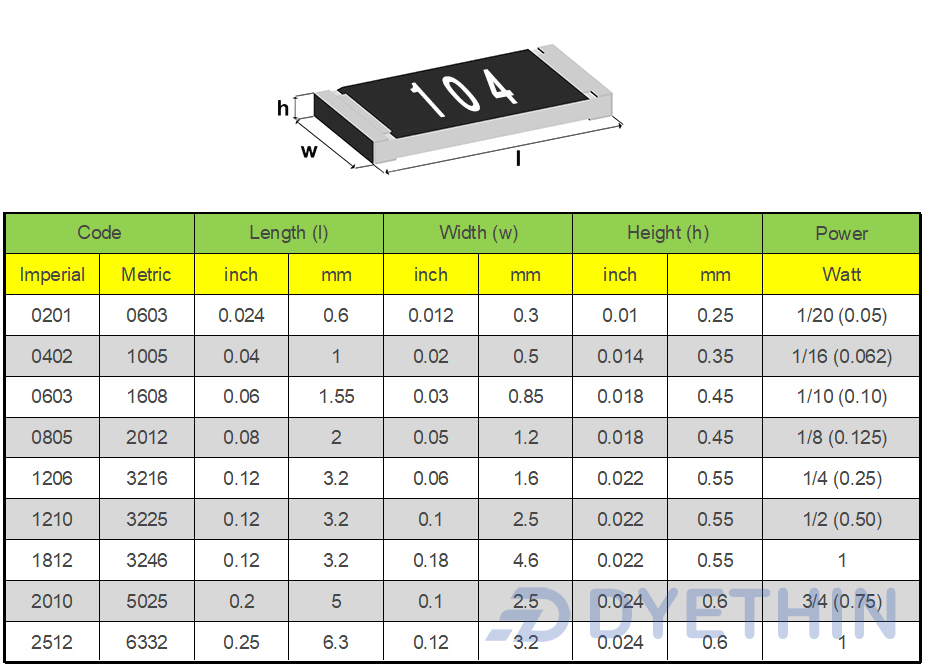
Figure 1 Smd Resistor Size Chart
The relationship between size and power indicates that as the size increases, the power rating of the resistor increases.
SMD Resistor Solder Pad Land Pattern
The dimensions of the resistor need to match the dimensions of the pads to ensure tightness and stability of the soldering. Therefore, in the design of SMD resistor pads, according to the size of the resistor should be drawn on the circuit board with the correct pad pattern, the following chart lists a variety of SMD resistor pad pattern cross-reference table, such as Figure 2.
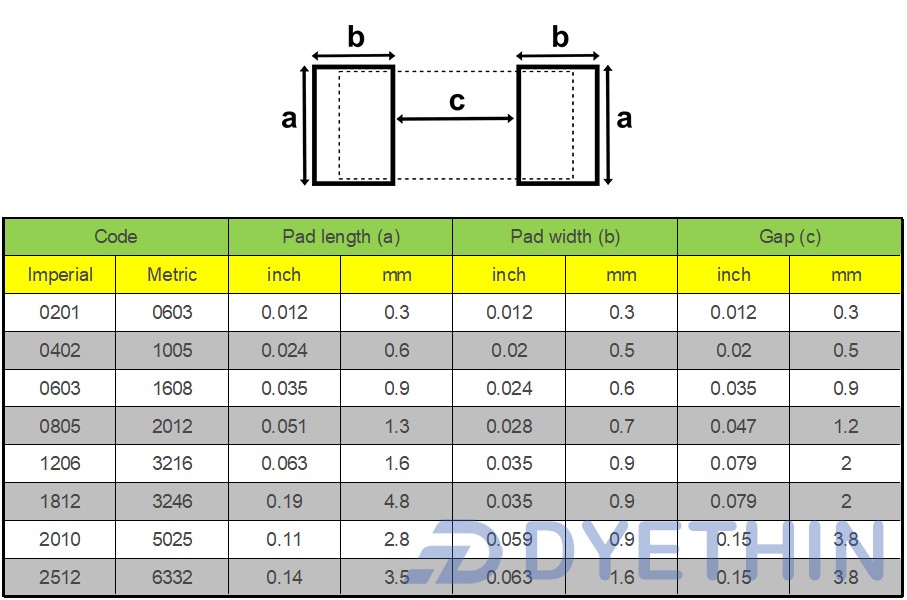
Figure 2 SMD Resistor Solder Pad Land Pattern
Selection Factors for SMD Resistor Size
Power Requirement: Select the proper resistor size based on the circuit power requirement. Too much or too little power may cause circuit performance degradation or component damage.
PCB space constraints: In the case of limited PCB space, it is necessary to select a smaller size resistor to reserve enough space between two parts for mass production inspection and repair.
Thermal performance: In high-power applications, the thermal performance of the resistor is critical. Larger resistor sizes typically have better thermal performance.
Electrical Characteristics: Although the resistor value is not directly determined by the size, the size selection still needs to consider the electrical characteristics of the resistor, such as accuracy and stability.
SMD resistor size and packaging standards
IPC standard: IPC (International Printed Circuit Council) developed an international standard on SMD packaging, including package size, tolerance and marking.
EIA Size Numbering Standard: EIA (Electronic Industries Alliance) defines the SMD resistor size numbering and its meaning, providing a uniform specification for component manufacturers and PCB designers.
Applicability of SMD resistor sizes in different applications
Consumer electronics: e.g. smart phones, tablet PCs, etc. Small resistors (e.g. 0201, 0402) are commonly used to save space.
Industrial applications: such as automation control and power supply equipment, etc., larger sizes (e.g., 1206, 1210) are applicable to meet power and heat dissipation requirements.
Automotive electronics: resistors under high-reliability requirements are generally selected in larger sizes to ensure stable operation in harsh environments.
Communication equipment: Size selection for high-frequency applications requires weighing factors such as size, power and electrical characteristics.
How to choose the right size of SMD resistor?
Select the right size based on current and power: By calculating the current and power requirements in the circuit, select a resistor size that can withstand these requirements.
Optimize layout according to PCB design: Consider the impact of resistor size on the layout during PCB design to ensure compactness and reliability of the board.
Relationship between heat dissipation requirements and size: In high-power applications, special attention needs to be paid to the heat dissipation performance of the resistor, and the appropriate size should be selected to ensure good heat dissipation.
Advantages and disadvantages analysis of common SMD resistor sizes
0201, 0402 and other small resistors:
Advantages: small size, space saving; suitable for high-density integration.
Disadvantages: lower power; more difficult to weld and test.
0603, 0805 and other medium-sized resistors:
Advantages: moderate power; relatively easy to weld and test; wide range of applications.
Cons: May not be applicable under extreme space constraints.
1206 and above Large Resistors:
Advantages: High power; good heat dissipation; easy to solder and test.
Disadvantages: Larger size, takes up more PCB space.
Future Trends: Smaller, More Efficient SMD Resistors
Miniaturization Trend: As electronic devices continue to miniaturize, 0201 and smaller size-resistors will gradually become popular.
Power Density Improvement: Handling higher power in small packages has become a challenge, and the introduction of new materials and technologies will help improve power density.
New materials and technologies: New materials such as ceramic substrates and thin film resistors, as well as new technologies such as laser welding, will further promote the miniaturization and high efficiency of SMD resistors.
Conclusion
SMD resistors of different sizes play an important role in circuit design. Selecting the right size resistor is critical to ensure circuit performance. With the continuous development of electronic technology, smaller and more efficient SMD resistors will become the future trend. Therefore, electronic engineers need to continuously learn and keep abreast of the latest technological developments and industry standards to cope with the increasingly complex and diverse circuit design requirements.
Related articles
CR1616 Battery Equivalent: Best Replacement Guide
CR2025 Battery: Equivalent, Specifications and Replacements
The Ultimate Guide to CR2016 vs CR2032 Batteries
SMD Capacitor Code Calculator: Decode Surface Mount Capacitor Values Instantly

FAQs
Articles you may also like
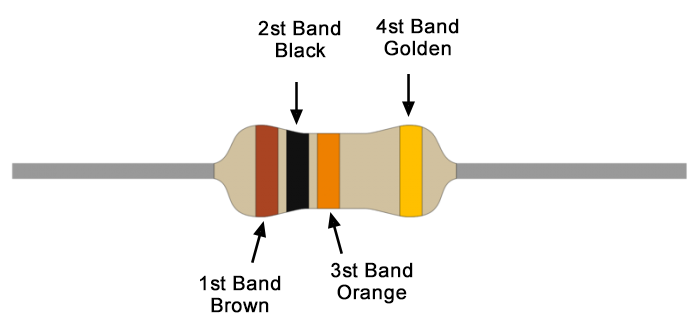
Understanding 10K Ohm Resistor: 10K Ohm Resistor Color Code
What is a 1K ohm resistor? 1K resistor code
Stepper motor drive based on ULN2003, refer to ULN2003 Datasheet and Pinout

Differential op amp and instrumentation amplifier applications

-
-
-
-
-
-
-
-
-
richtek-usa-inc
Buck Switching Regulator IC Positive Adjustable 0.8V 1 Output 3.5A 8-SOIC (0.154", 3.90mm Width) Exposed Pad