













- Home
- Blogs
- Power management
- Understanding LED Drivers and Applications
Understanding LED Drivers and Applications
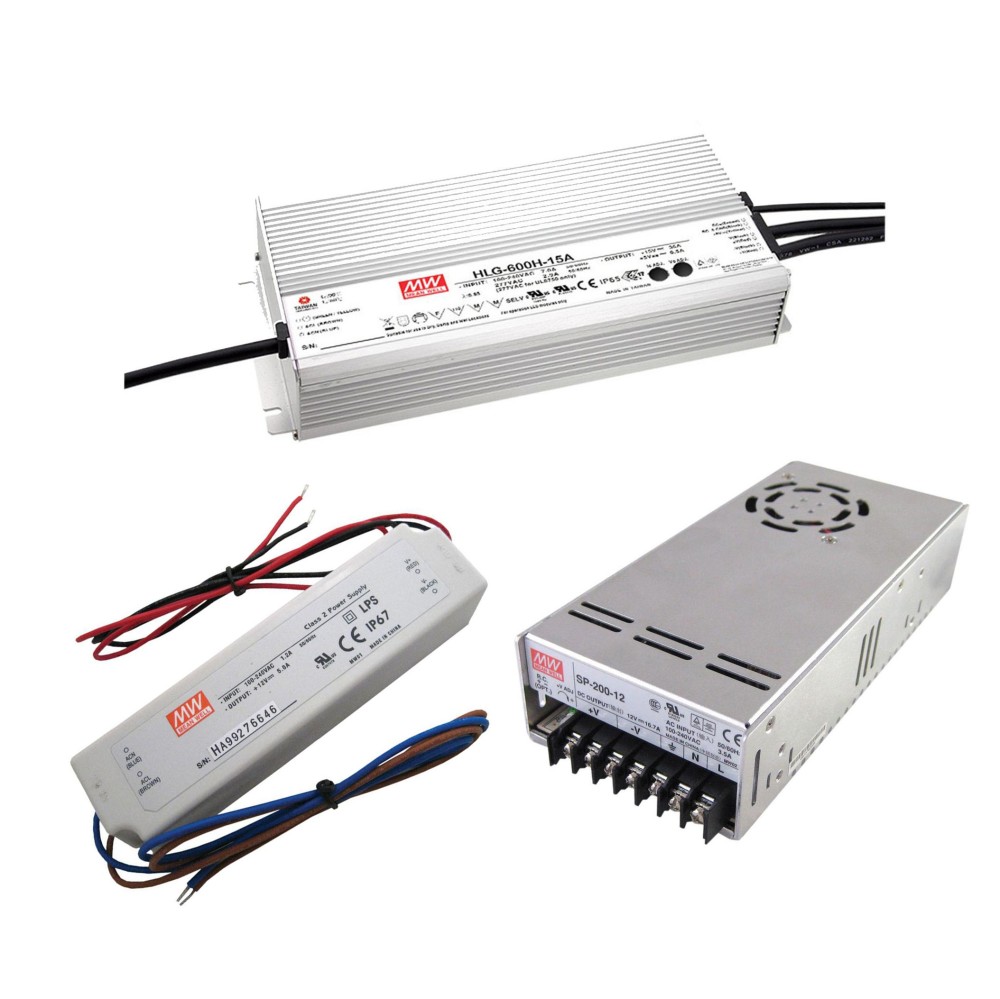
LED driver chip is a kind of power management IC, is responsible for the conversion of electrical energy into suitable for diode LED beads use of current or voltage.LED characteristics require it to require a constant current power supply, rather than a constant voltage, so the main function of the driver is to ensure that the LED current is stable, to protect the LED from current fluctuations and high voltage damage, but also to ensure that the LED can be stable light, to prolong the The service life is extended.
Working Principle of LED Driver
Constant Current Vs Constant Voltage Driver
LED driver is divided into two types: constant current driver and constant voltage driver.
Constant Current Driver: Constant current driver provides a fixed current at the output to ensure that the LEDs emit light stably under the set operating current, and will not damage the circuit due to current fluctuation. Constant-current drivers are suitable for multiple series-connected LED light circuit boards to ensure that the brightness of each LED light is consistent.
Constant Voltage Driver: Constant voltage drivers provide a constant output voltage and are used on circuit boards with LEDs connected in parallel. With this design option, the driver needs to ensure that the current of each parallel-connected LED is within an acceptable range to maintain a stable luminous effect.
Components of the driver circuit
A typical LED driver circuit consists of rectification, filtering, current control, and protection circuits. Rectification and filtering are used to convert the input AC power into smooth DC power. Current control is to ensure that the output current is always maintained within the safety parameters of the LED lamp circuit board. The protection circuit cuts off the circuit under abnormal conditions such as over-current and over-temperature to protect the LEDs and the driver.
Types of LED Drivers
Linear Driver
A linear driver is the simplest type of LED driver, providing a constant current by way of voltage regulation. Linear drivers have a simple design, less electromagnetic interference, and are suitable for low power applications, but their efficiency is relatively low, and when driving high power LEDs, they need to be equipped with additional cooling parts due to the high heat generation.
Switching mode driver
Switching mode drivers utilize switching power technology to regulate current and voltage by quickly switching switching elements to achieve high efficiency conversion. The efficiency of this kind of driver can usually reach more than 90%, and small heat, suitable for high power LED application program, especially in the need for energy saving and high efficiency conversion occasions.
Commonly used drivers and ICs
12V Drivers
12V LED drivers are one of the most common driver specifications used in low voltage power circuit boards such as home and automotive lighting. Offering a high level of safety, especially in homes and low-voltage power supply environments, 12V drivers are easy to install and relatively safe. In addition, 12V drivers are suitable for a wide range of LED strips and decorative lighting fixtures, providing sufficient brightness and stable power supply.
Commonly used 12V driver ICs
| Part Number | Manufacturer | Description |
| MP3394A | MPS | Supports multi-channel output with good current accuracy. |
| PT4115 | PowTech | Wide voltage input range with PWM dimming. |
| TPS92612 | Texas Instruments | Efficient and compact linear LED driver. |
| AL8860 | Diodes Inc. | Up to 40V input with PWM dimming support. |
| HV9910B | Microchip | High voltage LED driver with current control function. |
24V Drivers
24V LED drivers are used for higher power applications such as commercial lighting, industrial lighting and outdoor landscape lighting. Compared to 12V drivers, 24V drivers can better support long distance power supply, higher voltage means lower current under the same current, which can reduce the power loss of cables. 24V drivers can also usually drive longer LED strips, which is suitable for the scenes that need continuous high brightness lighting for a long period.
Commonly used 24V driver ICs
| Part Number | Manufacturer | Description |
| HV9982 | Microchip | Multi-channel LED driver ICs |
| TPS92692 | Texas Instruments | Supports wide voltage input |
| LT3761 | Analog Devices | Wide input voltage range with PWM dimming support. |
| AP1682 | Diodes Inc. | High-efficiency LED driver with integrated MOSFET |
| PT4205 | PowTech | Supports up to 30V input with current regulation. |
Dimmable Drivers
Dimmable LED drivers allow the user to adjust the brightness of LED lights to suit different power requirements. These drivers support a variety of dimming methods, such as 0-10V dimming, PWM dimming and DALI dimming. Dimmable driver circuits are commonly used in homes, hotels, conference rooms, and other situations where lighting brightness needs to be adjusted according to different contexts. They can help save energy, enhance user experience, and create the right atmosphere for different occasions.
Dimmable Driver ICs
| Part Number | Manufacturer | Description |
| LM3409 | Texas Instruments | Supports analog and PWM dimming. |
| AL8861 | Diodes Inc. | Support PWM dimming function, suitable for small and medium power LED driver. |
| MAX16834 | Maxim Integrated | Support PWM dimming function, suitable for high power LED lighting applications. |
| LT3932 | Analog Devices | Integrated boost converter with PWM dimming support. |
| BD18337EFV-M | ROHM | For automotive LED lighting, support dimming function. |
How to Choose the Right LED Driver
Power and Current Requirements
Selecting an LED driver requires determining the power and operating current requirements of the LED. The output power of the driver should be at least equal to or higher than the total power of the LED, while the output current needs to match the rated operating current of the LED. Choosing the right LED driver based on power and current parameters can increase its lifetime and stability.
Environmental considerations
When choosing an LED driver, you also need to consider the temperature and humidity of the environment in which it will be used. If the LED driver will be used in an outdoor or humid environment, the driver must have a corresponding waterproof and dustproof rating (e.g. IP65 or higher) to ensure that it is not affected by the harsh environment. In addition, the driver should have a good heat dissipation design to cope with high temperature environments.
Application Scenarios for LED Drivers
Indoor Lighting
LED drivers are used in home and commercial lighting systems such as pendant lights, downlights and table lamps. Constant current drivers ensure consistent brightness of each LED module, improving the quality and comfort of the overall lighting.
Outdoor Lighting
In outdoor lighting, such as street lights and building light shows, LED drivers need to be highly weatherproof and efficient in order to operate continuously for long periods of time. For these applications, switching mode drivers are the most suitable choice, which can provide stable current output with low power consumption.
Troubleshooting LED Drivers
Common Faults and Causes
Common LED driver failures include LEDs that do not light up, flicker, or have erratic brightness. These problems are usually caused by unstable driver output current, insufficient power, or wiring problems in the circuit. Checking power connections, driver specifications and LED matching can help troubleshoot these problems.
How to test the driver
Using a multimeter, you can measure the output voltage and current of the driver to determine if it is within the normal range. If the driver output is abnormal, you need to check for a short circuit or overload condition. You can also use the substitution method, which involves replacing the driver with one that is known to be normal, to find the faulty part in the circuit.
Advantages and Disadvantages of LED Drivers
Advantages
LED drivers have the advantages of high energy efficiency and stable output, which can extend the service life of LED lamps and lanterns. The high efficiency of switching mode drivers also reduces energy waste, making them particularly suitable for lighting systems that require long hours of operation.
Disadvantages
Despite the many advantages of LED drivers, their cost is high, especially for high-performance drivers. For complex driver circuits, installation and commissioning require certain specialized knowledge, which is troublesome for engineers without extensive experience.
LED Driver Trends
Smart LED Drivers
With the development of smart homes and the Internet of Things (IoT), LED drivers are also developing in the direction of intelligence. Today's smart LED drivers will be able to perform dimming and timing control wirelessly, and in the future, they can even be linked with other home devices to achieve more efficient home automation lighting management.
FAQs
Articles you may also like
Principles and applications of LDO
Working principle of field Mosfet transistor triode
Basic knowledge and working principle of AC to DC converter
A Method for Optimizing the Gate Drive of SiC MOSFETs