













What is a DIP Switch?
DIP switch is a switching device that can be mounted directly on a circuit board and controlled by simple operations (e.g., toggling, pressing) to turn the circuit on and off. The different series of switches vary in size, design and control methods to meet the need for mounting on a variety of different PCBs.
Varieties of DIP Switches
Slide DIP switches
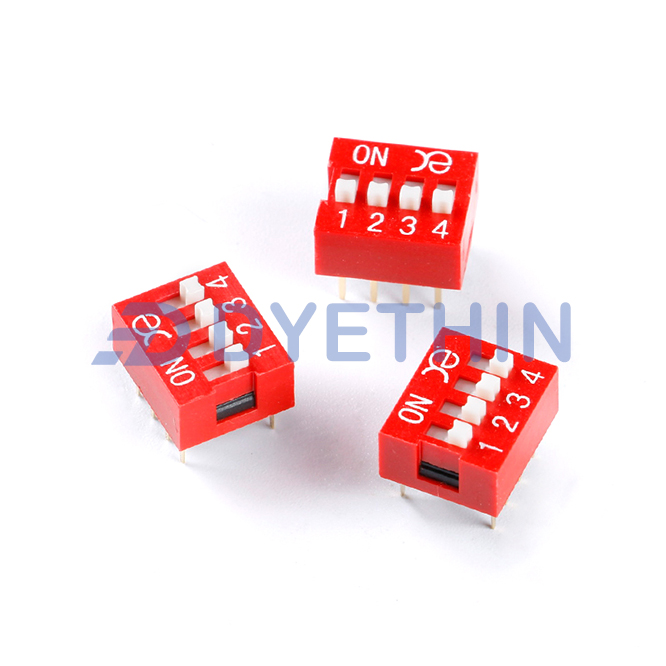
The Slide DIP switches are the type of DIP switches. They function by switching between two states—closed or open. Their straightforward design makes them user friendly and dependable, for an array of applications.
Piano DIP switches
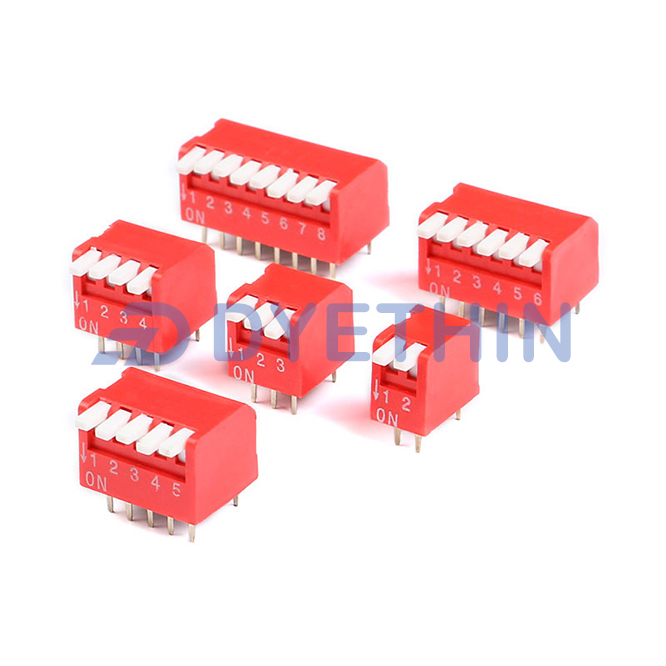
Piano DIP switches require a and down movement to toggle the switch. They are named so due to their similarity to piano keys and are commonly employed in densely packed circuit boards.
Rotary DIP switches
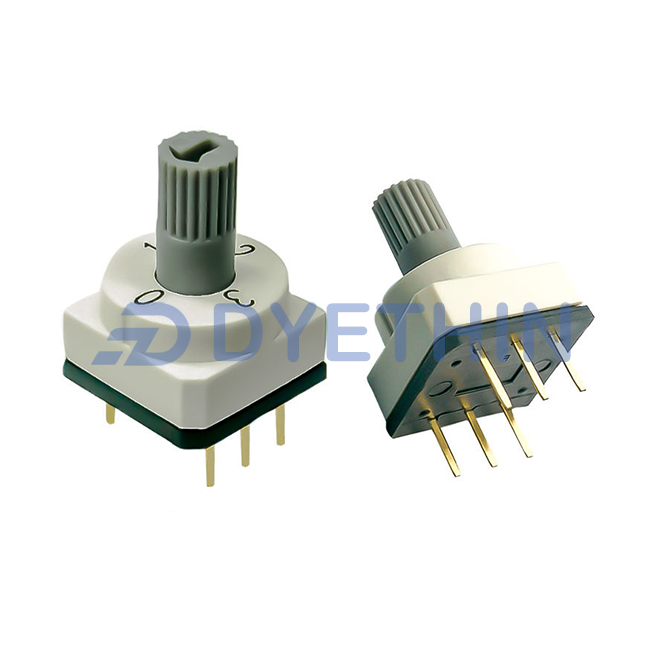
Rotary DIP switches entail a movement to switch positions. They can provide output configurations in code making them suitable for intricate applications requiring several settings.
How DIP Switches Work
DIP switches operate by modifying the path within a circuit. Each toggle, in a DIP package can be independently switched, enabling users to establish a customized configuration.
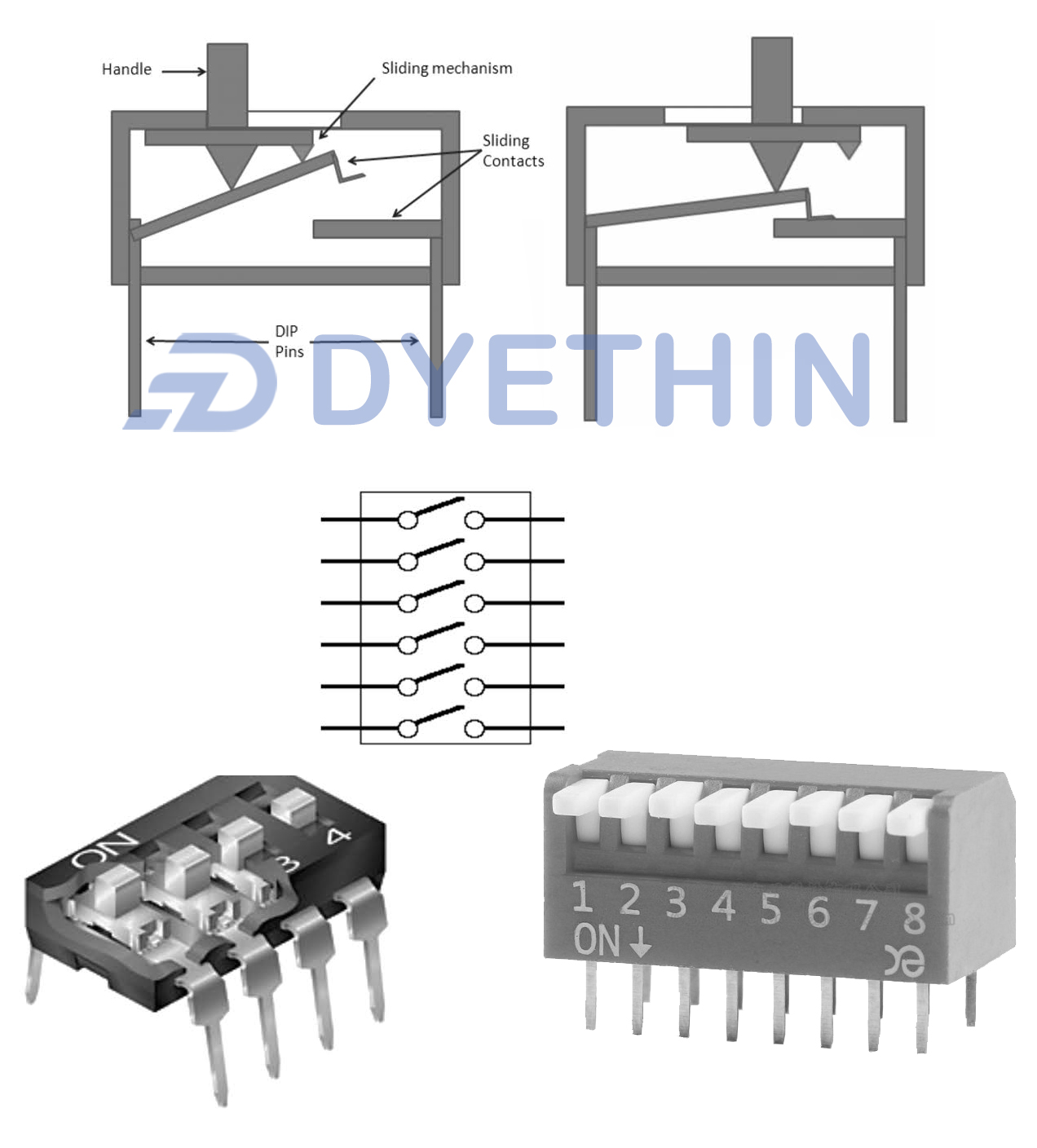
This setup can be interpreted by the circuit to alter its behavior. For example adjusting a DIP switch on a computer motherboard can. Deactivate functions or choose different operational modes.
Key Specifications of DIP Switches
When choosing a DIP switch it's important to consider specifications, for functionality and compatibility with your intended use. Here are the main specifications;
| Specification | Description |
| Mounting Style | The way the switch is mounted on the PCB or breadboard. |
| Termination Style | The type of connection utilized (through hole surface mount). |
| Voltage Rating | The voltage the switch can handle safely. |
| Current Rating | The maximum current that can flow through the switch without overheating. |
| Pitch | The distance between the pins of the switch. |
| IP Rating | The degree of protection against dust and water infiltration. |
Mounting Style
DIP switches can be mounted in manners, such as through hole and surface mount. Through hole mounting involves inserting the switchs pins into holes, in the PCB and soldering them into position. Conversely surface mount DIP switches are directly soldered onto the PCBs surface.
Different mounting styles offer advantages. Are selected based on the specific needs of the application.
Termination Style
The termination Style of a DIP switch refers to the method of connection utilized. Common termination methods include, through hole and surface mount, to the mounting styles. The choice of termination method impacts installation convenience and the mechanical stability of the switch on the PCB.
Voltage Rating
The voltage rating of a DIP switch indicates the voltage it can handle without damage. It's crucial to pick a switch with a voltage rating to ensure its longevity and reliability in your circuit.
Current Rating
The current rating specifies the current a switch can carry without overheating or failing. Selecting a DIP switch with the rating is essential for preventing potential damage and ensuring safe operation.
Pitch
Pitch refers to the distance between the pins of a switch, a consideration especially when designing circuits with limited space.
IP Rating
The IP (Ingress Protection) rating of a DIP switch determines its level of protection against dust and water. A higher IP rating signifies protection making it suitable for use, in demanding environments.
Applications of DIP Switches
DIP switches find application in a variety of scenarios due, to their flexibility and user friendly nature. Some common uses include:
Setting Codes for Garage Door Openers
DIP switches are frequently employed to establish a code for garage door openers. By adjusting the switches to positions users can create a code to prevent unauthorized entry.
Remote Control Customization
Many remote controls utilize DIP switches to configure channels or frequencies enabling users to operate devices simultaneously without interference.
Configuration of PC Expansion Cards
DIP switches are commonly integrated into PC expansion cards to adjust modes or settings allowing users to personalize the performance and features of their computer hardware.
Integration of Devices into Networks
In Internet of Things (IoT) networks DIP switches play a role in configuring devices and setting network parameters simplifying the process of adding devices while ensuring communication within the network.
Industrial Equipment Setup
Industrial equipment often incorporates DIP switches for configuring settings and selecting modes leveraging their reliability and ease of use for functionality, in industrial settings.
Advantages of Using DIP Switches
There are reasons why DIP switches are favored in circuits:
Affordability
DIP switches are cost effective when compared to other switch options making them a budget friendly choice, for many uses.
User Friendly Design
The straightforward layout of DIP switches allows for setup and adjustment. Users can make changes swiftly without needing tools or expertise.
Dependability
Known for their reliability and robustness DIP switches can endure adjustments and challenging conditions ensuring performance over time.
Disadvantages of Using DIP Switches
Despite their advantages there are some drawbacks to using DIP switches:
Limited Customization Options
DIP switches provide configuration choices than advanced alternatives. This limitation may pose challenges in applications that demand tailored settings.
Manual Configuration Needed
Changing settings with DIP switches requires intervention, which may not be ideal in scenarios where automatic or remote setup is preferred.
Contrasting Different Switch Types
Comparing DIP switches, with switch varieties helps highlight their characteristics and benefits:
Toggle switch
Toggle switch stand out for their larger size and sturdier build compared to DIP switches. They are typically utilized in applications requiring capacities and rugged performance.
SPST, SPDT, DPDT Switches
SPST (Single Pole Single Throw), SPDT (Single Pole Double Throw), and DPDT (Double Pole Double Throw) switches, which stand for Single Pole Single Throw, Single Pole Double Throw and Double Pole Double Throw provide corresponding functions.
Installation and Maintenance
Installation Steps
Determine the mounting style and termination style of the DIP switch.
Prepare the PCB. Breadboard, for installation.
Place the switch in its designated position.
Securely solder the pins to ensure a connection.
Test the switch to verify functionality.
Maintenance Tips
Regularly inspect the switch for any signs of wear or damage.
Clean the switch contacts to maintain operation.
Replace any switches to uphold circuit performance.
Common Issues and Troubleshooting
Common Problems
Switch Not Toggling Correctly: This may be due to dirt or debris blocking the switch mechanism.
Arcing: This happens when the switch handles voltage or current than its capacity permits.
Poor Solder Connections: This can result in operation. Complete failure of the switch.
Solutions
Clean the Switch: Use compressed air or a small brush to remove any debris from, within it.
Make sure to check the voltage and current ratings: Ensure that the switch is being used within its specified limits.
Inspect Solder Joints: Re solder any pins that're loose or not properly connected.
Innovations and Future Trends
The technology behind DIP switches is constantly evolving, with new advancements focused on enhancing performance and broadening applications. Some upcoming trends include;
Advancements in DIP Switch Technology
Miniaturization: Creating switches tailored for electronic devices.
Improved Durability: Enhancing materials and designs to withstand environments.
Expanded Configurations: Switches offering increased customization options.
Future Applications
Smart Home Devices: Incorporating DIP switches into home technology for configuration.
Wearable Electronics: Utilizing DIP switches in devices for adjusting different modes.
Advanced Robotics: Integrating DIP switches into robotics for control and customization.
Conclusion
DIP switches are dependable components that play a role in configuring and customizing electronic circuits. Their straightforwardness, cost efficiency and user friendly nature make them a popular option, across applications. By understanding their specifications and functions you can make informed choices when selecting and using DIP switches in your projects.

FAQs
Articles you may also like
Design of High Current H-Bridge Motor Drive Circuit
The working principle, key parameters, and selection of TVS
Understanding NAND Gate: The Universal Logic Gate in Digital Circuits
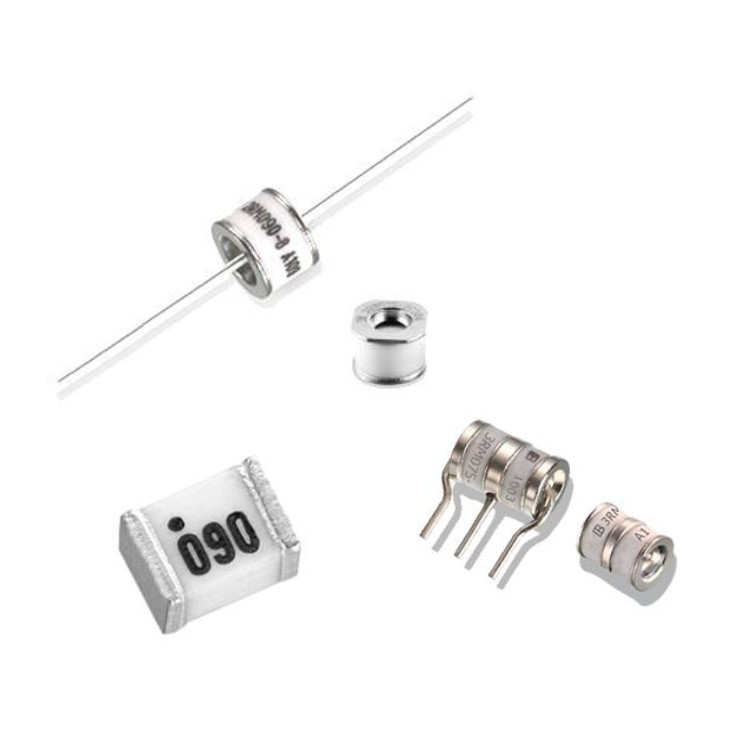
Gas Discharge Tube Symbols, Characteristics and Structure

-
-
-
-
-
-
-
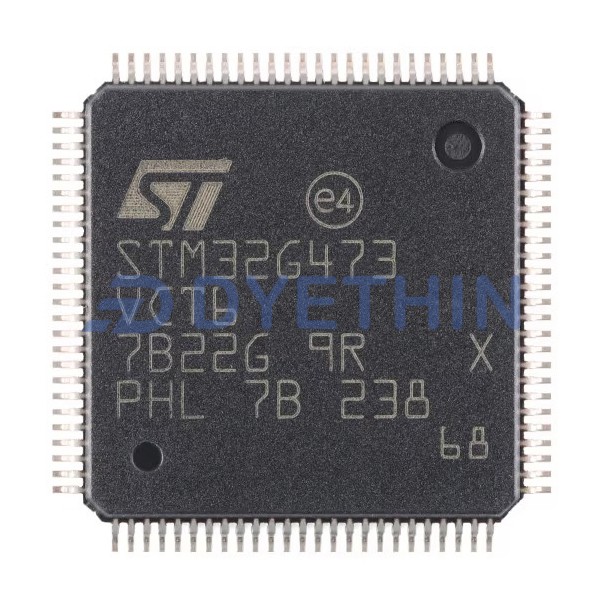
stmicroelectronics
ARM® Cortex®-M4 STM32G4 Microcontroller IC 32-Bit Single-Core 170MHz 256KB (256K x 8) FLASH 100-LQFP (14x14)
-
-