














Xilinx Zynq Multiprocessor System-on-Chip (MPSoC)
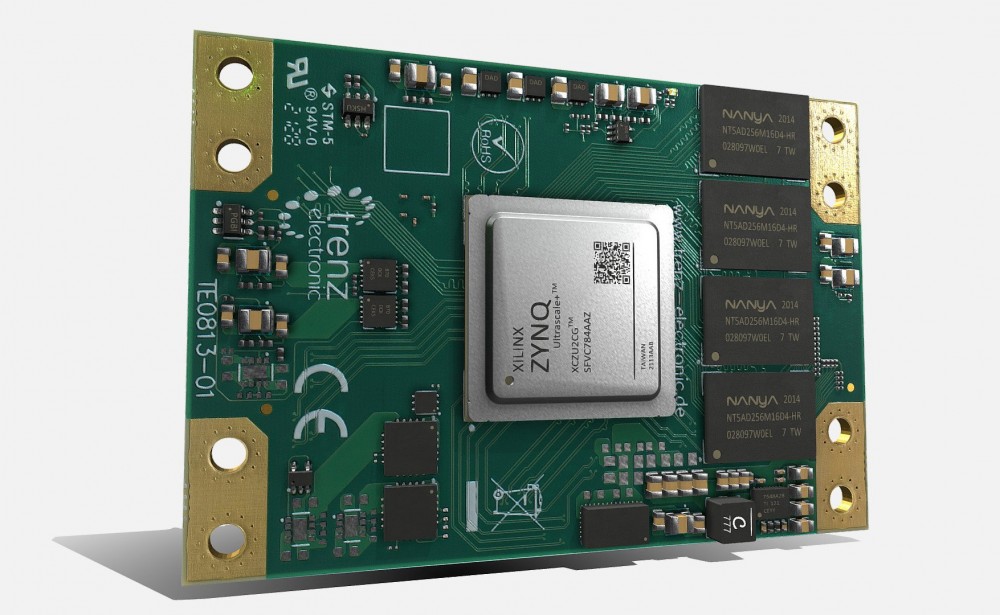
Xilinx introduces the Zynq multiprocessor system-on-chip (MPSoC, Multiprocessor System-on-Chip). It is an integrated system-on-chip device, with Zynq-7000 as its progenitor.
The Zynq Multiprocessor System-on-Chip MPSoC is comprised of various processor elements, each of which is optimised for a particular function. Typical components of an MPSoC include application processors, real-time processors, graphics processors, and Field Programmable Gate Array (FPGA) programmable logic.
In addition to the importance of the Zynq MPSoC architecture, the design methodology and software tools are also crucial. We are able to use Zynq MPSoC devices to solve actual design problems due to the application of a suitable design methodology. With a larger number of processing units than previous devices, designers can maximise the Zynq MPSoC's capabilities to achieve the desired system performance, reliability, cost, power consumption, security, and time-to-market, among other outcomes. This is why this column also provides an overview of the system development environment, including the design tools and operating systems that can be deployed on the processing processors. Included in the Xilinx SDx tool is a feature that permits the user to describe the system wholly in software code and then divide it among the available processing units. SD stands for Software Defined (SD) in SDx.
Numerous applications exist for Zynq MPSoC devices. Utilising Zynq-7000 R&D expertise and MPSoC expansion apparatus, we are able to conduct research in a number of cutting-edge fields. Examples include Advanced Driver Assistance Systems (ADAS), Computer Vision (CV), Software Defined Radio (SDR), and Industrial Internet of Things (IIoT).
MPSoC (Multiprocessor System-on-Chip) overview of Zynq.
In recent years, systems integration has become a popular discipline. For a system-on-chip (SoC, System-on-Chip) such as the Zynq and Zynq MPSoC, they include programmable logic, a microprocessor, and memory — the essential components of an embedded system. In fact, these devices also contain analogue circuits and an arithmetic engine that supports digital signal processing (DSP, Digital Signal Processing) applications, analogous to what DSP processors provide. As illustrated in Figure 1, the Zynq MPSoC device consists of a processing system (PS, Processing System) and FPGA programmable logic (FPGA Programmable Logic). Several sophisticated extensible interfaces (AXI, sophisticated eXtensible Interface) connect these two components. This structure is extremely similar to that of the Zynq-7000 microprocessor.
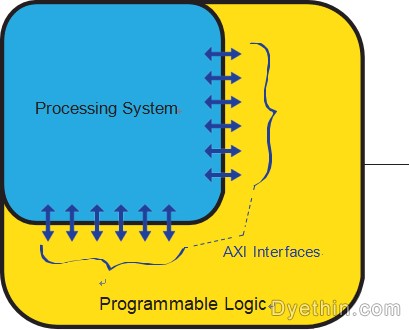
Figure 1 Simplified architecture of the Zynq MPSoC
Zynq MPSoC is distinguished from Zynq primarily by its increased integration, which increases the selection and number of processors in the processing system, the extent of the programmable logic portion of the FPGA, and the relationship between PS and PL. The quantity and bandwidth of their AXI connections. In addition, additional enhancements will be incorporated in the subsequent release. In rapidly expanding application areas, the need for a system-on-chip (SoC) is driven by the need to achieve fast time-to-market; it is also driven by the need to reduce the engineering effort required for the development of integrated components in the system, minimise the physical size, and reduce power consumption. The market for SoC. Due to the evolution of software design tools and techniques, these relatively complex SoC devices must be simple to system design and perpetually upgrade. Xilinx and its partners support multiple design entry methods and languages and continue to introduce new capabilities to facilitate rapid development, such as the capacity to evaluate various implementation alternatives in a timely manner.
An Overview of the Design of Xilinx Systems-on-Chip (SoCs).
Xilinx specialises in FPGA technology and complex programmable logic devices (CPLDs, Complex Programmable Logic Devices). Since the introduction of the Zynq-7000 in 2011, as it transitioned to a SoC, additional building blocks have been integrated, so that Xilinx now manufactures devices that include not only programmable logic, but also the components associated with the processor, memory, and interfaces, among others. integrated programmable logic.
Since Xilinx's invention of FPGA more than three decades ago, and particularly in recent years, there has been a great deal of interest in FPGA-based flexible embedded systems. This is possible due to the availability of "soft" processors, which can be constructed from the general-purpose programmable logic of FPGAs (as opposed to using dedicated processing circuits). Implementing the embedded system in the manner described above is still effective and flexible. In contrast, processor-based embedded development is subject to certain restrictions.
In certain application scenarios, the application programme must incorporate a separate processor chip and establish an appropriate interface with the FPGA. This resulted in the early 2010 introduction of the Zynq-7000 chip, which combines the programmable logic of an FPGA with a dedicated "hard" processor and provides a rapid interconnect between the two components. Figure 2 depicts the structure diagram of the Zynq-7000 series processor. In this illustration, the processor is a dual-core Arm Cortex-A (the "A" indicates an application processor), the same type as the collection-only processor. A comprehensive system can be implemented on a single chip, which is an improvement over the "soft" processor approach previously utilised.
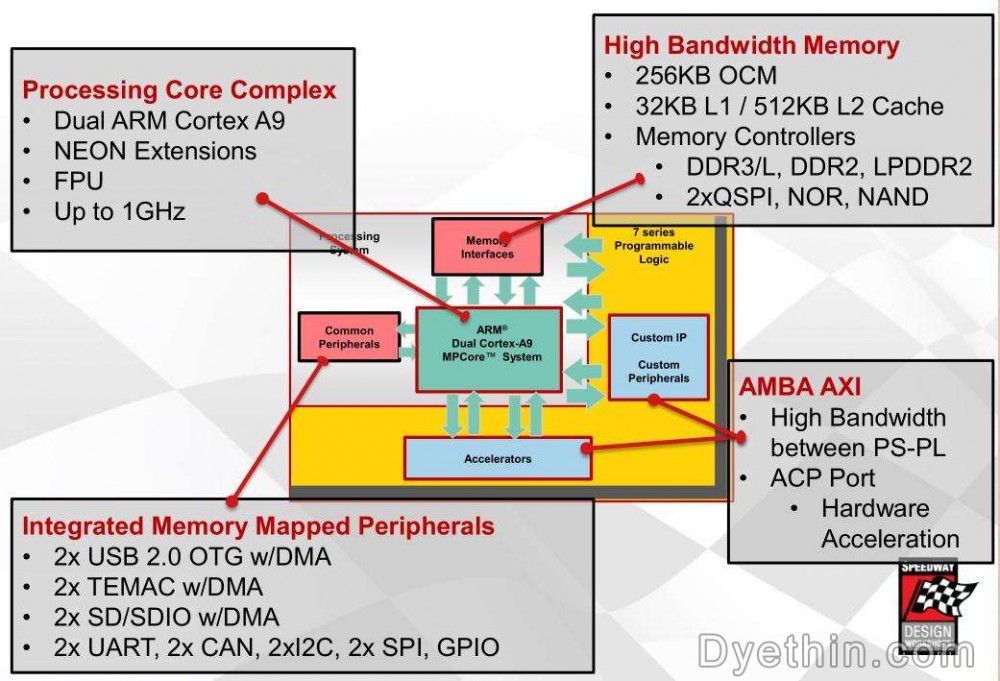
Figure 2: Schematic of the Zynq-7000 chip's architecture
Now, the Zynq MPSoC extends the SoC concept by increasing the varieties and capabilities of the processing system's processors. Figure 3 depicts the Zynq Ultrascale + MPSoC processing system, which is distinct from the dual-core application processor (Zynq-7000 series) and from which you can now select 32-bit or 64-bit dual-core or quad-core (whereas the A9 is a 32-bit dual-core processor). Additionally, the Zynq Ultrascale + MPSoC processing system includes a real-time processing system based on two Arm Cortex-R5 cores, a graphics processing unit (Graphics Processing Unit, GPU), and other units. The rationale for adding these additional types of processing units is that by using processors optimised for specific tasks, higher performance can be attained.
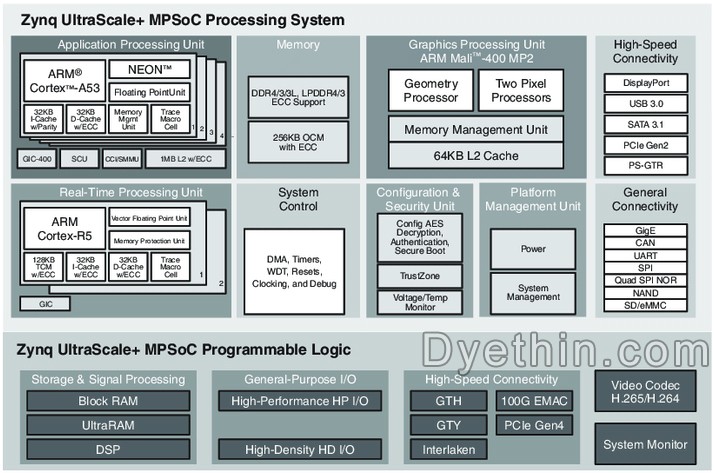
Figure 3 Schematic of the design technique for the Zynq Ultrascale + MPSoC processing system
Design method
Here, we present a very crucial issue! How can we utilise these complex system-on-chips to create the desired intelligent system? Specifically, what is our design process?
The design strategy for the Zynq multiprocessor system-on-chip (MPSoC) by Xilinx consists of (1) hardware design and (2) software design. The mapping of available physical resources on the SoC device is primarily the responsibility of the hardware design, while the software operates on one or more processors deployed on the chip. In light of the fundamental distinction between hardware design and software design, as depicted in Figure 4, different design tools are used to create hardware and software systems.

Figure 4: Simplified design flow for Zynq MPSoC (left: traditional "hardware/software" design flow; right: "software-defined" design tools utilising SDx).
In this design flow, hardware and software development can proceed essentially independently, followed by an integration phase, as neither is dependent on the other's completion. Utilising the tool of their choosing, designers generate a unit of the hardware system, integrate it using the Xilinx Vivado development environment, and implement it on the target device. Xilinx Software Development Kit (SDK, Software Development Kit) is available to software developers. Recent years have witnessed a significant shift towards software-centric hardware/software co-design. Using software code or a block-based design approach, these tools enable the functionality of an entire system to be described at a high level of abstraction. The functionality is then distributed among the hardware and software components of the SoC under the direction of the designer, taking into consideration the capabilities of the available resources.
Articles you may also like
What is the specific protocol of QSPI?
Intel Core i7 6700 vs i5 9500T



)