














- Home
- Blogs
- Semiconductor News
- The AI chip market will reach US$67 billion in 2024, and WIMI.US is increasing its efforts to develop efficient AI solutions.
The AI chip market will reach US$67 billion in 2024, and WIMI.US is increasing its efforts to develop efficient AI solutions.
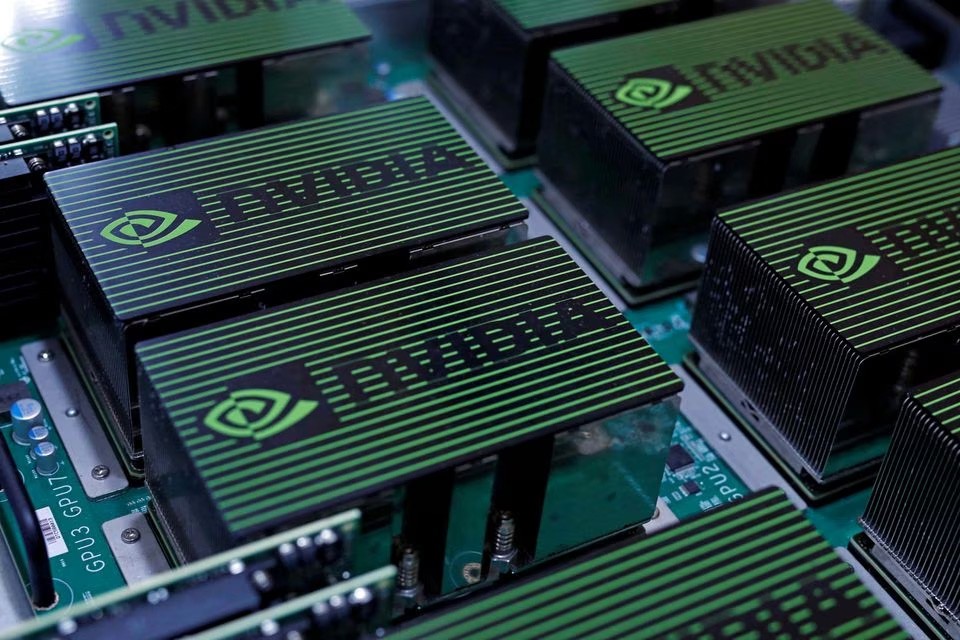
The unprecedented breakthrough of general-purpose large models has stirred up a pool of spring water in artificial intelligence (AI). Orient Securities believes that the data center industry chain will continue to benefit from the demand for chip computing power upgrades brought by large AI models, and the user experience of AI applications will also continue to improve.
According to market research firm Gartner, the market for chips used to perform artificial intelligence (AI) workloads is growing at a rate of more than 20% annually.
The agency predicts that the AI chip market will reach US$53.4 billion in 2023, an increase of 20.9% from 2022, and will increase by 25.6% in 2024, reaching US$67.1 billion. By 2027, AI chip revenue is expected to more than double the market size in 2023, reaching $119.4 billion. Gartner analysts pointed out that in the future, large-scale deployment of customized AI chips will replace the currently dominant chip architecture (discrete GPU) to adapt to various AI-based workloads, especially those based on generative AI technology.
Demand for AI chips continues to be strong
AI chips, also known as AI accelerators or computing cards, are chips specifically designed to handle AI-related computing tasks. They are an important cornerstone of computing power. While the construction of large models is in full swing, the demand for large model computing power will further drive the research and development of AI chips, and the cross-integration with other fields such as health, education, transportation, etc. will gradually deepen.
When generative AI tools like ChatGPT run, they need to process large amounts of data, which must be retrieved from the memory chip and sent to the processing unit for calculation. Faced with the explosive demand for AI chips brought about by the breakthrough development of large models, technology giants and emerging companies are rushing to compete in large models. A new round of AI chip competition is emerging.
Last month, the Q2 net profit of NVIDIA (NVDA.US), the king of AI chips, surged 422%, indicating that the demand for AI chips continues to be strong. NVIDIA CEO Jensen Huang said, "A new era of computing has begun. Companies around the world are transitioning from general computing to Transformation to accelerated computing and generative AI. This quarter, major cloud service providers announced the launch of large-scale NVIDIAH100AI infrastructure, bringing NVIDIAAI to various industries, and the race for generative AI has begun."
From the data point of view, taking the currently more mainstream NVIDIA A100 GPU as an example, a single training of a large model requires at least a hundred or kilocalorie scale. Based on current market prices, the cost of building a 1,000-card GPU-scale computing cluster can reach 200 million yuan.
With the H100, the most cutting-edge AI chip that is selling well all over the world, NVIDIA is undoubtedly one of the most conspicuous "trendsetters" in this AI wave. The AI boom is driving chip orders. Nvidia plans to ship approximately 550,000 H100 pieces globally in 2023, and the delivery of H100A800 GPU to customers in mainland China may not be until 2024Q1.
With the launch of the new generation AI chip GH200, NVIDIA will continue to expand its product portfolio by leveraging the AI spending of major data center players. AI spending by major data center players is expected to exceed $10 billion in 2023.
Intel wants to ride the AI chip wave
After ChatGPT led the explosion of the entire AI chip market, Nvidia became the "hot potato" in everyone's eyes. At that time, Intel (INTC.US) was going deep into the hinterland of artificial intelligence, and China was the "main battlefield" for its AI chips. one. Last month, Intel announced the official launch of its second-generation deep learning accelerator, Habana Gaudi2, for the Chinese market. This product can be used to accelerate AI training and inference.
As one of the key products of Intel's AI strategy, Habana Gaudi 2 is expected to break the current inherent pattern of the chip market.
Intel's executive vice president said that in the past six months, AI acceleration chips have suddenly become popular again because of large models. Next, we will invest more resources and use local teams to make these customized products in China. Able to accelerate landing.
WIMI Hologram builds efficient AI solutions
Currently, major chip companies around the world are actively developing AI chips. Also on the AI track, as an emerging AI semiconductor supplier, AI vision leader WIMI (WIMI.US) is betting on the powerful field of artificial intelligence hardware. , is committed to providing high-performance, low-power intelligent semiconductor solutions for the fields of cloud computing and artificial intelligence, developing and building core competitiveness, and seizing opportunities through "overtaking on corners."
In fact, WIMI has been committed to the development and application of AI algorithms in recent years, providing customers with comprehensive solutions to achieve technical goals by integrating technical algorithms with software or hardware or both. At present, WIMI has 195 related technology patents in image processing and display, model input/output, and 3D modeling, and has applied for 325 AI-related invention patents, etc. With its leading technology patent accumulation, it has developed models in its business Innovate and actively enhance the industry value in the general field of digital intelligent processing industry.
As AI continues to be popular, AI chips can help companies achieve large-scale revenue. WIMI is stepping up its efforts in the AI field, especially in cloud computing, data centers, autonomous driving and other fields. At the same time, with the continuous development of AI technology and the continuous improvement of the performance of AI chips, it is becoming more and more suitable for various application scenarios. It is reported that the company is also continuing to produce large-scale AI hardware based on the development trends and technological evolution of the AI industry. Moving forward, in the future, WIMI Hologram will allow more B-side customers to apply more efficient AI solutions.
End
The craze represented by large models has brought explosive growth in the demand for AI computing power, and AI computing power has become a key factor in promoting the development of artificial intelligence. From an industrial perspective, optimistically speaking, AI chips can be said to be in the budding stage of a hundred flowers blooming and a hundred schools of thought contending. All entities are rapidly exploring suitable growth paths in the fierce market competition. And how to further enhance the competitiveness of AI chips of various companies? Perhaps we can encourage more companies and social capital to enter the field of AI chips, increase investment, accelerate process innovation and progress, and build a local supply chain system, so that the overall development of AI needs to make breakthroughs.

Articles you may also like
$3.8 billion! Wenye acquires Future Electronics
Due to suspected anti-competitive behavior of AI chips, it is reported that the European Union has launched an early investigation into Nvidia
Qualcomm lays off employees globally
Apple and Nvidia to become strategic investors in Arm's US IPO

-
-
-
-
-
-
-
-
-
stmicroelectronics
ARM® Cortex®-M4F STM32G4 Microcontroller IC 32-Bit Single-Core 170MHz 256KB (256K x 8) FLASH 100-LQFP (14x14)