














- Strona główna
- Featured Products
- Texas Instruments
- LM324 Operational Amplifier: Applications, Features, and Performance
LM324 Operational Amplifier: Applications, Features, and Performance
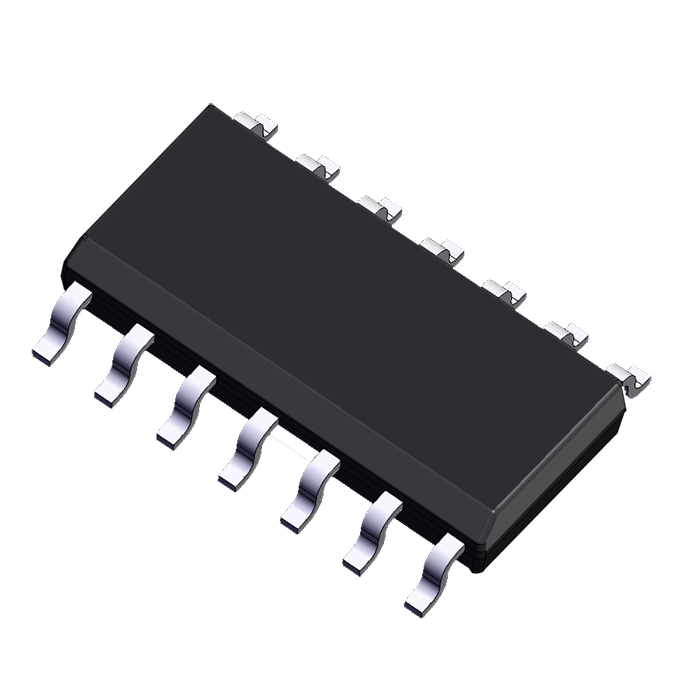
Introduction to LM324
The LM324 is a widely adopted quad operational amplifier designed for single-supply operation. Engineers prefer LM324 for its ability to function effectively in low-voltage analog systems, making it suitable for cost-sensitive applications. Unlike conventional op-amps that require dual supplies, LM324 operates on a single rail, reducing complexity and component count. With its four independent amplifiers in a single package, LM324 offers a practical solution for multipoint analog processing.
LM324 Features
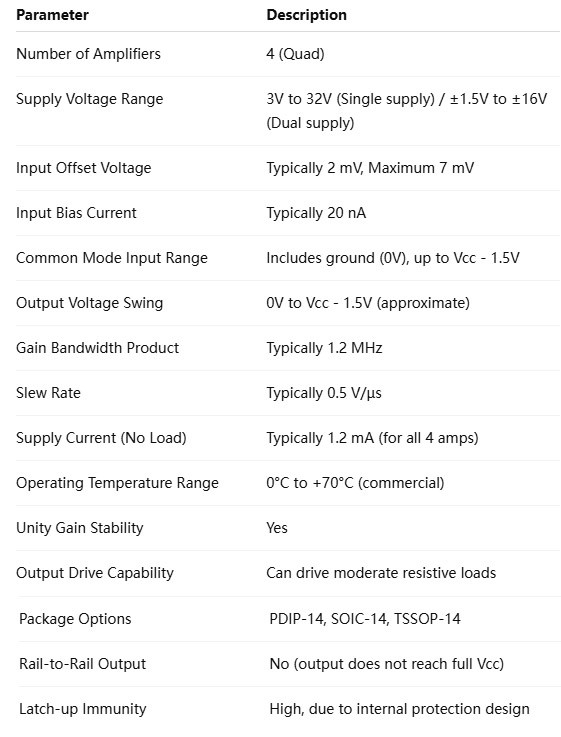
One of the core advantages of the LM324 lies in its wide input voltage range and high stability. The LM324 supports a supply range from 3V to 32V or ±1.5V to ±16V, providing flexibility for various analog designs. The device ensures low input bias current and minimal input offset voltage, enhancing accuracy in signal processing. LM324 also delivers a large gain bandwidth product and is unity-gain stable, which supports broad application scenarios without additional compensation circuits. With these qualities, LM324 continues to be a go-to amplifier for robust analog design.
Electrical Specifications and Performance
LM324 demonstrates consistent performance across a wide temperature spectrum. It maintains low quiescent current, which is essential in battery-powered systems. Its input offset voltage typically remains within a few millivolts, contributing to reliable amplification. The output swing extends close to the ground in single-supply configurations, making LM324 well-suited for low-voltage analog systems. Furthermore, LM324 provides acceptable slew rates for general signal conditioning tasks without inducing overshoot or instability.
Typical Applications of LM324
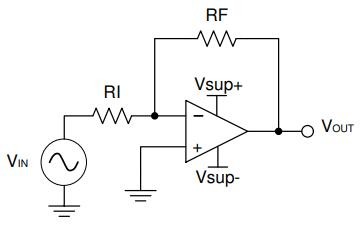
The figure above shows a classic inverting amplifier configuration using the LM324.In this setup, the input signal is applied through a resistor (RI) to the inverting input, while the non-inverting input is grounded. The feedback resistor (RF) connects the output back to the inverting input, forming a negative feedback loop. The LM324 inverts and amplifies the input signal based on the ratio of RF to RI. This configuration is commonly used for signal scaling, filtering, or analog computation in embedded and industrial applications. Because LM324 supports input voltages that reach down to the negative rail and operates reliably with a single or dual supply, it fits well in systems where cost and board space are limited. The supply voltage (Vsup+ and Vsup–) must be selected to exceed the expected input and output swing, and for many applications, a ±12V configuration provides sufficient headroom. LM324’s internal design ensures linearity and stability across this range, making it a dependable choice for precision analog front-end circuits.
Package Options and Pin Configuration
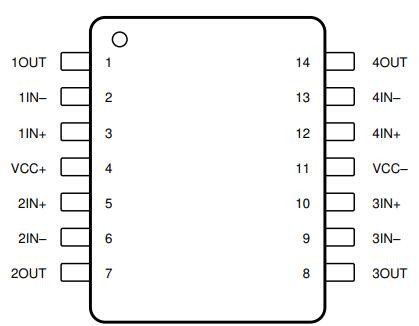
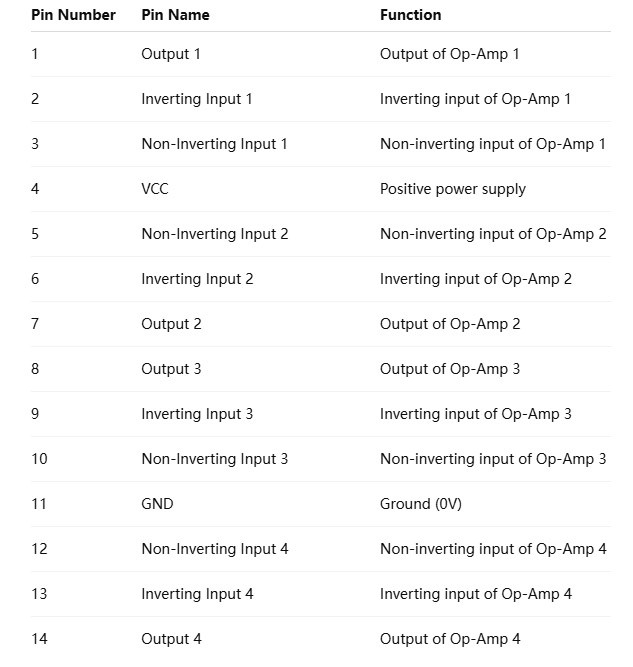
To accommodate diverse system requirements, LM324 is available in PDIP-14, SOIC-14, and TSSOP-14 packages. The typical 14-pin configuration offers four op-amps with shared Vcc and GND pins. This allows LM324 to be implemented in compact layouts while preserving electrical isolation between channels. The standardized footprint ensures drop-in compatibility across multiple board designs.
LM324 Functional Block Diagram
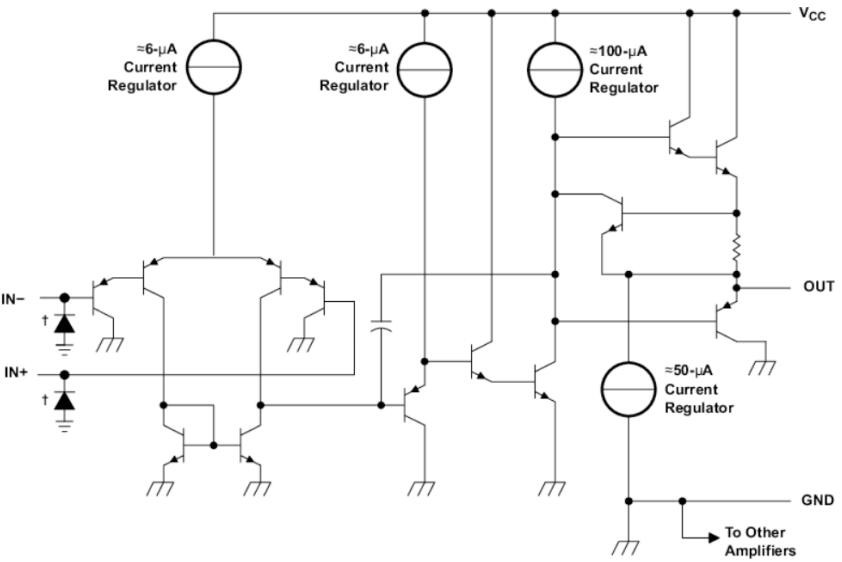
The functional block diagram on page 22 illustrates the internal architecture of a single LM324 amplifier. At its core, LM324 employs differential pair inputs protected by diodes against overvoltage, ensuring robustness in noisy environments. Multiple current regulators maintain consistent biasing throughout the stages—approximately 6 µA in the input stage and 100 µA in the output drive path. The signal passes through a level-shifting and gain stage before reaching the output transistors, which are arranged in a class AB configuration to enable push-pull operation. A notable design choice in LM324 is the inclusion of a 50 µA regulator for output stage biasing, minimizing crossover distortion and improving linearity. According to the component count, each amplifier includes 95 transistors, 4 diodes, and multiple passive components, reflecting the design's complexity despite its low power profile. This structure allows LM324 to maintain low power consumption while delivering reliable analog performance across a range of applications.
LM324 Power Supply Rejection Ratio Across
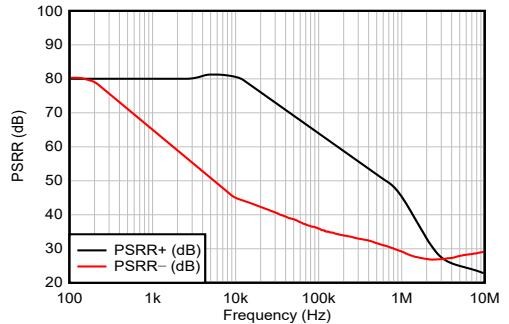
The figure above shows the PSRR (power supply rejection ratio) performance of the LM324 over a wide frequency range.. PSRR+ represents the rejection capability of the positive supply variations, while PSRR– corresponds to the negative supply. At low frequencies (around 100 Hz to 1 kHz), LM324 maintains a high PSRR of approximately 80 dB on both rails, ensuring excellent rejection of supply noise. As frequency increases, the PSRR begins to roll off—dropping below 60 dB around 10 kHz for the negative rail and beyond 100 kHz for the positive rail. At frequencies above 1 MHz, PSRR falls significantly, as expected for most general-purpose op-amps. This characteristic confirms LM324’s suitability for low-frequency analog applications where power line interference must be minimized. Designers should consider decoupling strategies in high-frequency environments to maintain clean signal integrity.
LM324 vs Other Series (LM224, LM2902)
| Parameter | LM324 | LM224 | LM2902 |
| Operating Temperature Range | 0°C to +70°C (Commercial) | –25°C to +85°C (Industrial) | –40°C to +125°C (Automotive) |
| Supply Voltage Range | 3V to 32V / ±1.5V to ±16V | 3V to 32V / ±1.5V to ±16V | 3V to 36V / ±1.5V to ±18V |
| Input Offset Voltage (Max) | 7 mV | 7 mV | 7 mV |
| Slew Rate (Typ) | 0.5 V/µs | 0.5 V/µs | 0.5 V/µs |
| Input Bias Current (Typ) | 20 nA | 20 nA | 45 nA |
LM324 Manufacturer
The LM324 is manufactured by several reputable semiconductor companies, with Texas Instruments being one of the most recognized sources. As a leading provider of analog ICs, TI ensures robust quality control and offers extensive design documentation for LM324. Engineers benefit from TI’s comprehensive application notes, simulation models, and global supply chain support. Choosing LM324 from an established vendor like TI guarantees consistency in large-scale production environments.
Conclusion
In analog system design, LM324 remains a staple for engineers seeking reliable, cost-effective amplification. With its wide voltage range, stable gain, and multiple op-amps per package, LM324 adapts to a vast array of applications. From embedded sensor interfaces to control loops in industrial settings, LM324 delivers consistent results. It balances flexibility and simplicity, a key reason LM324 continues to thrive in modern electronics. For designers looking to implement dependable analog solutions, LM324 stands as a trusted and time-tested component.

FAQs
Articles you may also like

TPL5010 hardware watchdog circuit
Operational amplifier IC LM358 pinout diagram and functions
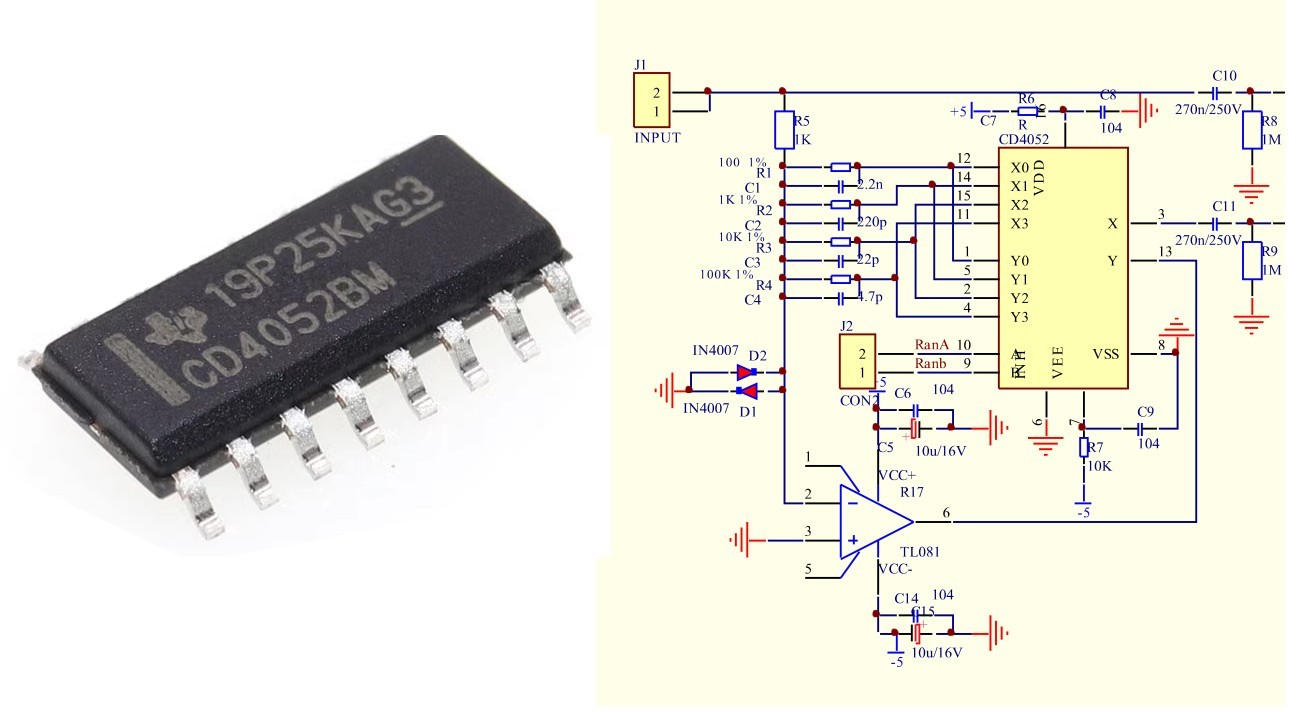
Logic IC CD4052 Comprehensive understanding and usage guide
74LS161AN Functionality Explained: Funcion, Pinout & Datasheet
Ilość w magazynie: 9,505

-
-
-
-
-

-
-
-
-
stmicroelectronics
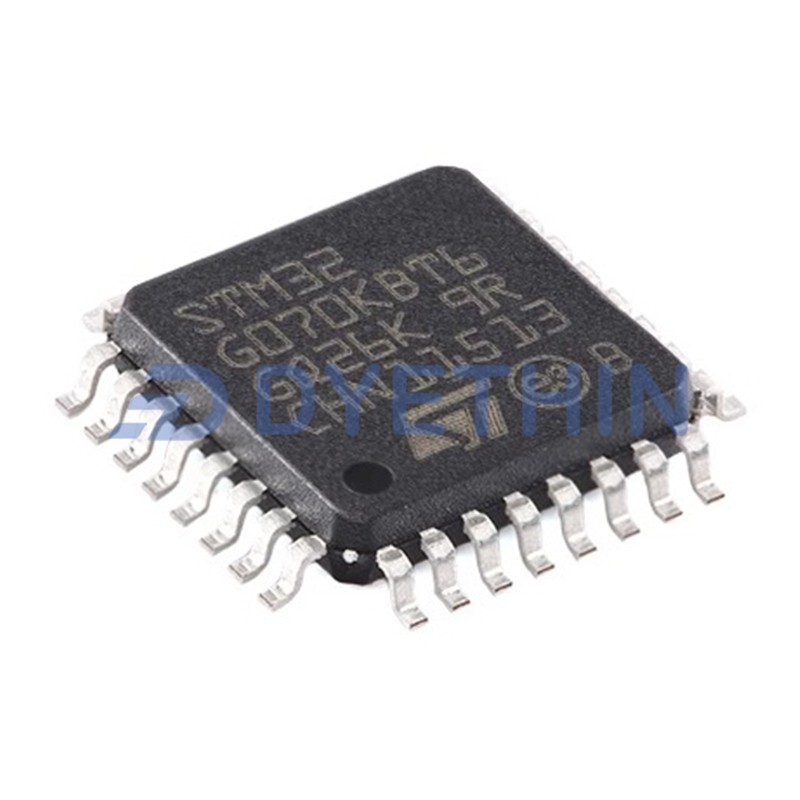
ARM® Cortex®-M0+ STM32G0 Microcontroller IC 32-Bit Single-Core 64MHz 128KB (128K x 8) FLASH 32-LQFP (7x7)