














- Início
- Blogs
- Semiconductor
- How Is a Microprocessor Different From an Integrated Circuit?
How Is a Microprocessor Different From an Integrated Circuit?
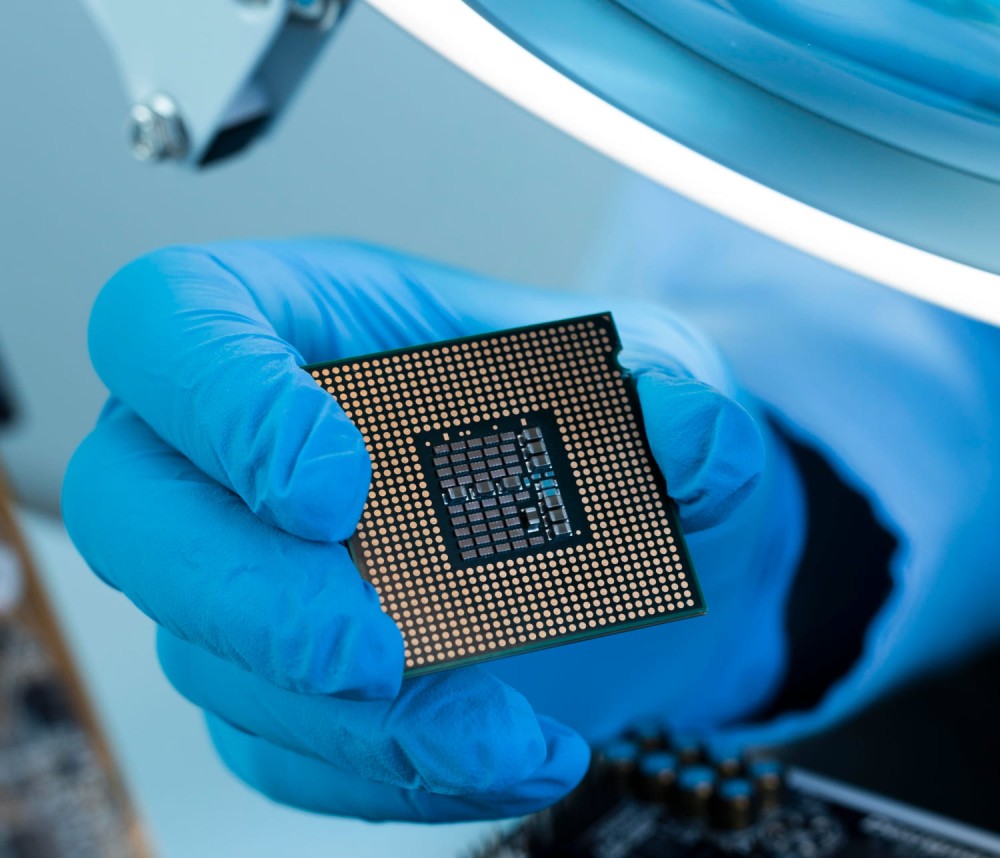
A microprocessor is a specific type of integrated circuit, so the two aren't opponents. Every microprocessor is an IC, but most ICs are not microprocessors.
The dividing line is programmability: a microprocessor runs software instructions you write, while a fixed-function IC performs one hardwired job and nothing else.
Key Takeaways
A microprocessor is one kind of integrated circuit, not its rival. Every microprocessor is an IC; most ICs are not microprocessors.
Programmability draws the line. You feed a microprocessor software, and it changes what it does, while a fixed-function IC is stuck doing its one built-in job.
A microcontroller crams the CPU, memory, and peripherals onto a single chip. A microprocessor keeps a beefier CPU and leaves memory and peripherals off-chip.
A CPU is the processing role; a microprocessor is that role on one chip, usually ringed by cache, extra cores, and other blocks.
Speccing a microprocessor is a bill-of-materials decision, not just a chip pick. It drags a constellation of support parts (external RAM, flash, a PMIC) onto the board alongside it.
Is a Microprocessor Faster, Smaller, and Cheaper Than an IC?
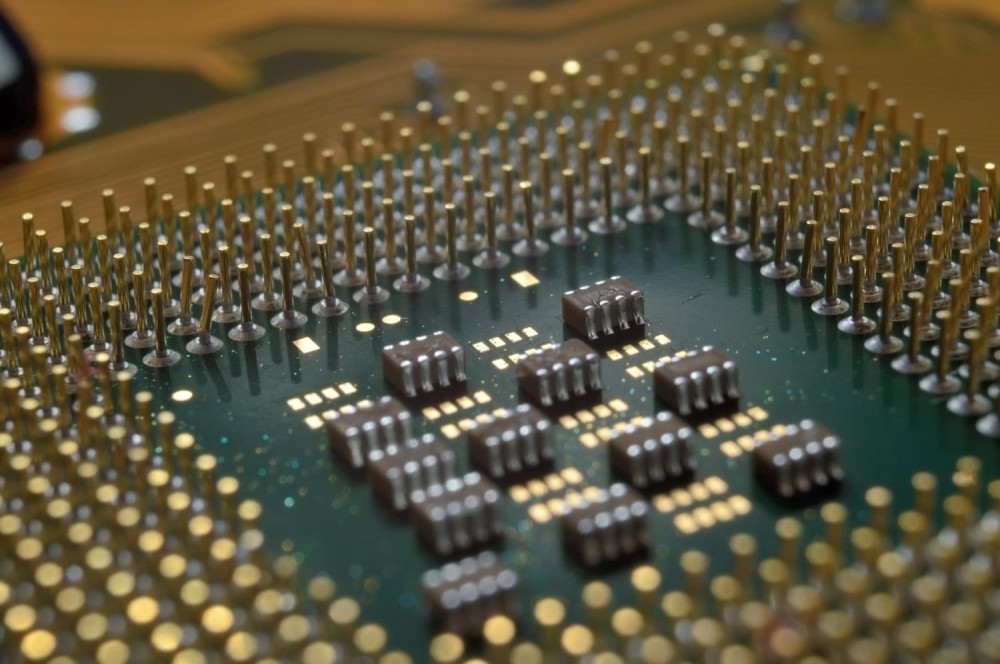
Type the question into a search bar, and you'll trip over a strange answer. Flashcard sites, quiz banks, the whole homework-help crowd, they'll tell you a microprocessor differs from an integrated circuit because it's "faster, smaller, and less expensive."
That answer falls apart the second you poke it.
A microprocessor is an integrated circuit. And a timer chip that costs pennies will undercut any processor on price. So the premise is broken before it starts. You're not looking at two rival gadgets in a cage match. You're looking at a whole family (integrated circuits) and one particular member of it that happens to have a rare talent.
Here's the talent, and it's the only thing you need to hold onto: a microprocessor can be told what to do. Reprogram it, and the same silicon behaves like a different machine entirely. Almost every other IC on your board can't pull that off. Each one was born to do a single job, and it does that job until you cut the power.
So how does a microprocessor differ from an integrated circuit, once you clear away the quiz-bank nonsense? Picture a kitchen. It'll make the rest of this easy.
What Counts as an Integrated Circuit
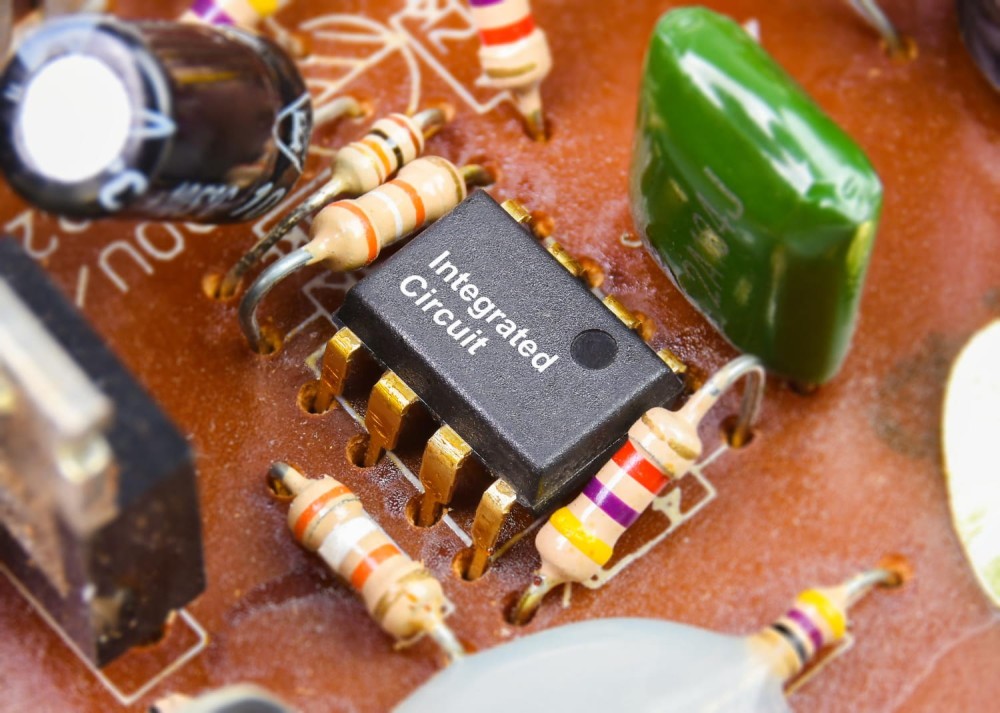
Strip away the mystique and an IC is a pile of tiny parts — transistors, resistors, the odd capacitor — shrunk down and wired together on a single flake of silicon, then sealed in a package with legs. Jack Kilby built the first working one in 1958. Before that, those parts lived as separate components soldered across a board, bulky and fragile. Kilby's move was to squeeze them onto one chip.
The word "integrated" carries the whole idea. The circuit is baked in. Permanent.
Back to the kitchen. An integrated circuit is any appliance on the counter, and some are gloriously single-minded:
The egg timer that buzzes after nine minutes. That's the job of a chip like the NE555PSRG4, a version of the NE555 timer that's been in production since 1972 and still turns up everywhere.
The kitchen scale that reads a faint signal and cleans it up. Analog work, home of the precision op-amp, such as the OP07DD.
The light switch with a temper, flicking on only once a signal crosses a threshold. That's logic, the territory of parts like the CD4093BCMX quad Schmitt-trigger NAND gate.
Not one of those costs much. Not one of them is crude, either. They're carefully engineered. But each knows exactly one trick. And that's the tell. An IC's transistor count can run from a handful to several billion, and it still counts as an IC. Complexity was never what set the categories apart. And those three are only a sample. The wider IC world splits into families like analog, digital logic, mixed-signal, memory, and power management, each one deep enough to fill an article of its own.
Curious how a bare chunk of silicon becomes a finished chip in the first place? We walked through that in the integrated circuit vs semiconductor piece. Or you can scan the integrated circuits catalog and see the range for yourself, from jellybean logic up to fearsomely dense chips.
What Is a Microprocessor, and How Does It Work?
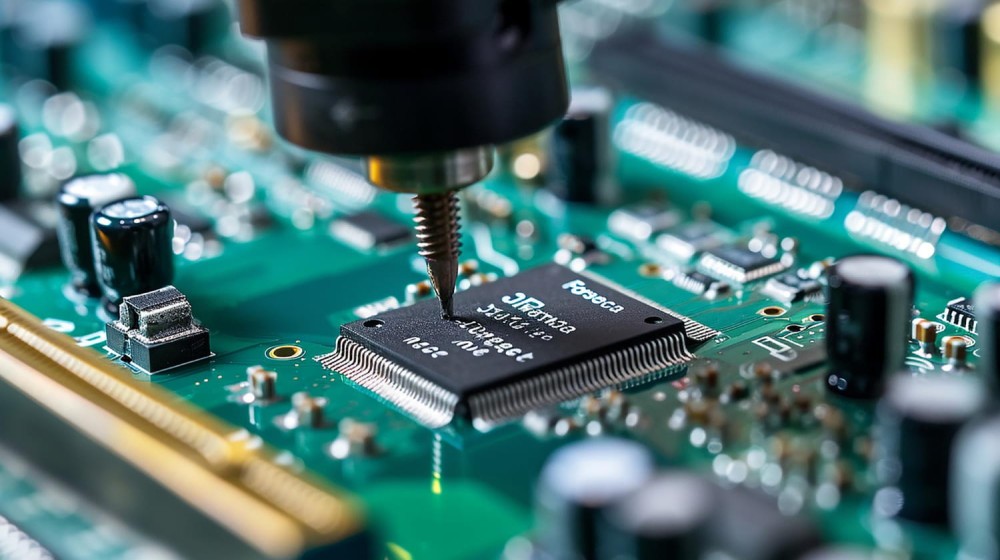
Now the cook walks in, and the cook is the microprocessor, the one chip on the board you hand a recipe to. Formally, it packs the guts of a CPU onto a single die: the arithmetic logic unit that does the math, the control unit that keeps the show on schedule, and a fistful of registers for scratch space. What it doesn't ship with is a purpose. You supply that yourself, in software.
How does a microprocessor work, second to second? It runs a tiny loop, over and over, a few billion times a second:
Fetch. Grab the next instruction from memory. (The cook reads the next line on the order ticket.)
Decode. Work out what that instruction is asking for.
Execute. Do the thing: add these two numbers, compare them, shove this byte over there.
Write back. Stash the result, then reach for the next instruction and start again.
That's the whole magic act. That unglamorous four-step shuffle drives everything from your laptop to the display in your dashboard. Swap the recipe, meaning the firmware, and the cook turns out a different dish on the exact same stove.
Real ones you'd know on sight? The x86 chips from Intel and AMD in desktops. The Arm Cortex-A cores in nearly every phone on the planet. And out in embedded work, families like NXP's i.MX line. One piece of hardware, countless behaviors, every one of them decided by the code you load. Those chips also fall into two design camps, CISC (the x86 lineage) and RISC (the Arm world), a split worth its own deep dive.
Microprocessor vs Integrated Circuit, Side by Side
Set them next to each other and the fuzziness clears up fast.
| Fixed-function IC | Microprocessor | |
| Its role | The specialist, one job | The generalist, does what the code says |
| Programmable? | No, or a few config registers at most | Yes, and that's the entire point |
| What's on the die | Circuitry for its single task | A CPU core: ALU, control unit, registers |
| Behavior | Locked in the day it's made | Rewritten with each new software load |
| Rough cost | Pennies to a few dollars | A few dollars to a few hundred |
| Example parts | NE555 timer, OP07 op-amp, CD4093 logic | NXP i.MX, Arm Cortex-A, x86 |
One sentence collapses that whole table. The microprocessor is the single IC on your board that you program; everything else was hired for one skill and showed up already knowing it.
Microprocessor vs Microcontroller: What's the Difference?
Fair thing to ask, because this is exactly where people tie themselves in knots.
Go back to the cook. A microprocessor is the cook standing alone, brilliant and starving for support gear. A microcontroller is a food truck: cook, mini-fridge, and prep counter all bolted into one small chassis. The processing core, memory, timers, and peripherals — all crammed onto a single chip. It won't out-muscle a full kitchen, but it's cheap, it sips power, and it needs almost nothing bolted on before it starts cooking.
That one distinction steers a huge share of design decisions:
Grab a microcontroller when the job is fixed and frugal. A thermostat. A motor controller. A sensor node that has to run off a coin cell for three years without complaint.
Grab a microprocessor when you need genuine horsepower: a Linux boot, a rich display, gigabytes of RAM, the kind of compute a smart panel or a network gateway chews through.
Want two names you already know? A Raspberry Pi is built around a microprocessor; a classic Arduino runs on a microcontroller.
Both are integrated circuits. Both have a CPU beating away at the center. They just draw the border between "on the chip" and "off the chip" in different spots. Weighing the two for a real design? The microcontroller, microprocessor, and FPGA modules category lines the options up next to each other.
Is a Microprocessor the Same Thing as a CPU?
Microprocessor and CPU… Nearly, and the two words get swapped around constantly without anyone getting hurt. They still aren't twins.
A CPU is a role: the processing core that fetches and runs instructions. A microprocessor is that role built onto one chip. The reason the terms drift apart is that a modern chip carries far more than a lone CPU — think multiple cores, cache, memory controllers, sometimes a whole graphics engine riding the same slab of silicon. Call a desktop processor a "CPU" and you'll be understood every single time. Just keep in the back of your mind that the microprocessor wrapped around it is usually doing more than the CPU label lets on.
What Speccing a Microprocessor Means for Your Bill of Materials
Here's the part the other articles breeze right past, and it's the one that hits the budget.
Speccing a microprocessor is never speccing a single part. Remember the cook stranded in an empty room? A microprocessor shows up brilliant and bare. To make it do anything at all, you bolt on the rest of the kitchen yourself:
External RAM, because the processor left memory off-chip on purpose (call it the walk-in fridge)
Boot flash to hold the firmware it runs (the pantry)
A PMIC to feed its several fussy supply rails (the power hookups)
Clock sources, transceivers, level shifters so it can talk to the world outside (the pass to the dining room)
Pick an NXP i.MX processor such as the MCIMX6X2CVN08AC or the older MCIMX535DVV1C, and you've quietly signed up for a whole constellation of supporting parts. Each one carries its own price, its own lead time, its own odds of going end-of-life before your product does. Even a long-serving veteran like the MC9328MXLCVM15 drags that same support cast along behind it.
Choose a microcontroller instead, and most of that shopping list folds into one line item. Fewer parts to source. Fewer to qualify. Fewer to lie awake over when an allocation crunch dries up supply.
That's the true shape of the microprocessor-versus-IC question. It isn't trivia. It's a decision about how long your bill of materials runs, how many suppliers you're juggling at once, and how badly a single scarce part can stall the whole build.

FAQs
Articles you may also like
Characteristics of CPU, GPU, and FPGA
Silicon controlled rectifier (SCR) and switch control circuit explained
Accurately measure resistor value using ADC
The difference between RAM ROM FLASH

-
-
-
-
-
-
-
-
-
analog-devices-inc
Linear Voltage Regulator IC Positive Adjustable 1 Output 1.2A 16-LFCSP (4x4)