













- Ana Sayfa
- Blogs
- Basic knowledge
- Understanding Toggle Switches: A Comprehensive Guide
Understanding Toggle Switches: A Comprehensive Guide
Toggle switches are ubiquitous in a wide range of circuit products, from small appliance kettles to control panels of large industrial equipment, managing circuit signals with a simple toggle.This guide dives into what toggle switches are, explores their varied types, walks through their primary applications, and gives tips on picking the perfect one for any project.
What is a Toggle Switch?
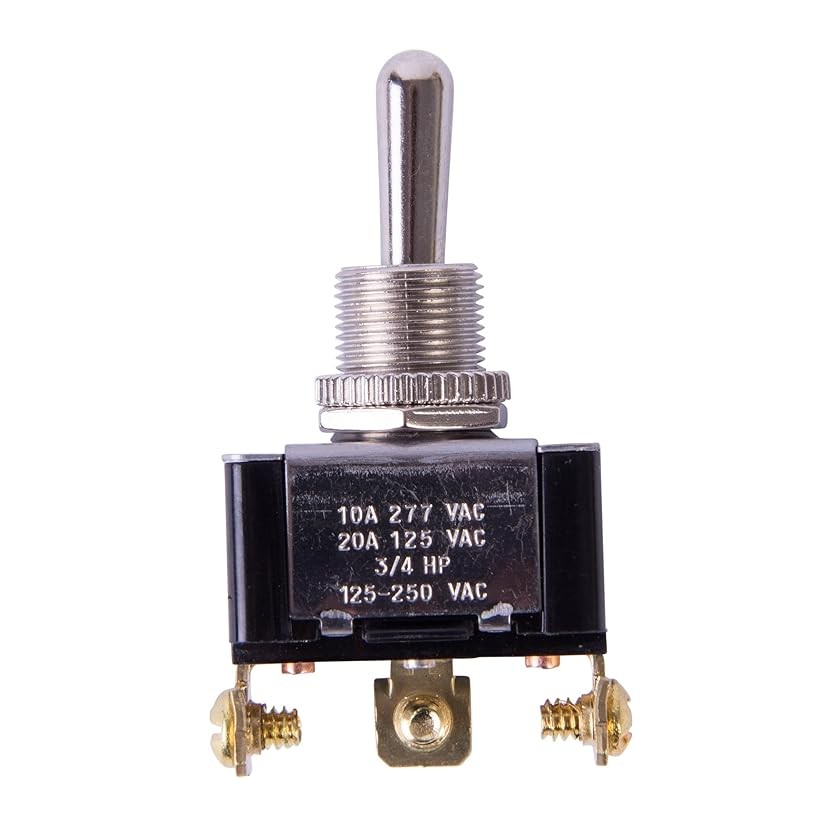
Toggle switch is an electrical switch that works by toggling the switch handle to make or break the circuit in order to switch the circuit.
How Does a Toggle Switch Work?
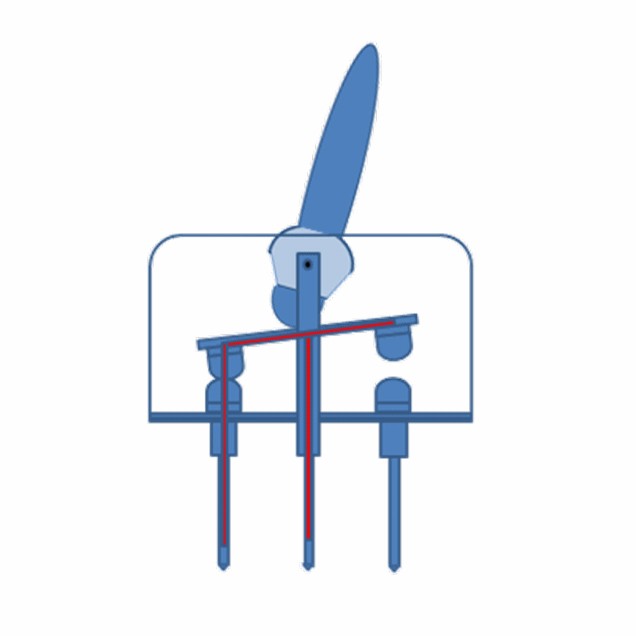
Principle of operation
Toggle switches operate by means of a lever or handle that moves back and forth to open or close a circuit.
The circuit is turned on or off by using the lever to control the current from the power source to the device or within the device.
The Mechanics of a Toggle Switch
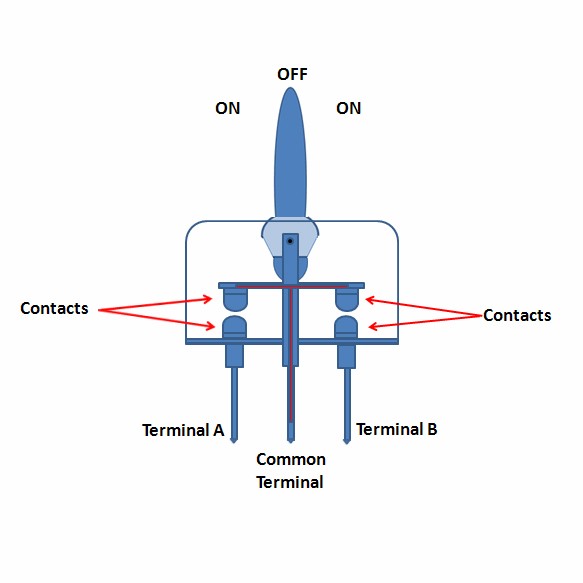
A toggle switch is a seesaw on a microscopic scale, with a lever joined to contacts by a mechanical link. Flicking the lever swaps the switch's state by playing matchmaker or heartbreaker to the contacts below.
Main Characteristic Parameters
Electrical performance specifications include contact resistance test (30 milliohms or less required), insulation resistance test (100 megohms or more required), withstand voltage test (no abnormalities such as insulation damage), etc.
Mechanical performance specifications include action force routine (usually 250 grams), etc.
Electrical Contacts: The Heart of the Switch
Toggle Arm: The toggle arm is one of the core parts of a toggle switch and is usually made of metal. When the user performs a switching operation, the toggle arm moves up or down to open or close the circuit.
Contacts: Contacts are another core part of a toggle switch and are usually made of metal materials such as silver, nickel or palladium. They fit snugly into the toggle arm to open or close the circuit and provide a stable electrical connection.
Spring: The spring is one of the most important components of a toggle switch and is usually used to ensure a tight connection between the toggle arm and the contacts and to provide good flexibility.
Types of Toggle Switches: An In-Depth Look
Types of toggle switches commonly used in circuit projects:
Single-Pole Single-Throw (SPST)
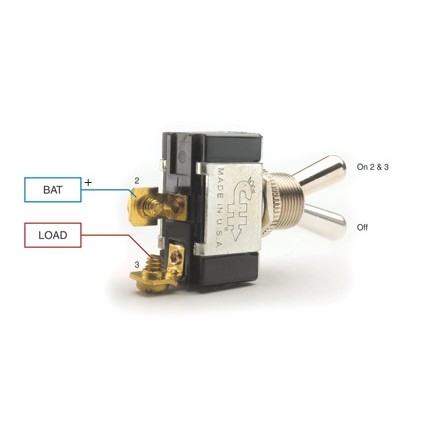
Description: Think of the SPST switch as the straightforward "yes or no" of the toggle world. With just one path in (the pole) and one path out (the throw), it's the epitome of simplicity, acting as an on/off switch.
Mechanism: Flip the switch 'on,' and you will have a connection that makes electricity flow between two terminals. Flip it 'off,' and it's like they've never met - the flow stops.
Construction: Simplicity at its best; SPST switches often come with a handle or a lever to move those internal contacts. Ideal for when you need a simple yes or no to power.
Single-Pole Double-Throw (SPDT)
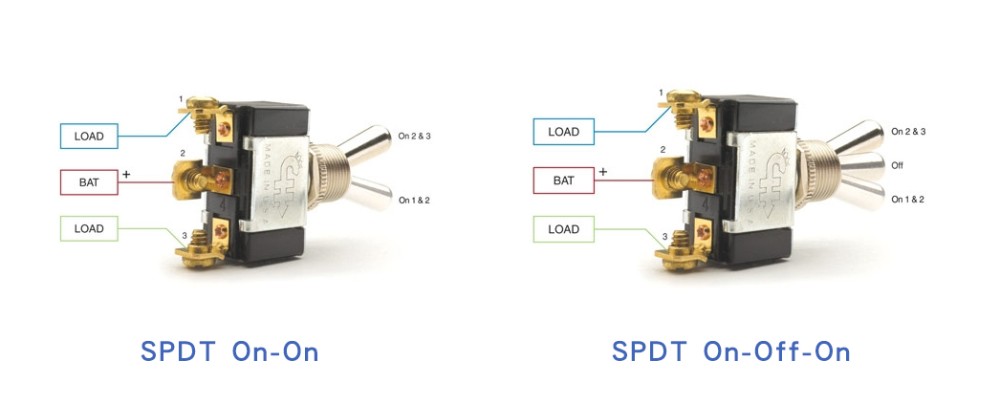
Description: The SPDT switch adds a little twist to the plot with one input lane (pole) but two exits (throws), making it the toggle equivalent of a fork in the road.
Mechanism: Position one links the input with output one; flip it, and now the input chats with output two. Like a road trip switcheroo, it lets you choose between two destinations.
Construction: A smidge more complex, SPDT has an extra terminal for that second output, making it the switch when one choice isn't enough.
Double-Pole Single-Throw (DPST)
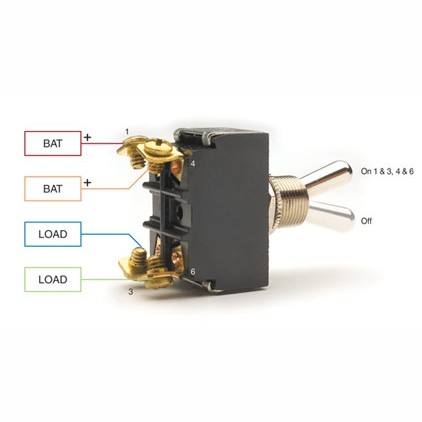
Description: Imagine the DPST as two SPST switches fused into one. It's got double the input (two poles) and double the output (two throws) but dances in unison to the same tune.
Mechanism: A single flip connects or disconnects both pairs of terminals, allowing control over two circuits with a single gesture.
Construction: Heftier due to its dual nature, DPST switches cater to those instances where controlling two paths simultaneously is the name of the game.
Double-Pole Double-Throw (DPDT)
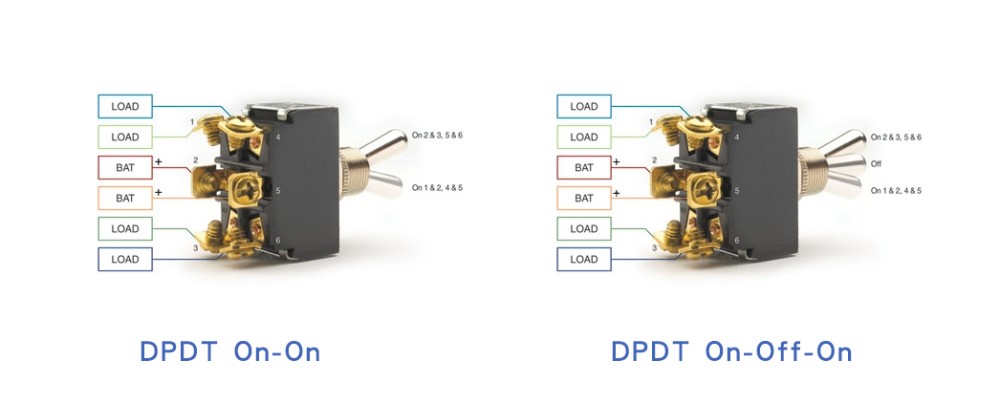
Description: The DPDT switch is the "choose your adventure" toggle. With two inputs (poles) and four outputs (throws), it's all about controlling two separate circuits and navigating between two options for each.
Mechanism: Like the SPDT's big brother, it switches each input between two outputs but with the prowess to handle two circuits simultaneously.
Construction: Complex and capable, the DPDT switch has the construction to juggle multiple terminals and ensure both poles switch in sync, perfect for when your electrical needs are more ambitious.
Specialized Variants
Alongside the basic models, we find toggle switches that break the mold, crafted for particular tasks:
Center-Off: Imagine a switch that rests not just in "on" or "off" but also in a peaceful middle ground. This is the center-off toggle switch. It's perfect when you need a pause between actions, like a breath between notes in music.
Momentary: Ever pressed a button that snaps back as if saying, "That's enough"? That's a momentary toggle switch for you. It's like hitting a note on a piano - the sound only lasts as long as you press the key. You'll find these in gadgets that need a quick burst of action, like a doorbell ringing to announce a guest.
Illuminated: These switches shine in the dark, literally. With a built-in light, stars on your control panel guide you right where you need to go without fumbling in the dark.
Sealed: Imagine a fortress. Now, shrink it down and wrap it around a toggle switch. That's a thick seal. It is impervious to dust, water, and the elements and ready for any adventure outdoors or in challenging environments.
Grasping the various types of toggle switches arms you with the knowledge to pick precisely what you need. It could be for a simple task like lighting up a room or something as grand as orchestrating industrial machinery.
Applications of Toggle Switches
Toggle switches are widely used in both residential and commercial applications, the main areas are:
Home appliance applications
Light switch control: Toggle switches are commonly used for light switch control in indoor lighting systems, such as wall panel switches and floor pedal switches.
Electronic equipment start-stop: It can also be used for start-stop control of electronic equipment, such as the power switch of audio and other equipment, to directly control the start and stop of the equipment.
Multi-speed adjustment: Toggle switches can also be used for multi-speed adjustment control, such as adjusting the brightness of the lights, the size of the fan's air volume, etc.
Circuit switching: In household electrical appliances, it can also be used for circuit switching, such as the vibration mode switch of cell phones, music playback mode switch and so on.
Automotive electronics
Air Conditioning Control Panels : Multiple toggle switches are commonly used on the air conditioning control panels of automobiles to regulate the temperature, air speed, and air direction inside the vehicle.
Circuit Protection
Toggle switches can also be used for circuit protection. For example, by disconnecting one part of the circuit, it prevents overloading or short-circuiting of the current and protects the normal operation of other parts.
Function switching
Toggle switches are also often used to switch the function of a device. For example, in a television set, a toggle switch can be used to switch between different modes such as TV, DVD, games, etc.
Choosing the Right Toggle Switch
Picking the perfect toggle switch isn't just important—it's essential for your setup's smooth operation, safety, and effectiveness. Let's dive into the key aspects you need to think about:
Current and Voltage Ratings
The Basics of Ratings: Imagine a toggle switch as a bridge for electricity. Its current and voltage ratings tell you how much electrical traffic it can manage without causing a jam (in this case, overheating and failure). It's all about the switch's design and materials.
Matching to Your Needs: Ensure the switch's electrical capacity aligns with your project's needs. Go too low, and you might end up with a switch that's more of a fire starter than a component.
Environmental Conditions
Dealing with the Elements: Planning to use your switch in the great outdoors or a demanding workplace? It must hold its own against weather tantrums, humidity fits, and any chemical splashes it might face.
Choosing Armor: Seek out switches that have a suit of armor (technically, environmental protection ratings, like IP scores) tailored to the challenges of your specific environment.
Size and Mounting
A Place to Fit: It's a game of Tetris. Measure your space to ensure the switch doesn't just squeeze in but fits comfortably without elbowing out other essential components.
How It Holds Up:
Think about how you'll secure the switch.
Whether it's sticking to a panel or a PCB, ensure it's a match.
Remember to pick an actuator that feels right to the touch and is easy to use.
Durability
The Marathon Runners: Durability translates into how many clicks and flicks (cycles) a switch can handle before calling it quits. If your switch will see a lot of action, aim for one that can go the distance.
Built Tough: Quality materials are the secret ingredients for switches that don't easily give in to wear and tear from physical use and electrical stress.
By keeping these insights in hand, you'll choose a toggle switch that meets your current needs and stands reliable over time. Remember, it's all about finding that balance—matching your demands while ensuring the switch can handle the conditions it will face.
Common faults and solutions
The switch cannot be flipped
Possible cause: Dust or debris accumulation causes the toggle is not smooth.
Solution: Use a cleaning cloth to gently wipe the surface of the switch, or use a hair dryer to remove dust.
The switch is loose
Possible cause: The use time is too long, the internal parts of the switch are loose.
Solution: Use a screwdriver to tighten the screws on the switch to ensure that the parts are firmly connected.
The switch makes noise
Possible cause: The internal parts of the switch are worn or loose.
Solution: Use lubricating oil to drip into the inside of the switch to make the parts run more smoothly and reduce noise.
The switch is broken
Possible cause: The switch with poor quality is easy to break, or it is broken by external force.
Solution: Choose a reliable quality brand to buy the switch, and pay attention to avoid external force impact. In case of breakage, replace the new switch in time.
The switching circuit is faulty
Possible cause: The switch cannot work properly due to poor cable connection or circuit aging.
Solution: Check whether the wire connection is firm, if there is aging or damage, replace the circuit and reconnect in time.
Additional Considerations
Aesthetic and Ergonomic Factors: When diving into consumer-driven products, the visual appeal and user interaction with a toggle switch are paramount. The design isn't just about looking good; it's about feeling right in the user's hand. A switch must blend seamlessly with its environment and offer that satisfying click, a tactile confirmation of an action taken.
Certifications and Standards: Navigating the maze of regulatory requirements specific to your project is crucial. This means ensuring your toggle switch isn't just a switch but a certified guardian of safety and efficacy. Different regions and sectors have rulebooks—understanding and adhering to these can make or break the path to compliance.
Articles you may also like
CR2025 Battery: Equivalent, Specifications and Replacements
CR1632 vs CR2032: Are CR1632 and CR2032 battery equivalent?
CR1616 Battery Equivalent: Best Replacement Guide
CR2430 Battery Replacements, Equivalents, and Applications