













- Startseite
- Blogs
- Basic knowledge
- The Principle and Application of Reed Switch
The Principle and Application of Reed Switch
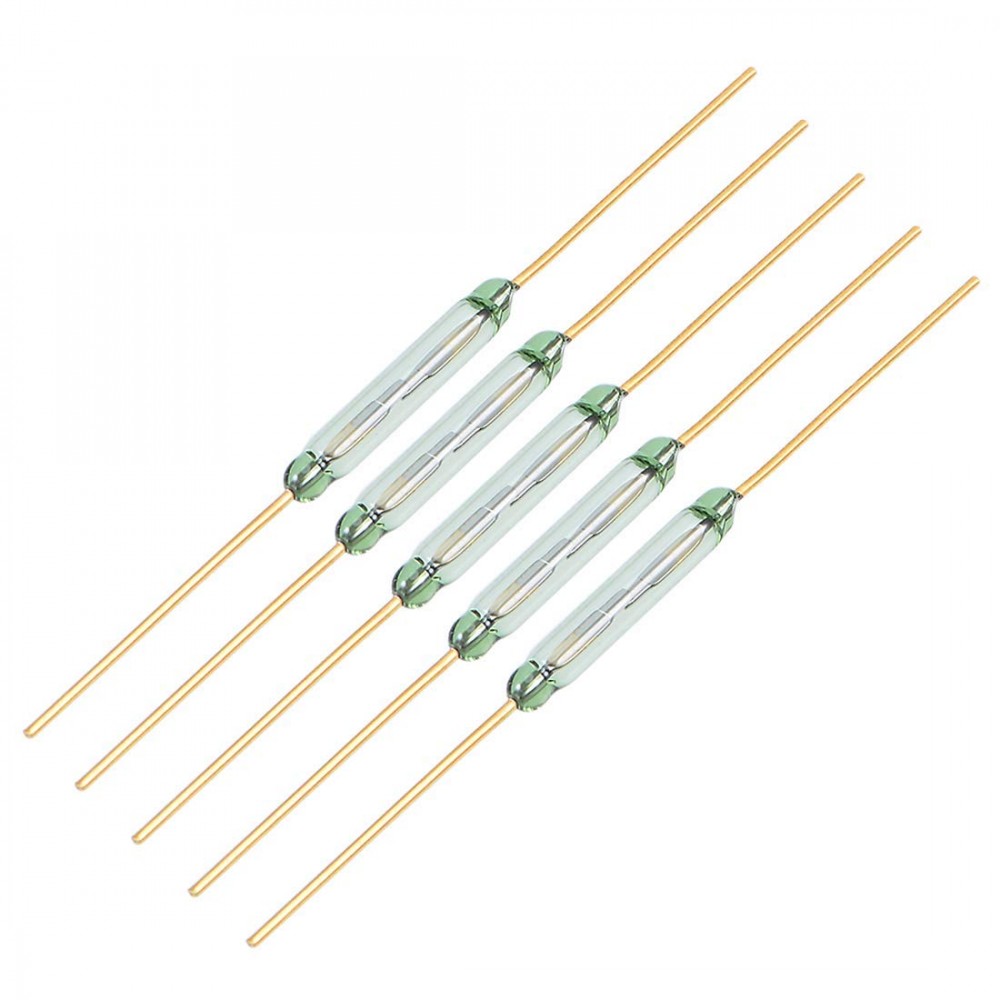
1. The principle of reed switch
A reed switch is an electrical switch operated by a magnetic field.
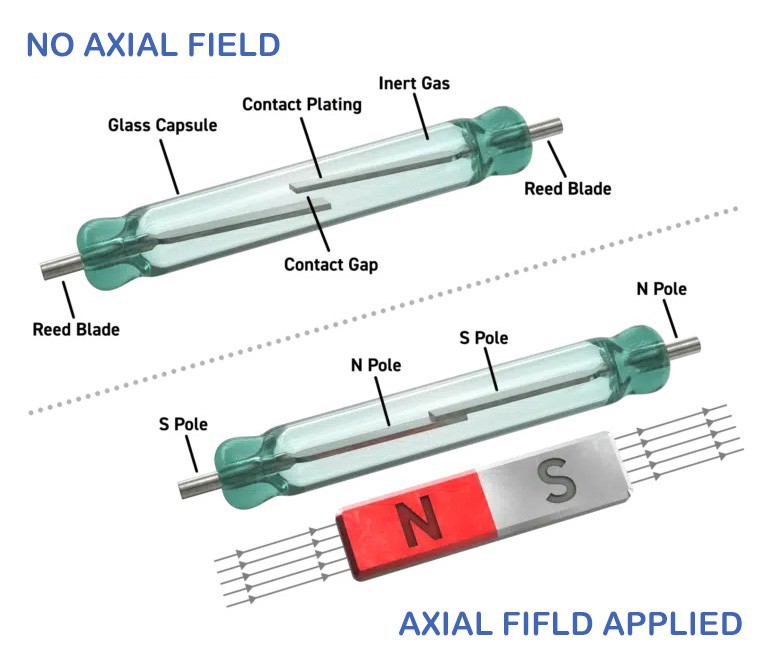
The structure of a reed switch is generally composed of two soft magnetic metal reeds sealed inside a glass tube; The spacing between the two reeds is very small, as shown in the following figure:
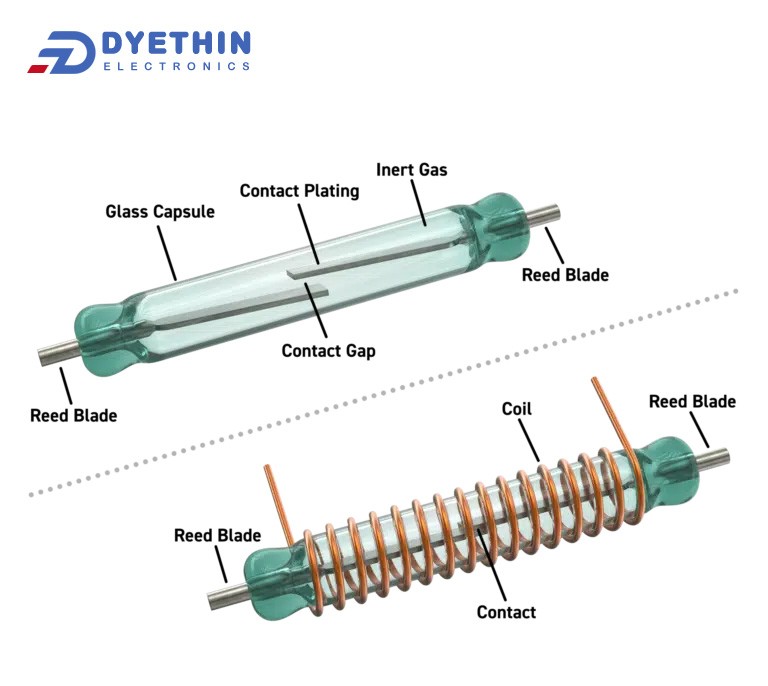
Its working principle is that when an external magnetic field approaches, two springs are magnetized to generate magnetic fields of different polarities. When the magnetic field strength is sufficient, the two springs will be attracted together, so that the switch is conductive; When the external magnetic field is away, the reed gradually demagnetizes and disconnects, and the switch opens. Therefore, it is an electrical switch operated by a magnetic field.
(The above figure shows the structure of a set of normally open switch reed switchs, which can also be in the form of single pole double throw. This article will explain the most common set of normally open reed switchs)
2. Installation direction of the reed switch
When using, pay attention to the installation direction of the reed switch.
According to the principle of a reed switch, when the magnetic field approaches, two metal reeds must be magnetized to different polarities in order to make the switch conductive. Therefore, the magnetic field lines must pass through both reeds simultaneously in order to make the reed switch conductive.
For example, the magnetic field lines of a bar magnet are distributed as follows:
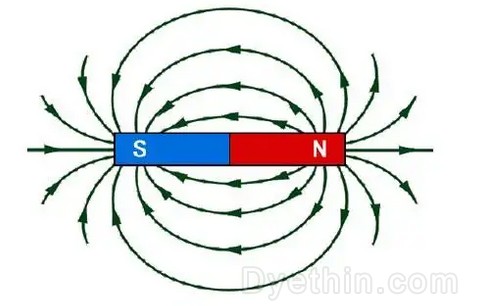
As shown in the following figure, it is the simplest conduction method to use a bar magnet:
The north and south poles of the magnet are parallel to the direction of the reed switch. Approaching them will make the reed switch conductive, while moving away will cause the reed switch to disconnect.
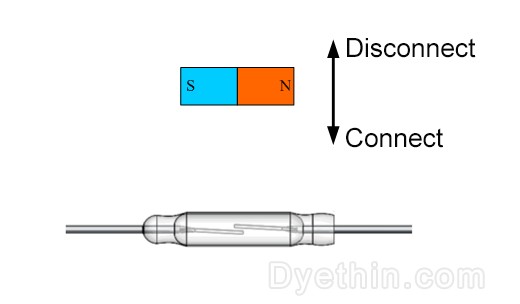
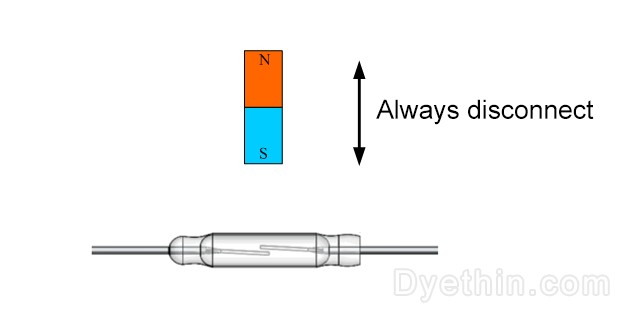
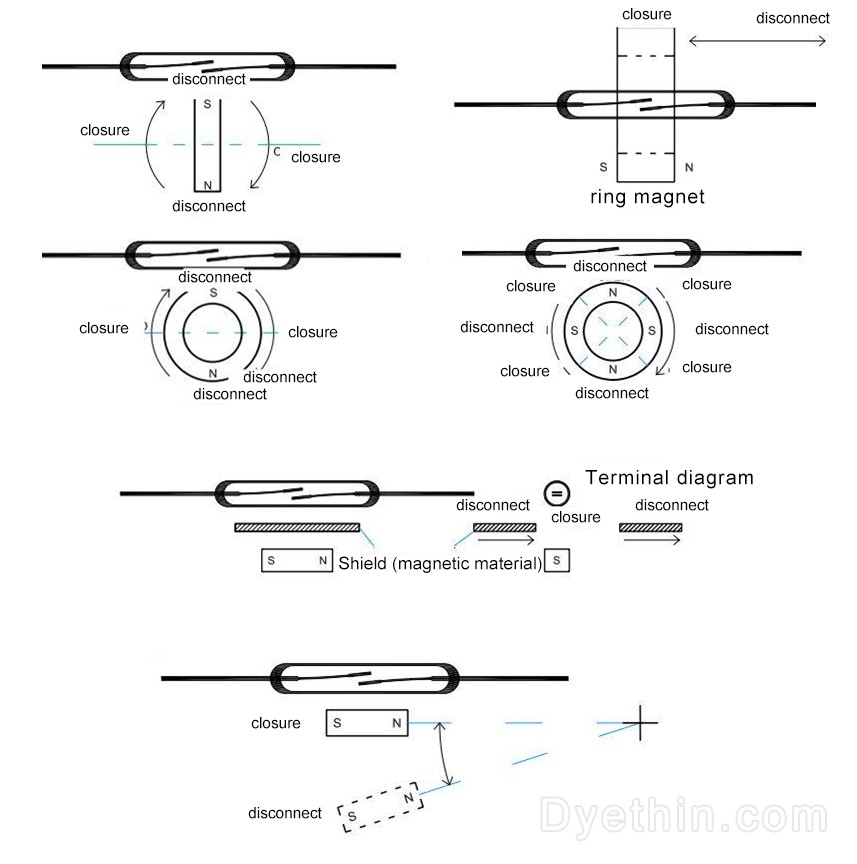
Moving as shown in the following figure does not control the conduction of the reed switch, it will remain disconnected:
The reason is that when moving in this way, the two reeds of the reed switch are magnetized to the same polarity and will not attract each other. Instead, they will repel each other and move away due to the same polarity.
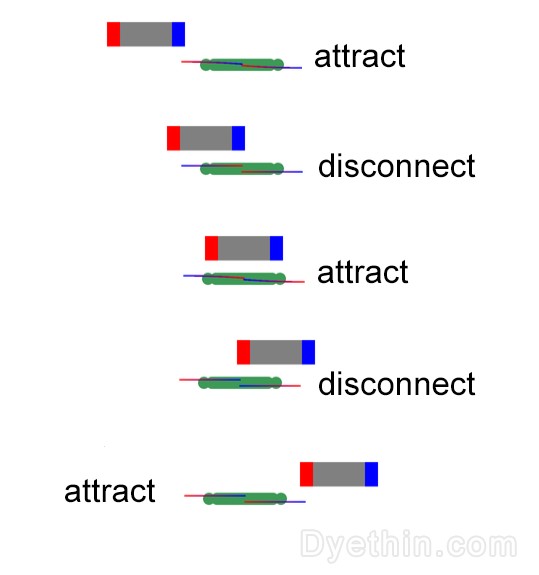
It can be simply inferred that when the magnet is parallel to the reed switch and moves from left to right, the following form of control is obtained to control the on-off state:
Some other commonly used installation and usage methods are shown in the following figure:
3. Characteristics and applications of reed switch
The glass tube of the reed is sealed with inert gas (also vacuum), so the reed is less affected by moisture and oxidation, making it more reliable; Small size, low cost, and low requirements for structural design; Due to the small reed of a reed switch, its connection and disconnection speed is relatively fast, usually 5-10 times faster than a relay.
By using magnetic field control switches, it can be applied to non-contact circuit control, such as installing reed switchs on the doors of water level switches, washing machines, and induction cookers, which can detect the opening and closing status of the doors.
The disadvantage of reed switchs is that they have a small switching capacity and can only withstand weak currents; When the external magnetic field is weak, the contacts are prone to shaking or poor contact; Glass tubes are afraid of vibration and are fragile; Do not use too high a temperature during welding, as it may cause deformation of the spring.
Articles you may also like
CR2025 Battery: Equivalent, Specifications and Replacements
Understanding Toggle Switches: A Comprehensive Guide
CR1632 vs CR2032: Are CR1632 and CR2032 battery equivalent?
CR1616 Battery Equivalent: Best Replacement Guide