














- Startseite
- Blogs
- Basic knowledge
- Source of transistor and difference between NPN and PNP
Source of transistor and difference between NPN and PNP
History of Transistors
Reviewing History
Before sharing the NPN and PNP of transistors, let me share some basic knowledge.
Electronic tube
Before the emergence of transistors, there was a device with a function similar to that of a transistor, called an electron tube.
In 1904, the world's first electronic diode was born under the hands of British physicist Fleming.
Electronic tube is one of the earliest electronic signal amplification devices.
A cathode electron emission part, control gate, acceleration gate, and anode (screen) lead that is enclosed in a glass container (usually a glass tube) are soldered onto the tube base, and electronic modulation signals are injected into the control gate in vacuum using an electric field. Different parameter signal data after signal amplification or feedback oscillation are obtained at the anode.
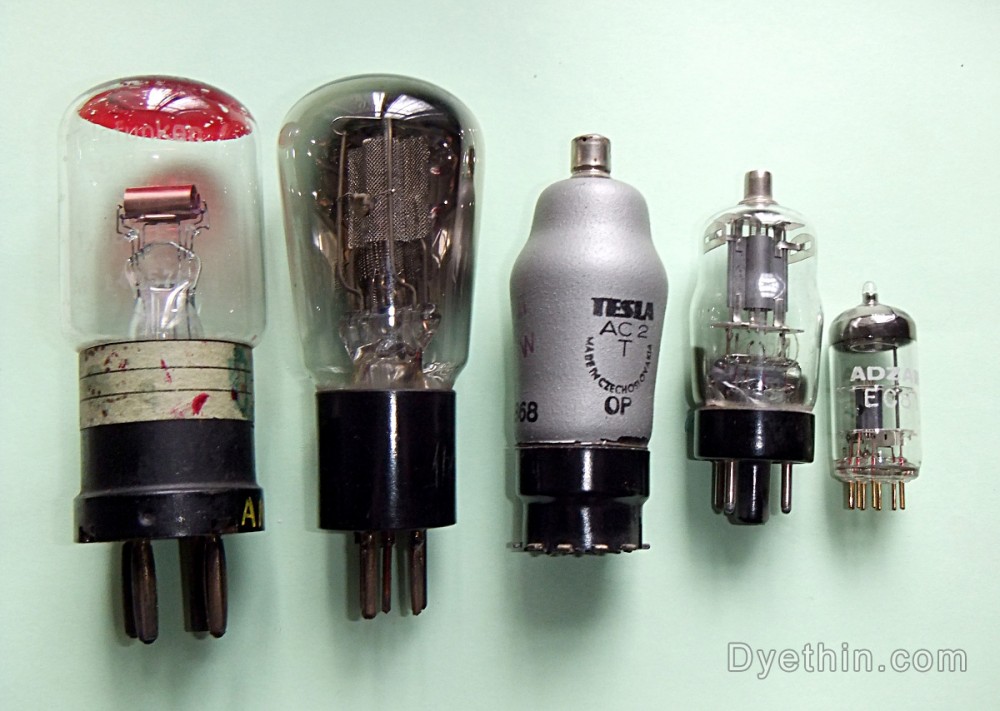
Early transistor
Electronic tubes were used in early electronic products such as televisions and radio amplifiers. In recent years, they have gradually been replaced by amplifiers and integrated circuits made of semiconductor materials. However, in some high fidelity audio equipment, low noise and high stability electronic tubes are still used as audio frequency power amplifiers.
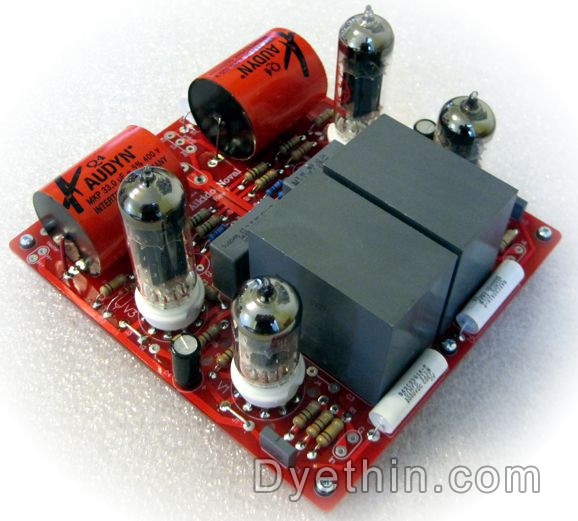
Circuit boards using early transistors
Advantages and disadvantages of electronic tubes:
Disadvantages: Large volume, high power consumption, severe heat generation, short lifespan, low power utilization efficiency, fragile structure, and the need for high-voltage power supply.
Advantages: Strong load capacity, superior linear performance to transistors, high operating frequency, and superior to transistors in high-frequency and high-power fields.
The volume of electrons is relatively large (compared to transistors). In 1946, the world's first computer was built using 1.8W electronic tubes, covering an area of 150 square meters, weighing 30 tons, and consuming approximately 150 kilowatts of electricity.

Ancient Computers
What Is a Transistor?
Transistors
Due to the many drawbacks of electronic tubes, humans have invented more advanced transistors than electronic tubes.
A transistor is a solid-state semiconductor device that includes diodes, transistors, field-effect transistors, thyristors, etc. It has various functions such as detection, rectification, amplification, switching, voltage stabilization, signal modulation, etc.
December 16, 1947: William Shockley, John Barton, and Walter Bratton successfully manufactured the first transistor at Bell Labs.
First transistor model:
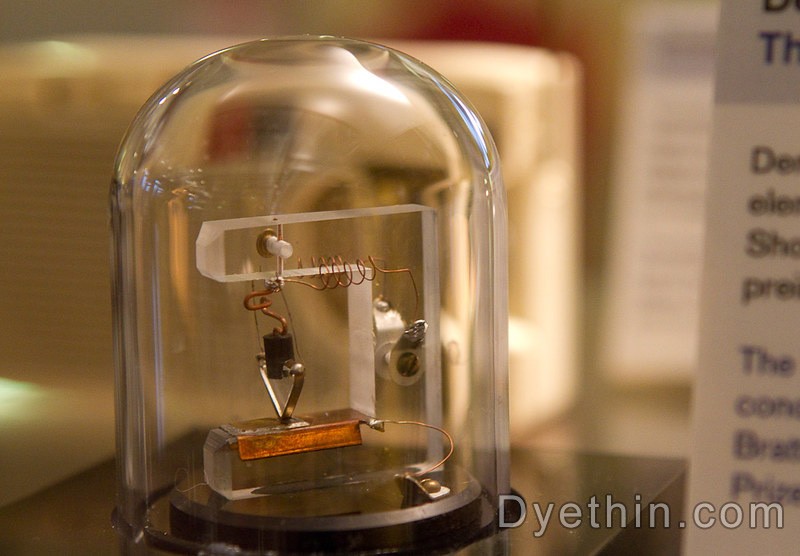
First transistor model
Transistors, as a variable current switch, can control output current based on input voltage. Unlike ordinary mechanical switches, transistors use electrical signals to control their opening and closing, and the switching speed can be very fast, with a switching speed of over 100GHz in the laboratory.
Previously, I also shared a video with everyone on the working principle of transistors
Anyone who wants to watch the video can click on the link above.
The above video shows the basic working principle of transistors.
What Is a Triode?
Transistor
Triode, also known as semiconductor transistor, also known as bipolar transistor or crystal transistor, belongs to a type of transistor.
A transistor is a semiconductor device that controls current. Its function is to amplify weak signals into electrical signals with larger amplitude values, and it is also used as a contactless switch.
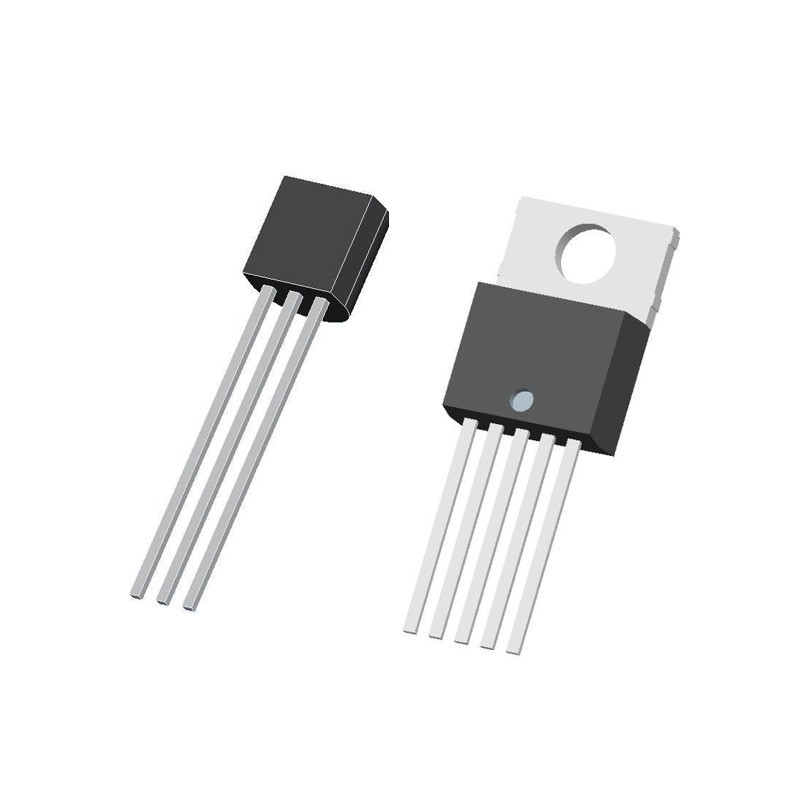
Triode
Triode is one of the basic semiconductor components, which has the function of current amplification and is the core component of electronic circuits. A transistor is a device that produces two PN junctions that are very close together on a semiconductor substrate. The two PN junctions divide the entire semiconductor into three parts, with the middle part being the base region and the two sides being the emitting and collecting regions. There are two types of arrangement: PNP and NPN.
NPN vs PNP Overview
Differences between NPN and PNP
N: Negative
P: Positive
There are two types of crystal transistors based on their materials: germanium tubes and silicon tubes. And each type has two structural forms: NPN and PNP, but the most commonly used are silicon NPN and germanium PNP transistors.
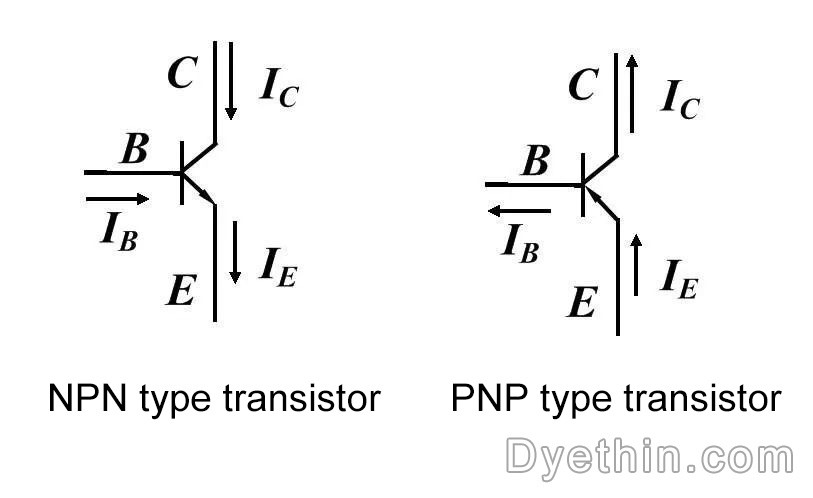
Different definitions
NPN type transistor: composed of two N-type and one P-type semiconductors, with P-type semiconductors in the middle and two N-type semiconductors on both sides. Triode is the most important device in electronic circuits, with its main functions being current amplification and switching.
PNP type transistor: A transistor composed of two P-type semiconductors sandwiched between one N-type semiconductor, hence it is called a PNP type transistor. It can also be described as a transistor in which current flows from emitter E.
Current Control Differences
Different current control
NPN: Use B → E current (IB) to control C → E current (IC). The E-pole potential is the lowest, and during normal amplification, the C-pole potential is usually the highest, i.e. VC>VB>VE
PNP: Control the current (IC) of E → C using the current (IB) of E → B. The E-pole potential is the highest, and during normal amplification, the C-pole potential is usually the lowest, i.e. VC<VB<VE
Output State Differences
Different output states
PNP and NPN type sensors actually utilize the saturation and cutoff of the transistor to output two states, belonging to switch type sensors. But the output signal is completely opposite, that is, high level and low level. The NPN output is low level 0, while the PNP output is high level 1.

Articles you may also like
CR2025 Battery: Equivalent, Specifications and Replacements
Understanding Toggle Switches: A Comprehensive Guide
CR1632 vs CR2032: Are CR1632 and CR2032 battery equivalent?
CR1616 Battery Equivalent: Best Replacement Guide

-
-
-
-
-
-
nxp-usa-inc
I2C, 2-Wire Serial Real-Time Clock IC with Battery-Backed SRAM and EEPROM
-
-
-
stmicroelectronics
ARM® Cortex®-M7 STM32H7 Microcontroller IC 32-Bit Single-Core 550MHz 1MB (1M x 8) FLASH 100-LQFP (14x14)