













- Startseite
- Blogs
- Basic knowledge
- Is the gnd of the microcontroller and chip connected to the negative pole of the power supply?
Is the gnd of the microcontroller and chip connected to the negative pole of the power supply?
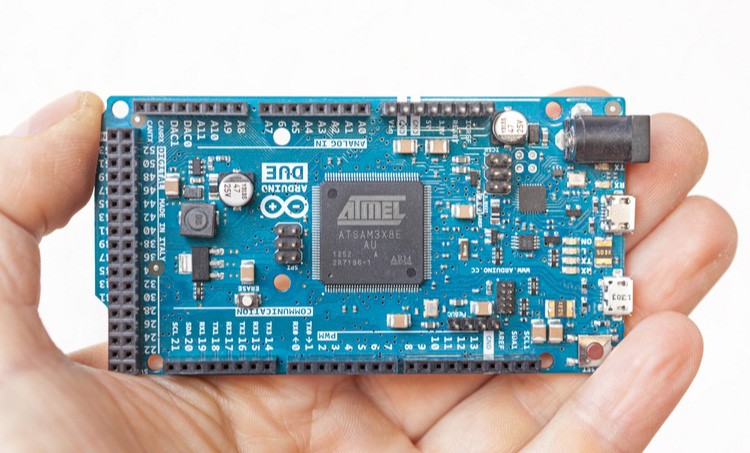
Ask a simple but difficult to answer circuit question: What is the nature of the ground wire GND in the circuit?
During the PCB Layout process, engineers will face different GND treatments.
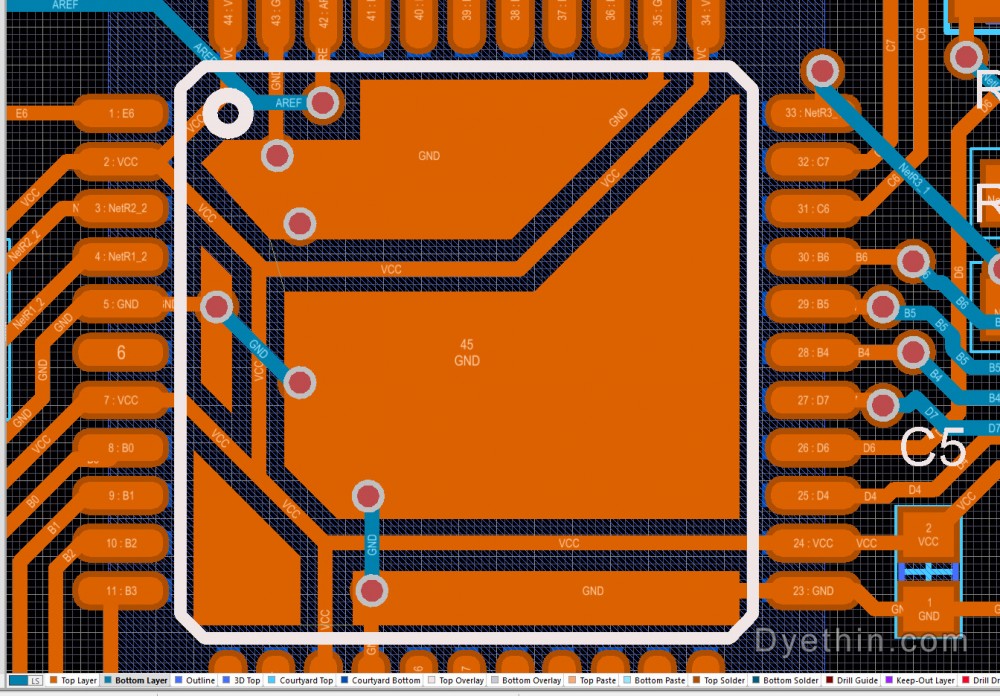
Why is this? In the circuit principle design stage, in order to reduce mutual interference between circuits, engineers generally introduce different GND ground wires as 0V reference points for different functional circuits to form different current loops. Classification of GND ground wires:
Analog ground wire AGND
Analog ground wire AGND Analog ground wire AGND is mainly used in analog circuits, such as ADC acquisition circuits of analog sensors, operational amplification ratio circuits, etc. In these analog circuits, since the signal is an analog signal and a weak signal, it is easily affected by the large current of other circuits. If no distinction is made, large current will produce a large voltage drop in the analog circuit, which will distort the analog signal and may seriously cause the functional failure of the analog circuit.
Digital groundwire DGND
Digital groundwire DGND Digital ground wire DGND is obviously compared to analog ground wire AGND. It is mainly used for digital circuit parts, such as button detection circuits, USB communication circuits, microcontroller circuits, etc. The reason why the digital ground line DGND is established is that digital circuits have a common characteristic, they are all discrete switching signals, and only the digital "0" and the digital "1" are distinguished, as shown in the figure below.
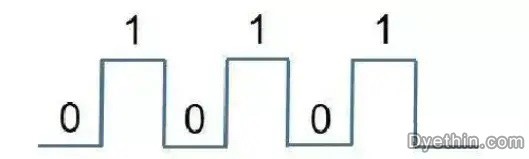
In the process of jumping from a digital "0" voltage to a digital "1" voltage, or in the process of jumping from a digital "1" voltage to a digital "0" voltage, a change occurs in the voltage. According to Maxwell's electromagnetic theory, the change A magnetic field will be generated around the current, which will form EMC radiation to other circuits.
There is no way. In order to reduce the EMC radiation impact of the circuit, a separate digital ground wire DGND must be used to effectively isolate other circuits.
Power ground wire PGND and analog AGND
Whether it is the power ground wire PGND, the analog ground wire AGND, or the digital ground wire DGND, they are all low-power circuits. In high-power circuits, such as motor drive circuits, solenoid valve drive circuits, etc., there is also a separate reference ground wire. This reference ground wire is called the power ground wire PGND. High-power circuits, as the name suggests, are circuits with relatively large current. Obviously, large currents can easily cause ground offsets between circuits with different functions, as shown in the figure below.
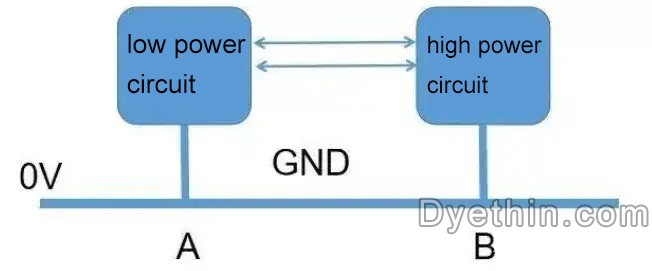
Once there is a ground offset in the circuit, the original 5V voltage may not be 5V, but become 4V. Because the 5V voltage refers to the GND ground line 0V, if the ground offset causes the GND ground line to rise from 0V to 1V, then the previous 5V (5V-0V=5V) voltage becomes the current 4V (5V-1V= 4V).
Power ground wire GND
The power ground wire GND, the analog ground wire AGND, the digital ground wire DGND and the power ground wire PGND are all classified as DC ground wire GND. These different types of ground wires will eventually be brought together as the 0V reference ground wire for the entire circuit. This ground wire is called the power ground wire GND.
Power supply is the source of energy for all circuits. The voltage and current required for all circuit operations come from the power supply. Therefore, the ground wire GND of the power supply is the 0V voltage reference point for all circuits.
This is why other types of ground, whether it is analog ground AGND, digital ground DGND or power ground PGND, ultimately need to be brought together with the power ground GND.
AC ground wire CGND
AC ground wire CGND AC ground wire CGND generally exists in circuit projects containing AC power supply, such as AC-DC AC to DC power supply circuits.
AC-DC power circuit is divided into two parts. The front stage in the circuit is the AC part, and the back stage in the circuit is the DC part. This forces the formation of two ground wires, one is the AC ground wire, and the other is the DC ground wire.
The AC ground wire serves as the 0V reference point for the AC circuit part, and the DC ground wire serves as the 0V reference point for the DC circuit part. Usually in order to unify a ground wire GND in the circuit, engineers will connect the AC ground wire to the DC ground wire through a coupling capacitor or inductor.
The safe voltage of the earth wire EGND
The safe voltage of the earth wire EGND for the human body is below 36V. If a voltage exceeding 36V is applied to the human body, it will cause damage to the human body. This is a safety common sense for engineers when developing and designing circuit project plans.
In order to enhance the safety factor of the circuit, engineers generally use the earth's ground wire EGND in high-voltage and high-current projects, such as in the circuits of household appliances such as fans, refrigerators, and televisions. A socket with earth wire EGND protection function, as shown in the figure below.
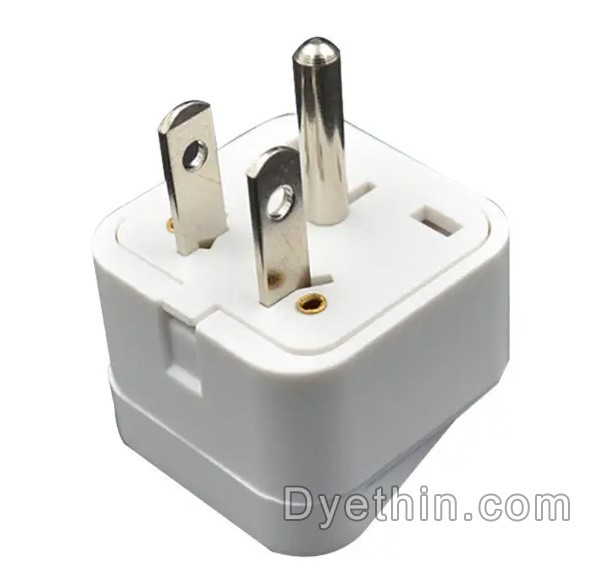
Why do household appliance sockets have three terminals? 220V AC only requires live wire and neutral wire, two are enough, so why does the socket have three terminals?
There are three terminals on the socket, two of which are for the 220V live and neutral wires, and the other terminal is the protective earth wire EGND.
What Dyethin wants to focus on is the earth ground wire EGND. It is only connected to our earth and plays a high-voltage protection role. It does not participate in the circuit function of the project and has nothing to do with the circuit function.
Therefore, the earth ground wire EGND has obvious circuit meaning differences from other types of ground wires GND.
Engineers who study the principles of GND in detail may ask, how can a ground wire GND have so many distinctions, and how can a simple circuit problem become so complicated?
Why do we need to introduce so many subdivided GND ground wire functions?
For this type of GND ground wire design problem, engineers usually simply name it GND without distinguishing it during the schematic design process. As a result, it is difficult to effectively identify GND ground wires with different circuit functions during PCB wiring. Simply and simply Connect all GND ground wires together.

Articles you may also like
CR2025 Battery: Equivalent, Specifications and Replacements
Understanding Toggle Switches: A Comprehensive Guide
CR1632 vs CR2032: Are CR1632 and CR2032 battery equivalent?
CR1616 Battery Equivalent: Best Replacement Guide

-
-
-

-
-

-
-
-
richtek-usa-inc
Buck Switching Regulator IC Positive Adjustable 0.765V 1 Output 3A SOT-23-6 Thin, TSOT-23-6
-