














Capacitors
Super Capacitors
Explore our extensive range of energy, amp, discharge, and ultra capacitors at Dyethin. Perfect for various applications, these capacitors ensure optimal performance and reliability. Find top-quality components from leading manufacturers to power your projects effectively. Shop now! We also offer a capacitor code calculator to help you quickly convert capacitance code to capacitance data.
Benefits of Capacitors for Amplifiers
Capacitors are crucial for amplifiers, enhancing performance by stabilising voltage, reducing noise, and improving audio quality. They filter out unwanted frequencies, providing cleaner sound and protecting components from damage. Explore our wide range of super capacitors at Dyethin to boost your amplifier's efficiency and reliability.
-
![VES101M1ETR-0607]()
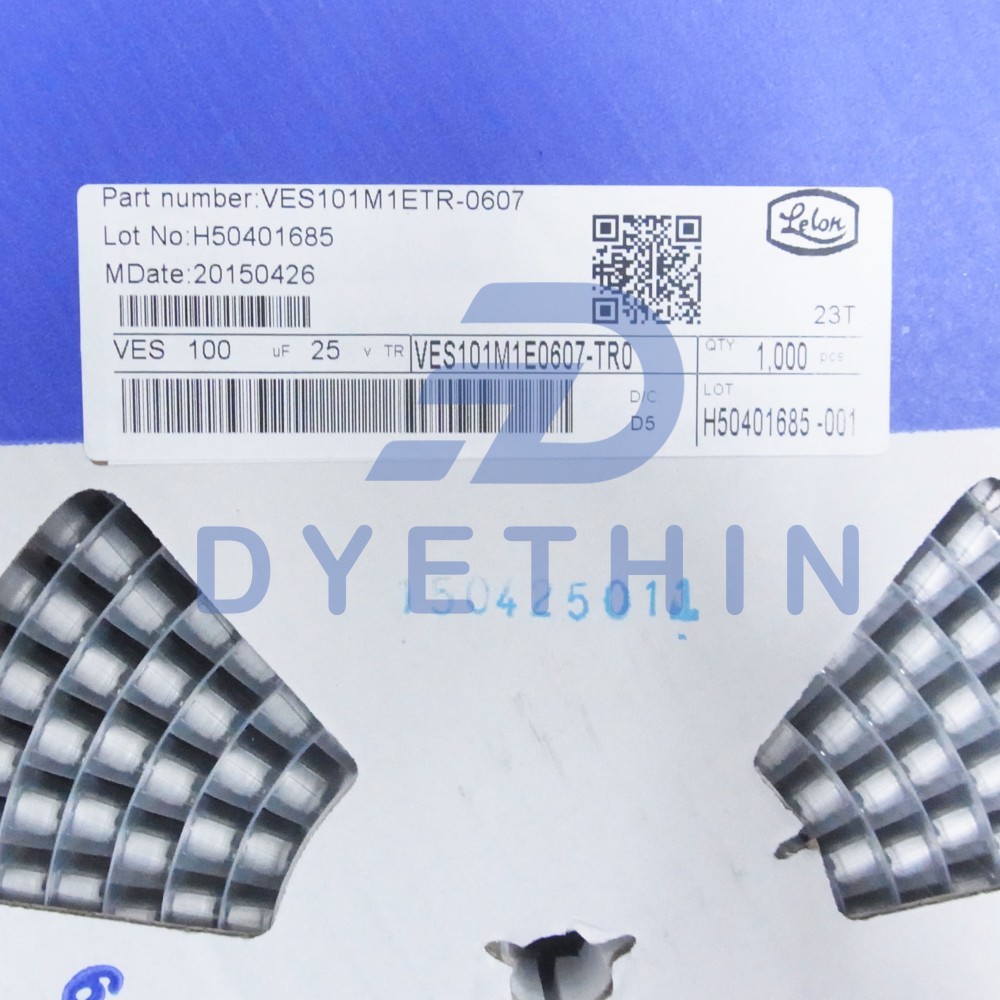
VES101M1ETR-0607
Lelon
-
88,751En stock
-
-

- 100µF 25V SMD aluminum capacitor, 6x7mm size, 105°C, 1000h life, VES ...
- RFQ Agregar a BOM
 Hoja de datos
-
![EMK325F226ZN-T]()
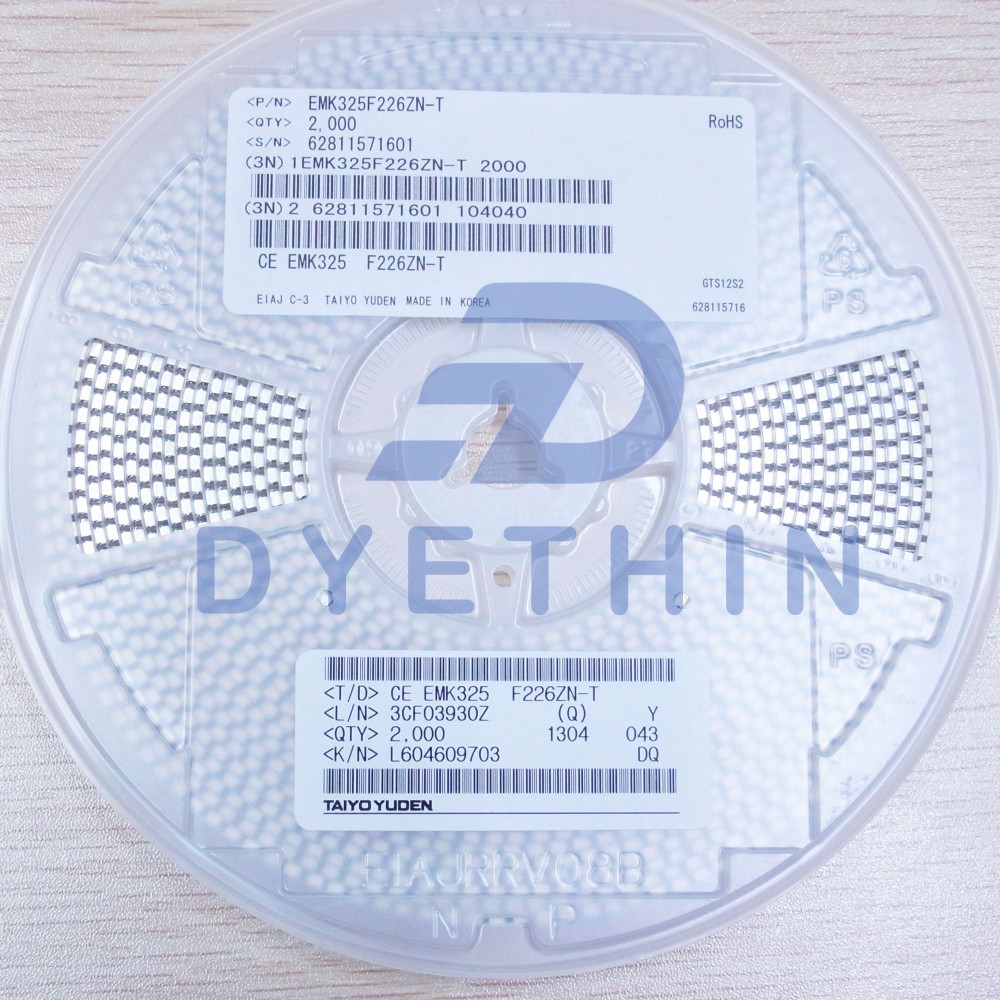
EMK325F226ZN-T
Taiyo Yuden
-
10,274En stock
-
-
- 22μF 16V MLCC, Y5V dielectric 1210 size RoHS & REACH compliant
- RFQ Agregar a BOM
-
![F930J476MBA]()
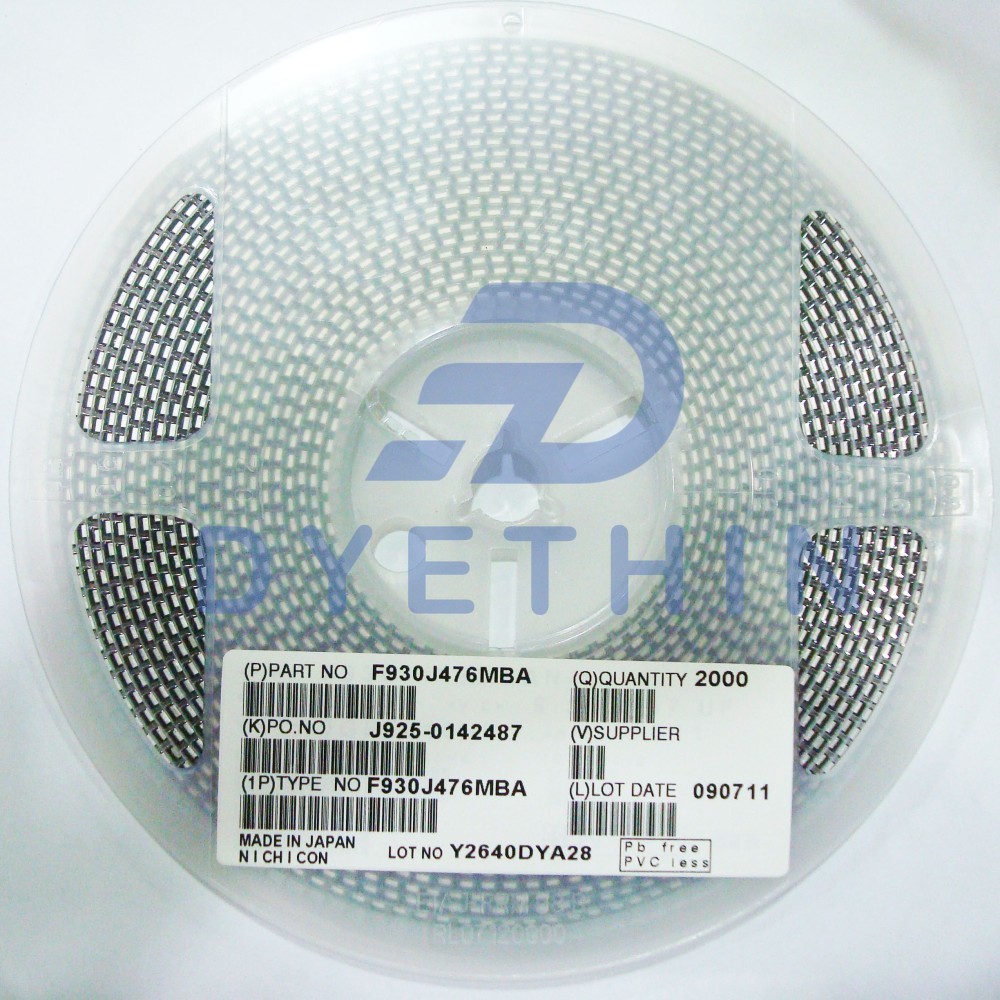
F930J476MBA
Nichicon
-
8,313En stock
-
-
- CAP TANT 47UF 6.3V 20% 1411
- RFQ Agregar a BOM
-
![F930J686MCC]()
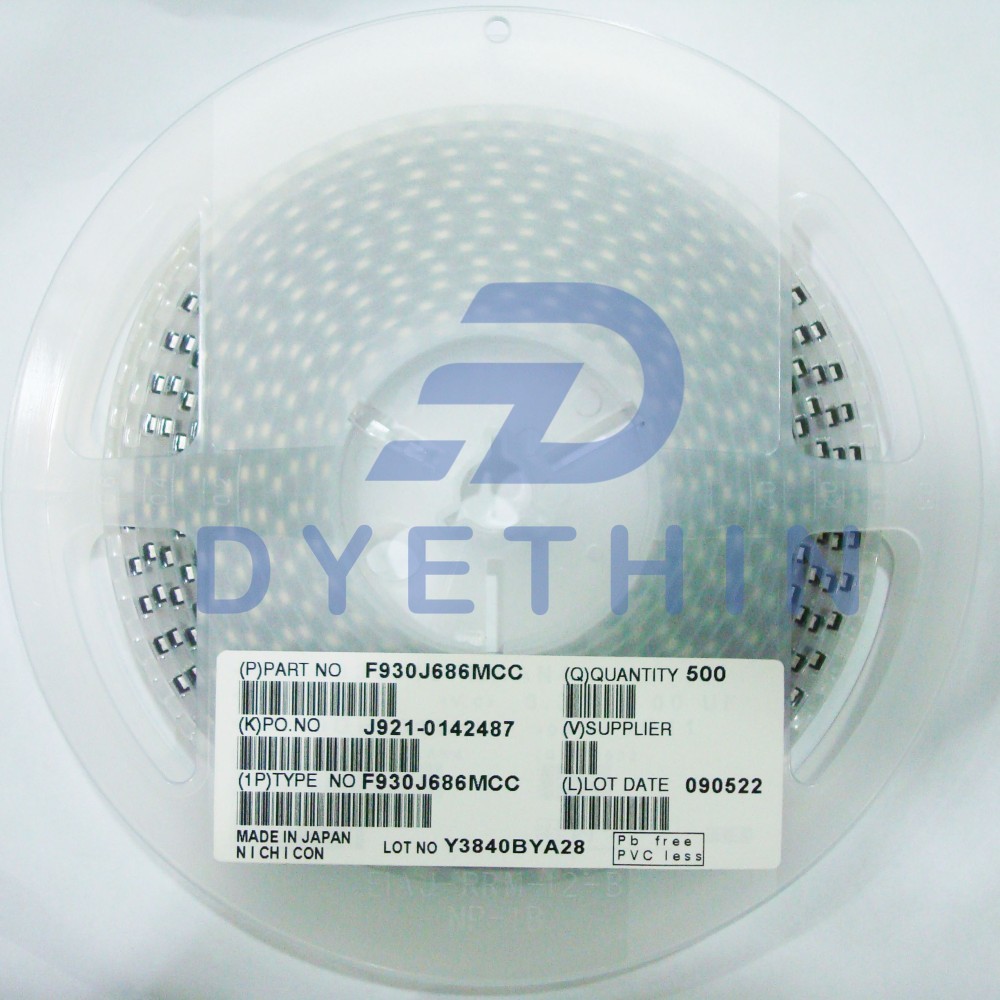
F930J686MCC
AVX Corporation
-
9,346En stock
-
-
- CAP TANT 68UF 6.3V 20% 2312
- RFQ Agregar a BOM
-
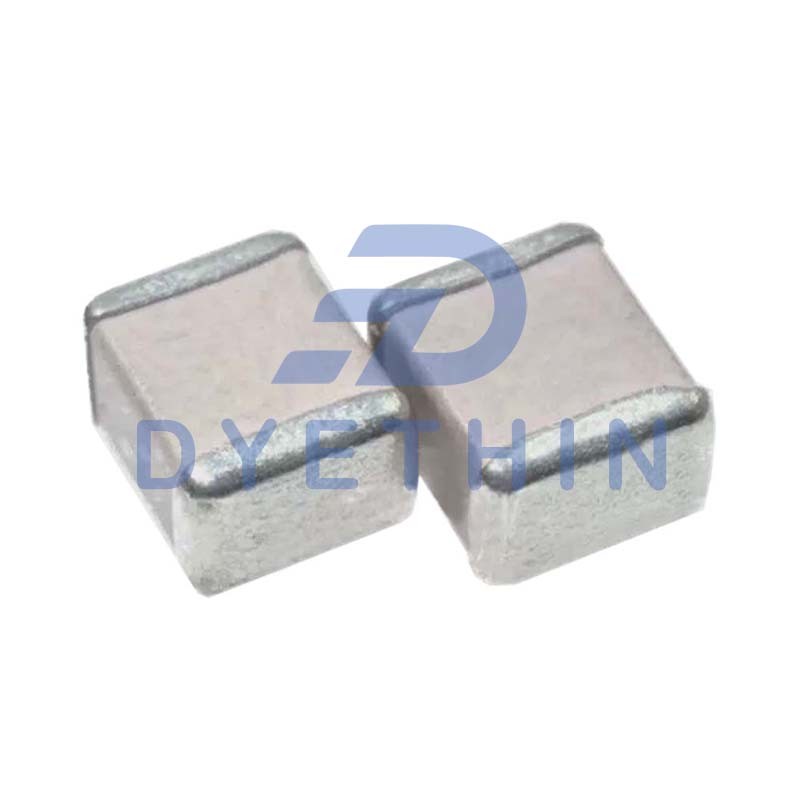
![100B0R2BT500XT]()
100B0R2BT500XT
KYOCERA AVX
-
5,580En stock
-
- $4.25
-
- Cap Ceramic 500volts 0.2pF 175°C SMD
- RFQ Agregar a BOM
-
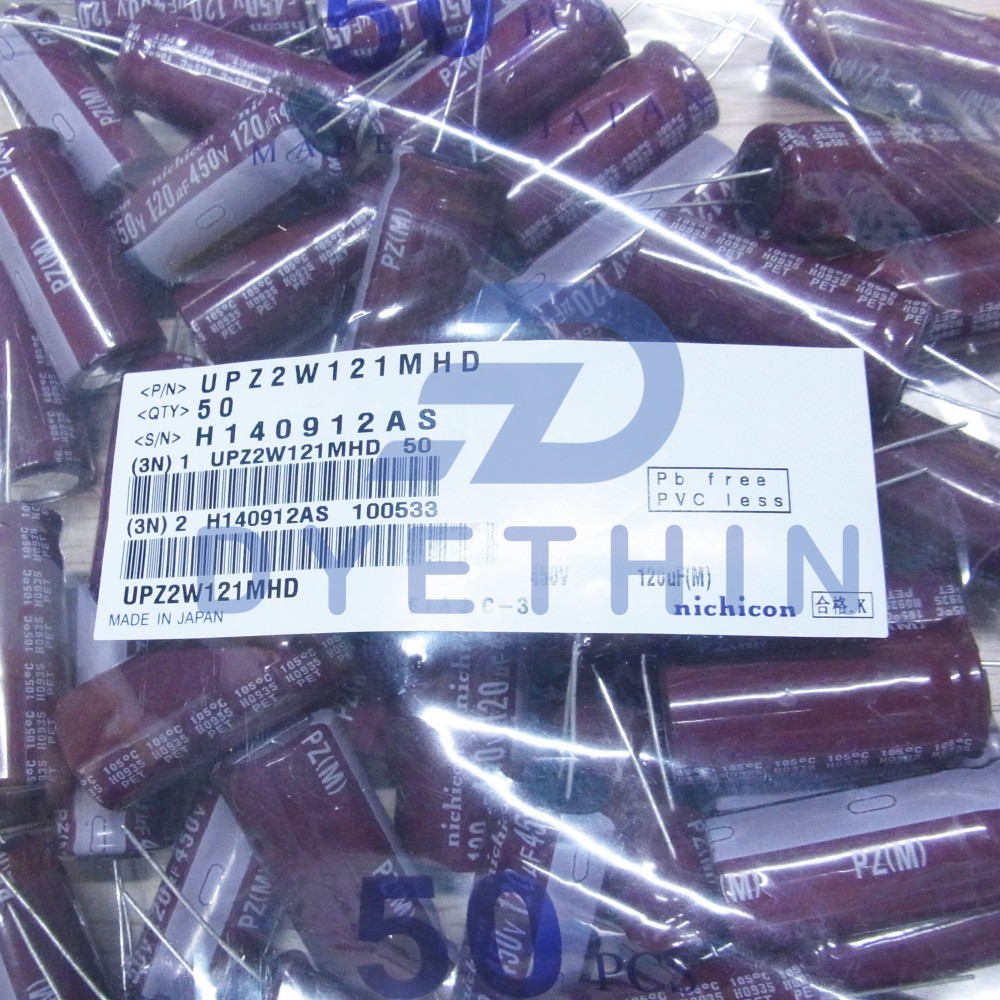
![UPZ2W121MHD]()
UPZ2W121MHD
Nichicon
-
10,269En stock
-
- $1.99
-
- 120µF 450V aluminum capacitor, 105°C rated, 7.5mm pitch, 2000h life, radial...
- RFQ Agregar a BOM
-
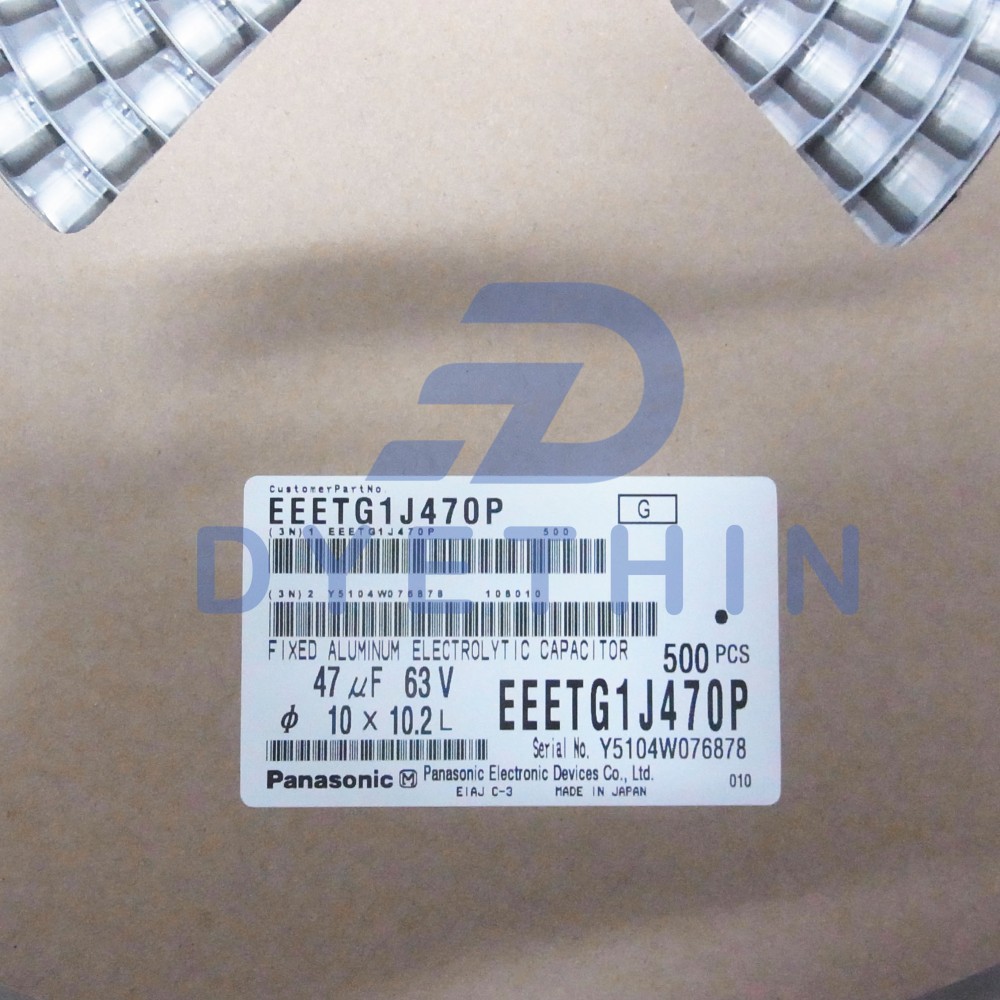
![EEE-TG1J470P]()
EEE-TG1J470P
Panasonic Electronic Components
-
12,151En stock
-
- $0.20
-
- 63V 47μF SMD aluminum capacitor, 125°C, low ESR, AEC-Q200 qualifi...
- RFQ Agregar a BOM
-
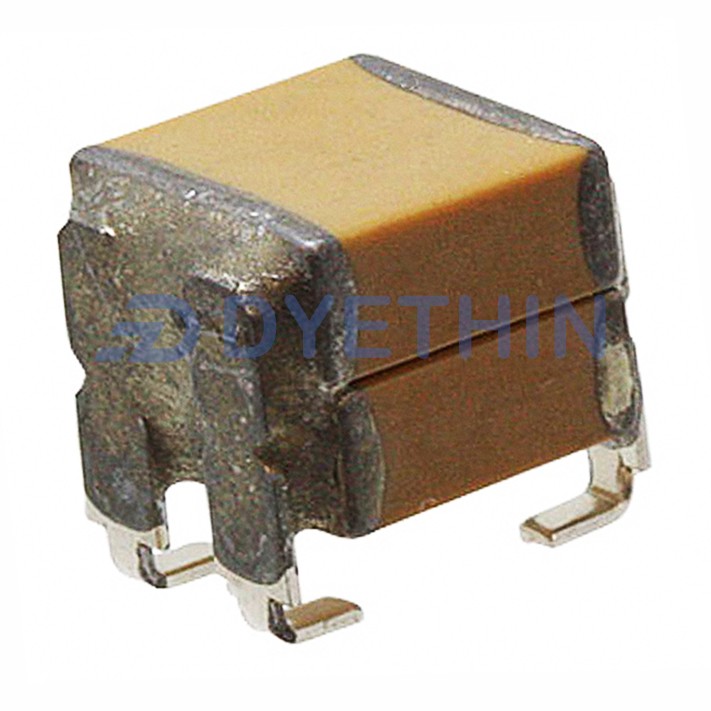
![RH221C106MA3RA3]()
RH221C106MA3RA3
AVX Corporation
-
11,219En stock
-
- $3.51
-
- CAP CER 10UF 100V X7R SMD
- RFQ Agregar a BOM
-
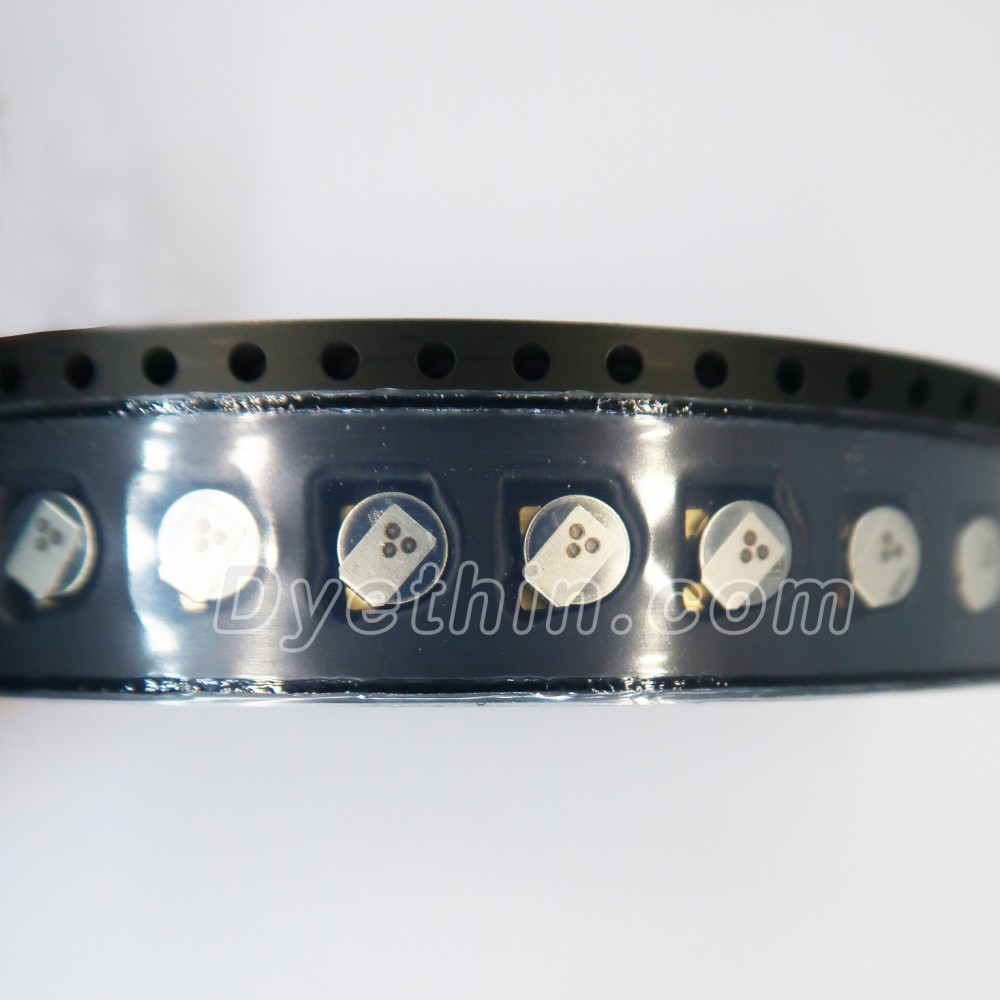
![SM3R3703T01U]()
SM3R3703T01U
Korchip
-
88,795En stock
-
-
- SM 0,07F 3,3V -20+80% 4,8x1,4
- RFQ Agregar a BOM
-
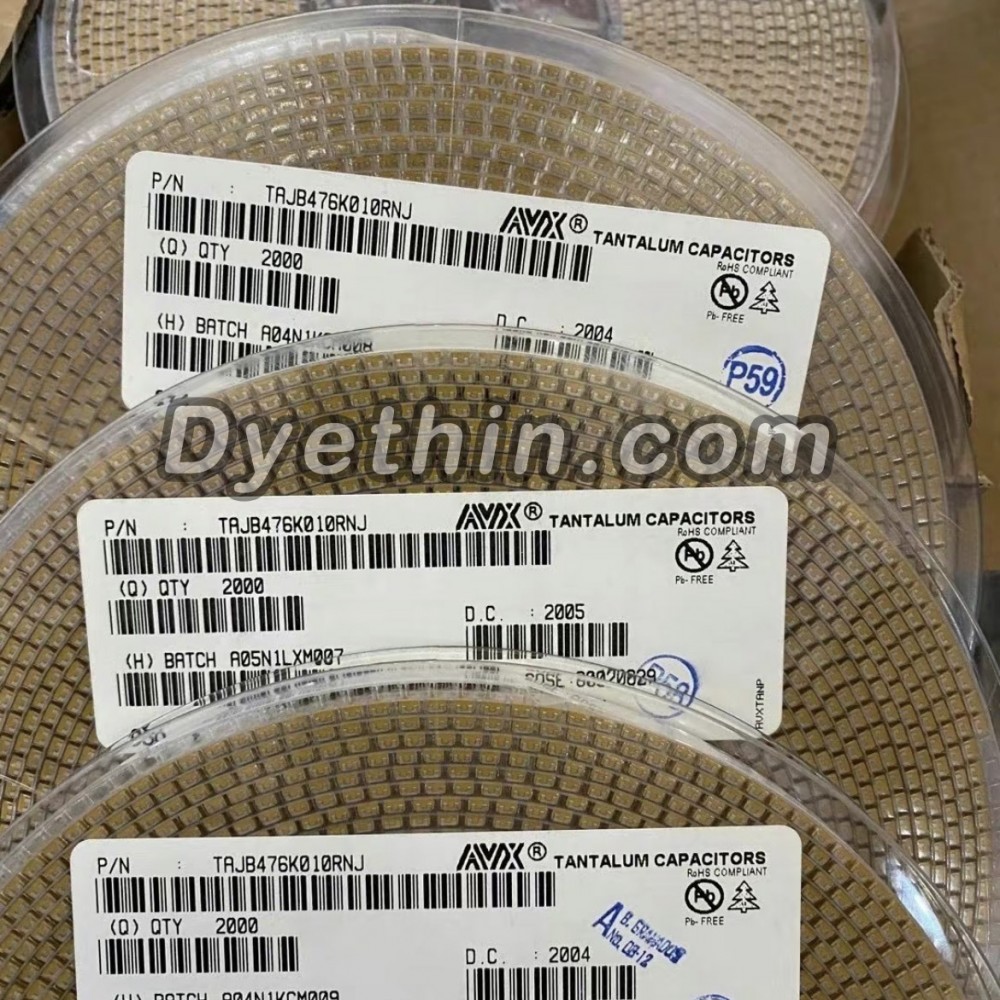
![TAJB476K010RNJ]()
TAJB476K010RNJ
AVX Corporation
-
7,575En stock
-
- $0.05
-
- Tantalum capacitor, 47 µF, 10 V, case B
- RFQ Agregar a BOM
-
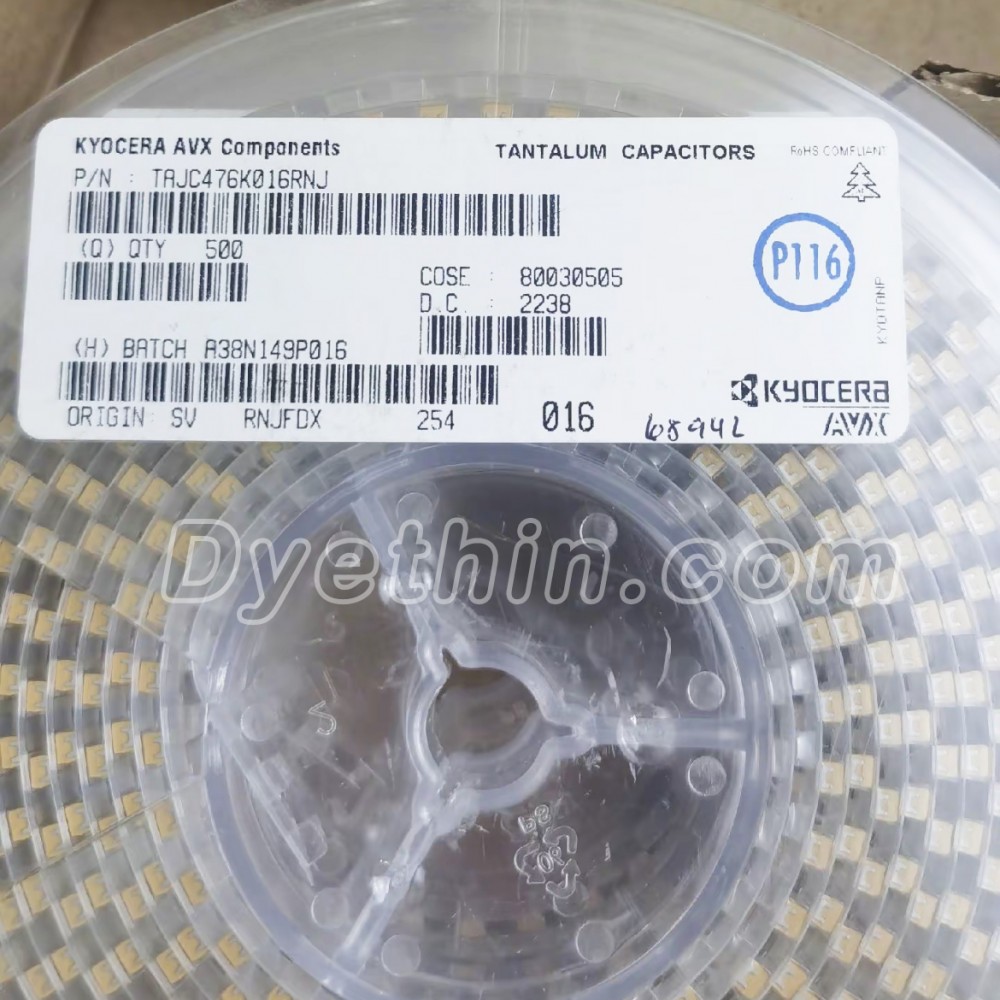
![TAJC476K016RNJ]()
TAJC476K016RNJ
AVX Corporation
-
9,595En stock
-
- $0.14
-
- CAP TANT 47UF 16V 10% 2312
- RFQ Agregar a BOM
-
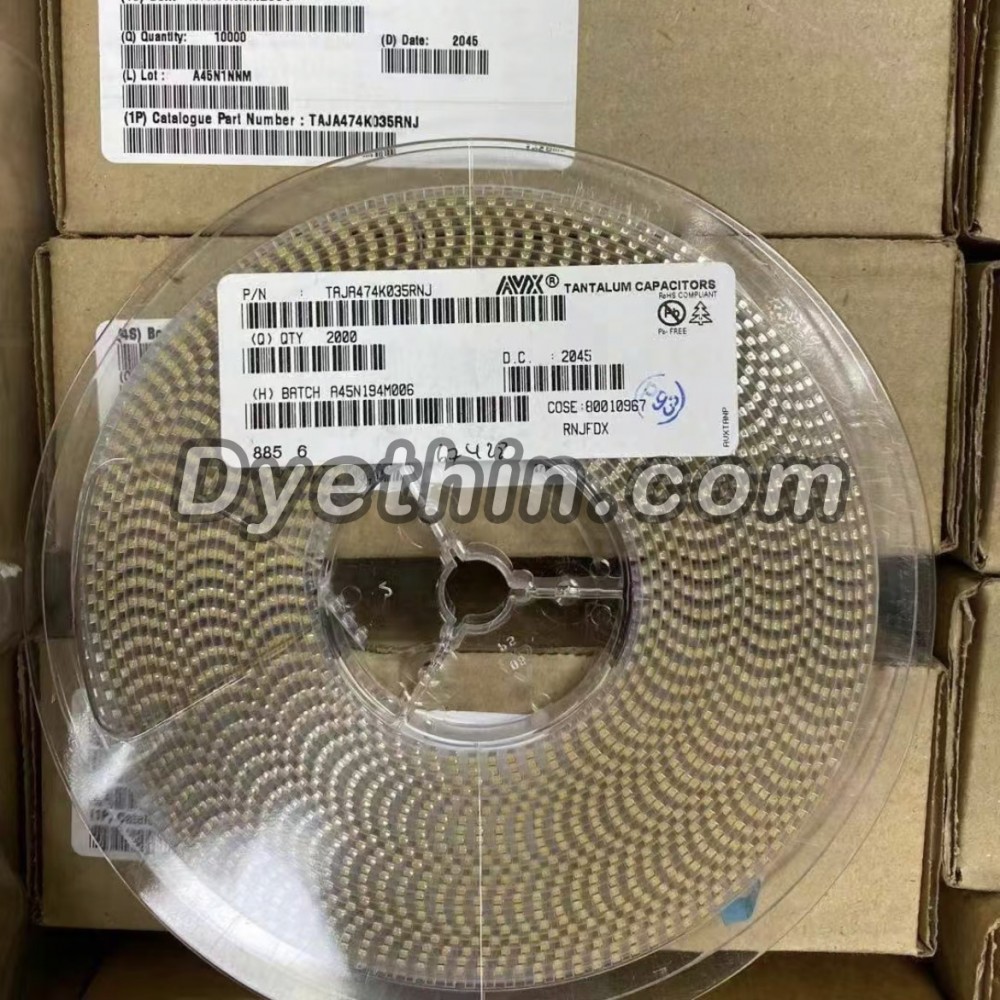
![TAJA474K035RNJ]()
TAJA474K035RNJ
AVX Corporation
-
10,820En stock
-
- $0.15
-
- CAP TANT 0.47UF 35V 10% 1206
- RFQ Agregar a BOM
-
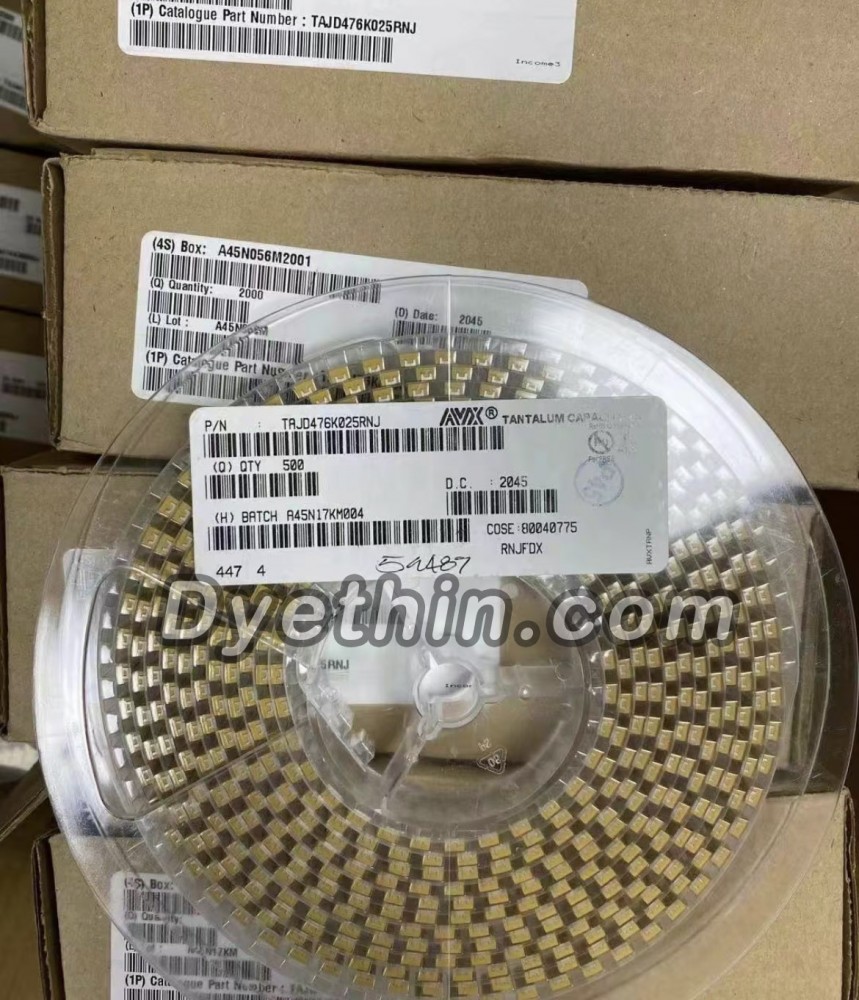
![TAJD476K025RNJ]()
TAJD476K025RNJ
AVX Corporation
-
11,680En stock
-
- $0.30
-
- 47 µF, 25 V D-case SMD tantalum capacitor
- RFQ Agregar a BOM
-
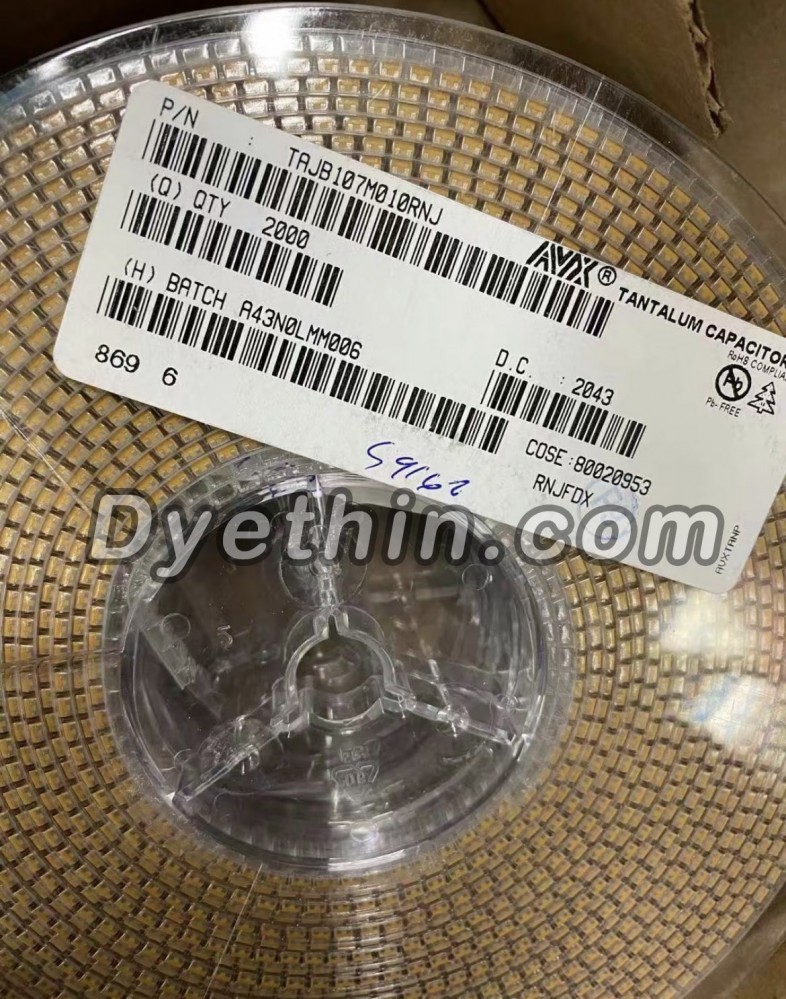
![TAJB107M010RNJ]()
TAJB107M010RNJ
AVX Corporation
-
8,879En stock
-
- $0.10
-
- CAP TANT 100UF 20% 10V SMD
- RFQ Agregar a BOM
-
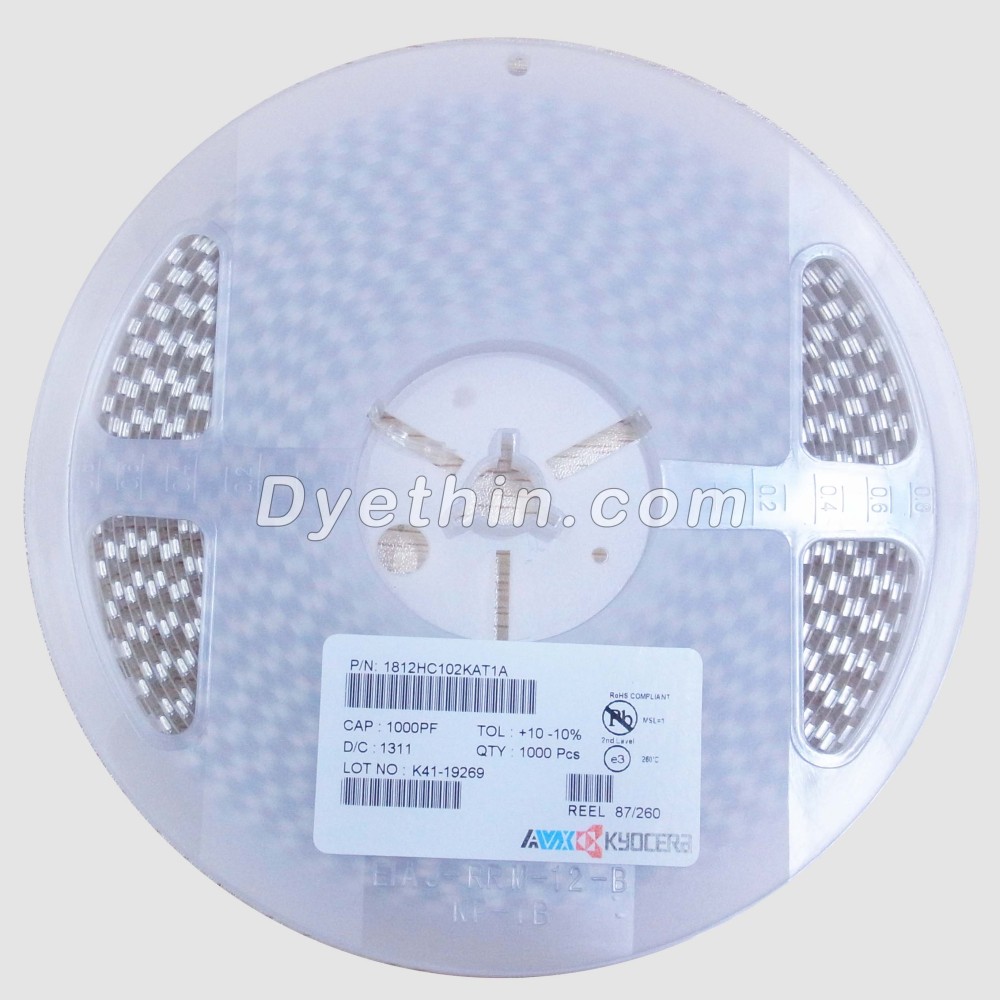
![1812HC102KAT1A]()
1812HC102KAT1A
AVX Corporation
-
10,050En stock
-
-
- High-voltage MLCC, 1000 pF, 3 kV, 1812
- RFQ Agregar a BOM
-
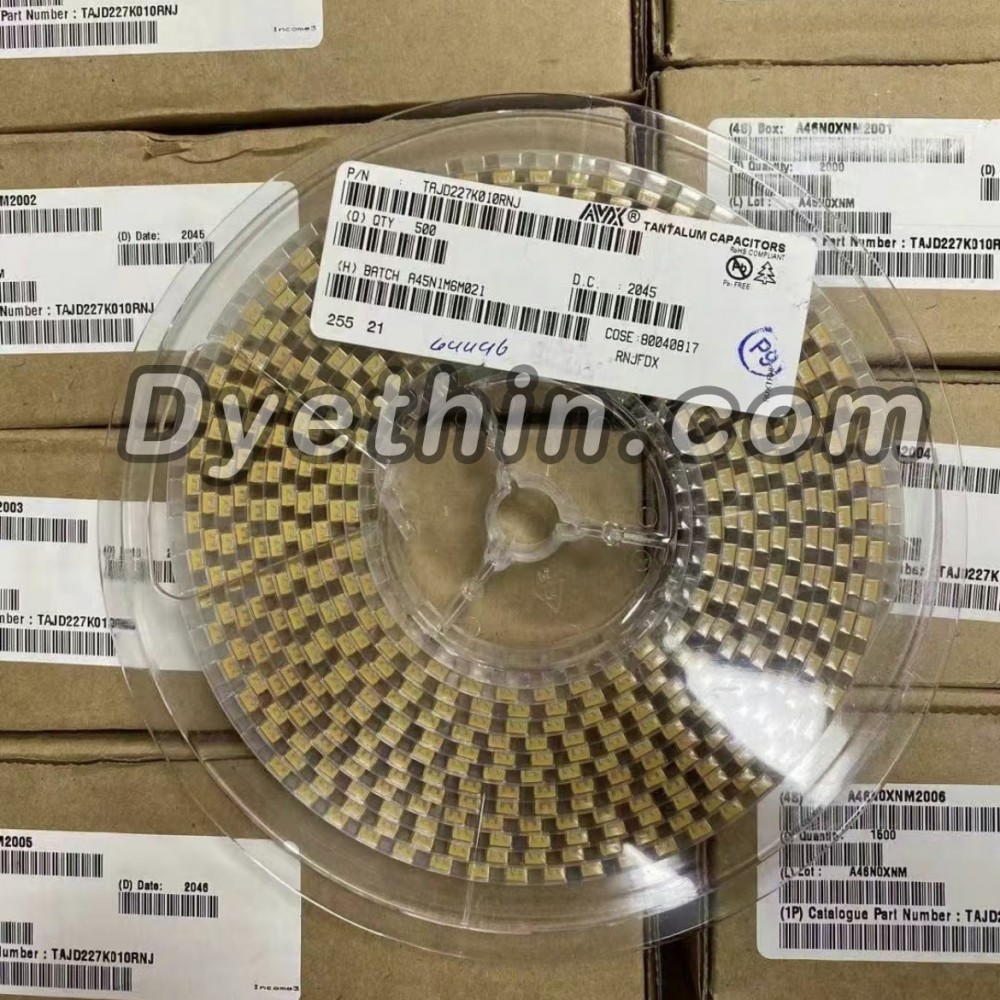
![TAJD227K010RNJ]()
TAJD227K010RNJ
AVX Corporation
-
9,213En stock
-
- $0.44
-
- CAP TANT 220UF 10V 10% 2917
- RFQ Agregar a BOM
-
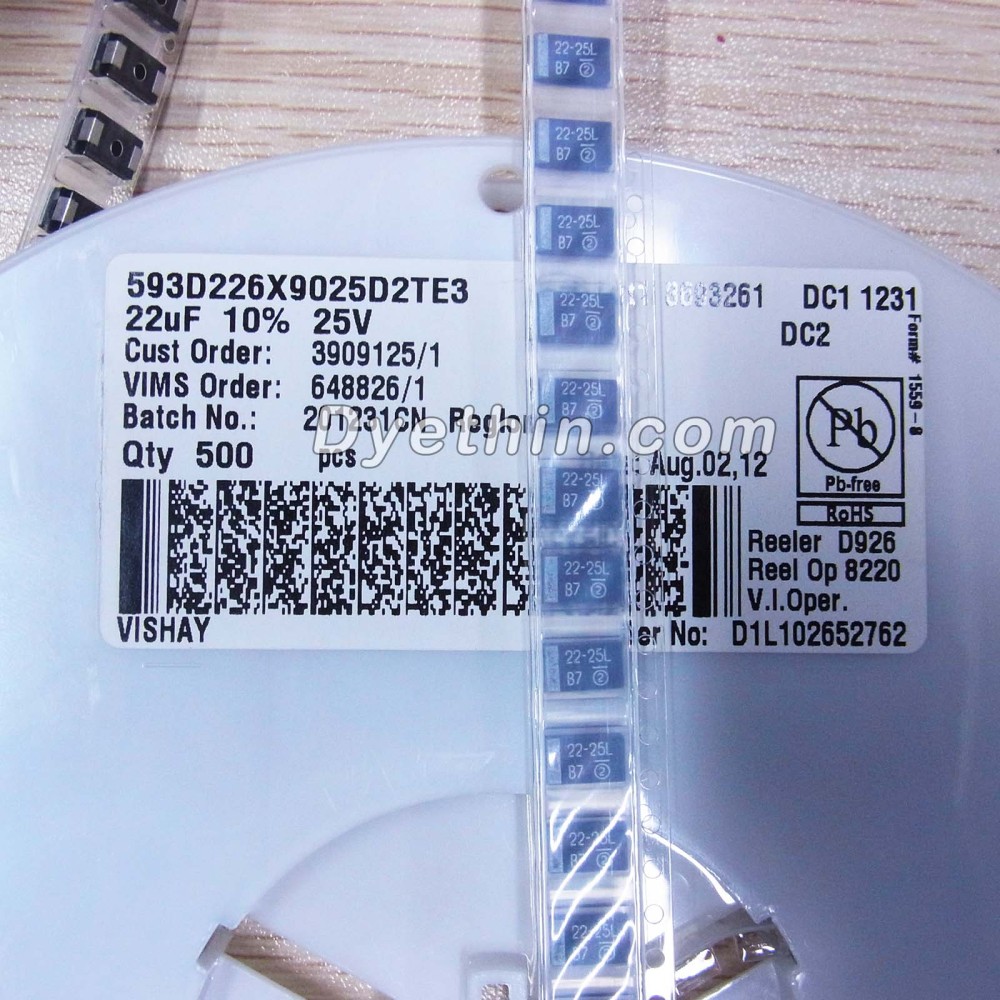
![593D226X9025D2TE3]()
593D226X9025D2TE3
Vishay Sprague
-
8,142En stock
-
- $0.16
-
- CAP TANT 22UF 25V 10% 2917
- RFQ Agregar a BOM
-
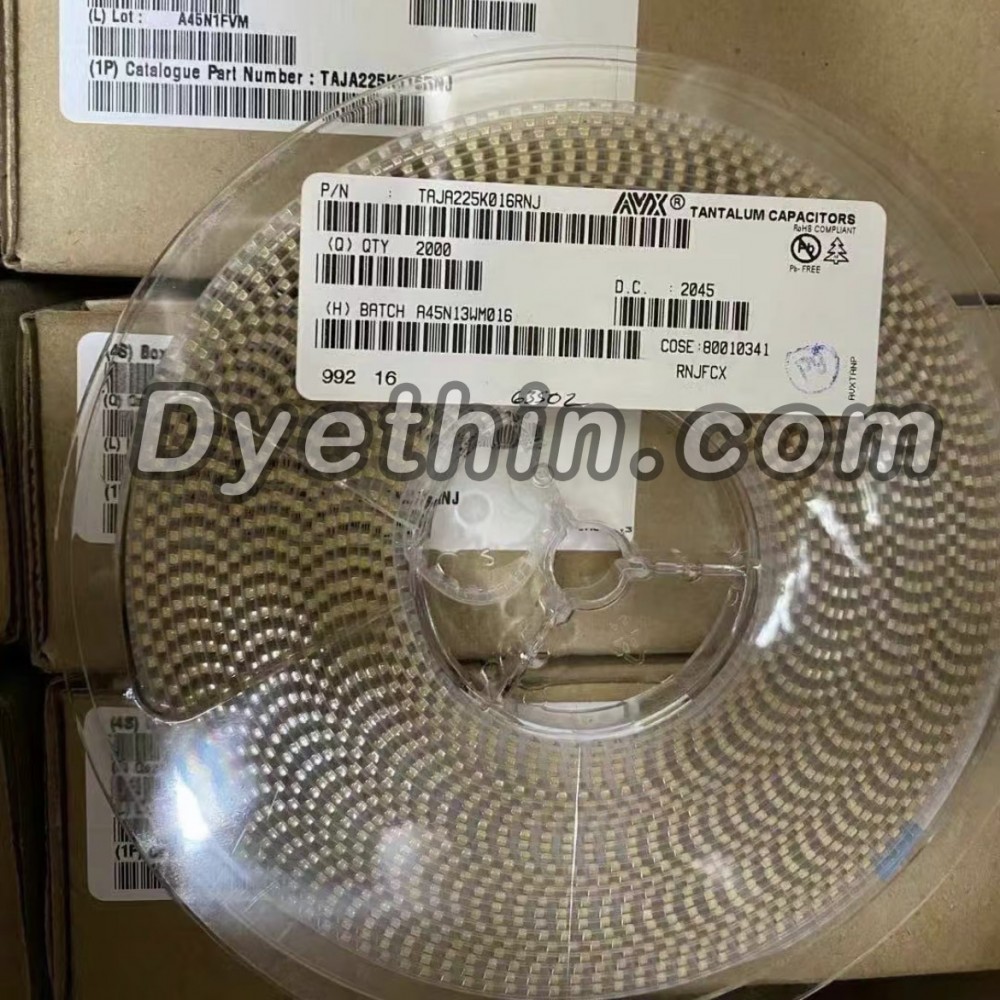
![TAJA225K016RNJ]()
TAJA225K016RNJ
AVX Corporation
-
10,586En stock
-
- $0.03
-
- 16V 2.2µF SMT Tantalum Capacitor
- RFQ Agregar a BOM
-
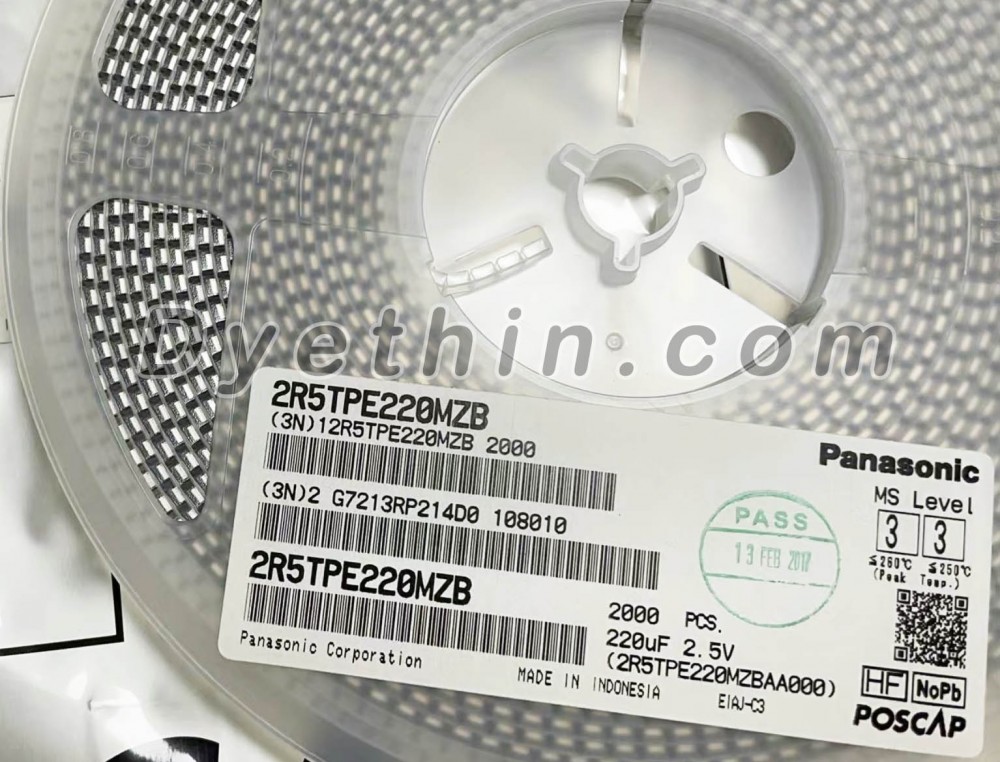
![2R5TPE220MZB]()
2R5TPE220MZB
Panasonic Electronic Components
-
8,369En stock
-
- $0.18
-
- CAP TANT POLY 2.5V 220UF 1411
- RFQ Agregar a BOM
-
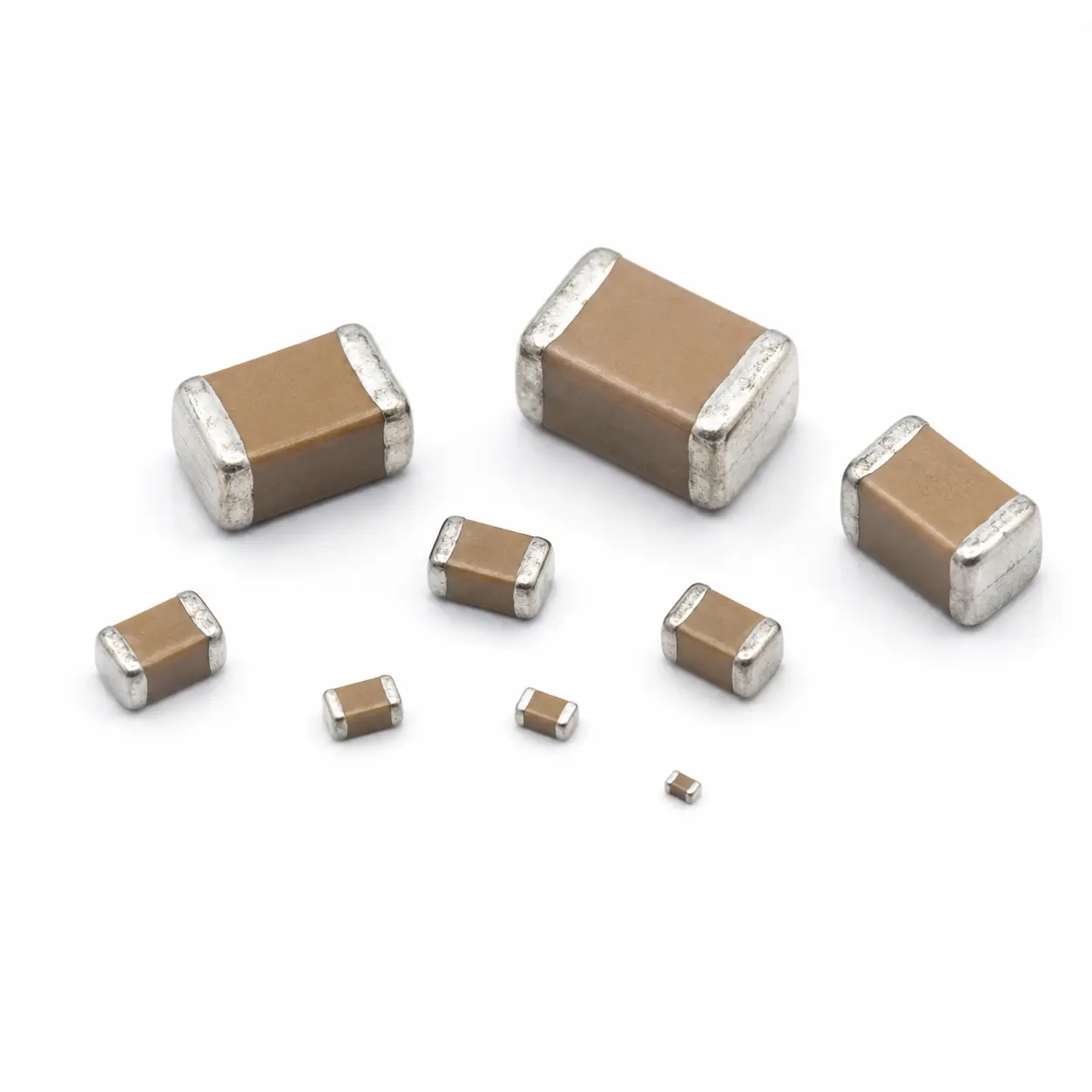
![C1608X7R1H102M]()
C1608X7R1H102M
TDK Corporation
-
7,354En stock
-
-
- CAP CER 1000PF 50V X7R 0603
- RFQ Agregar a BOM
-
![GRM1557U1H2R1CZ01D]()
GRM1557U1H2R1CZ01D
Murata Electronics North America
-
9,531En stock
-
-
- CAP CER 2.1PF 50V U2J 0402
- RFQ Agregar a BOM
-
![CL21X106MRFNNNG]()
CL21X106MRFNNNG
Samsung Electro-Mechanics
-
10,725En stock
-
-
- CAP CER 10UF 4V X6S 0805
- RFQ Agregar a BOM
-
![GRM1885C1H110JA01D]()
GRM1885C1H110JA01D
Murata Electronics North America
-
8,214En stock
-
- $0.00
-
- CAP CER 11PF 50V C0G/NP0 0603
- RFQ Agregar a BOM
-
![CL10F334ZA8NNNC]()
CL10F334ZA8NNNC
Samsung Electro-Mechanics
-
11,404En stock
-
- $0.00
-
- CAP CER 0.33UF 25V Y5V 0603
- RFQ Agregar a BOM
-
![QMK325BJ224KN-T]()
QMK325BJ224KN-T
Taiyo Yuden
-
11,686En stock
-
-
- CAP CER 0.22UF 250V X5R 1210
- RFQ Agregar a BOM
-
![RDE5C1H153J1P1H03B]()
RDE5C1H153J1P1H03B
Murata Electronics North America
-
10,937En stock
-
- $0.38
-
- CAP CER 0.015UF 50V NP0 RADIAL
- RFQ Agregar a BOM
-
![SMK316B7222KF-T]()
SMK316B7222KF-T
Taiyo Yuden
-
9,697En stock
-
-
- CAP CER 2200PF 630V X7R 1206
- RFQ Agregar a BOM
-
![CS45-E2GA222M-GKA]()
CS45-E2GA222M-GKA
TDK Corporation
-
9,232En stock
-
- $0.22
-
- CAP CER 2200PF 440VAC RADIAL
- RFQ Agregar a BOM
-
![GRM1885C2A9R0CA01J]()
GRM1885C2A9R0CA01J
Murata Electronics North America
-
11,620En stock
-
- $0.02
-
- CAP CER 9PF 100V NP0 0603
- RFQ Agregar a BOM
-
![FG16X7R2A474KNT06]()
FG16X7R2A474KNT06
TDK Corporation
-
7,398En stock
-
- $0.07
-
- CAP CER 0.47UF 100V X7R RADIAL
- RFQ Agregar a BOM
Frequently Asked Questions
Q: What is a capacitor?
A: These are passive electronic components that store and release electrical energy. They consist of two conductive plates separated by an insulating material called a dielectric. The conductive plates can be made of metal, such as aluminum or tantalum, while the dielectric can be made of various materials like ceramic, electrolyte, or plastic film.
The fundamental principle of a capacitor is based on its ability to store an electric charge. When a voltage is applied across the plates, opposite charges accumulate on each plate, creating an electric field between them. The capacitance of a capacitor, measured in Farads (F), represents its ability to store charge per unit voltage.
Q: What are the functions and application scenarios of super capacitors?
A:
Energy Storage: They are commonly used to store electrical energy temporarily. They can quickly charge and discharge, making them suitable for applications requiring short bursts of power, such as camera flashes and electronic flashes.
Filtering and Smoothing: They are used in power supply circuits to filter out noise and ripple voltage. They smooth the output voltage, improving the stability and reliability of electronic devices.
Timing and Oscillation: Capacitors, in combination with resistors, can be used to create timing circuits, such as RC (Resistor-Capacitor) circuits. These circuits are used in applications like timing delays, oscillators, and frequency generation.
Coupling and Decoupling: They are used for coupling signals between stages of amplifiers and other electronic circuits. They allow AC (alternating current) signals to pass while blocking DC (direct current). They are also used for decoupling, reducing unwanted noise and voltage fluctuations in sensitive circuitry.
Tuning and Filtering: They are employed in tuning circuits, such as radio frequency (RF) filters, to select specific frequencies or reject unwanted frequencies. They play a vital role in radio and communication systems.
Motor Start and Run: They are used in electric motors to provide the initial torque required for motor start-up. They can also be used in motor run applications to improve motor efficiency.
Energy Conversion: They are utilized in energy conversion systems, such as inverters and power electronic circuits, for energy storage and power conditioning.
Q: What are the types of capacitors?
A: They come in a wide range of types, including ceramic capacitors, electrolytic capacitors, tantalum capacitors, film capacitors, and many more. Each type has its unique characteristics, such as capacitance value, voltage rating, temperature stability, and frequency response. The selection of the appropriate capacitor depends on the specific requirements of the circuit and application.
Q: What is your refund policy?
A: Refunds are granted within 30 days of delivery. If you haven't received your package, contact us. We'll refund or resend it if not received within the standard shipping period, except if delivery fails due to incorrect address or customs issues caused by the customer.
Q: Can't find the part model you want on the website?
A: Because there are so many product models, I have not released some products on the platform, please contact us directly.