













- Home
- Blogs
- Intelligent control
- Build an intelligent UPS power supply
Build an intelligent UPS power supply
Basic knowledge of UPS, followed by an analysis of three system technical solutions to enhance the power supply reliability of UPS.
Fundamental understanding of uninterruptible power supply UPS
1.The fundamental concept of UPS
A UPS consists of a rectifier, an inverter, a battery, and a control circuit, among other components, and can provide equipment with a pure and stable waveform for a limited duration.
The UPS serves the following purposes:
① When the grid voltage is normal, in addition to producing pure, stable, continuous AC power, it can charge the battery and store reserve energy.
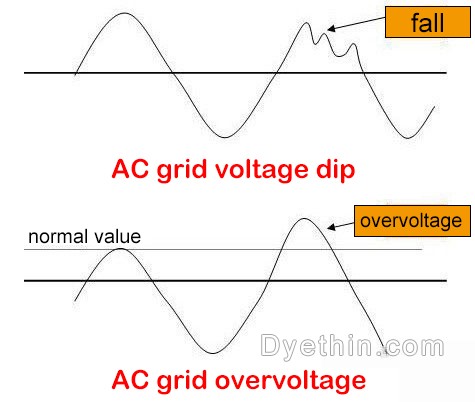
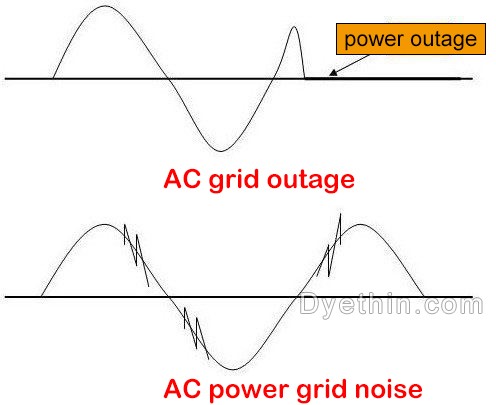
② When the power grid is abnormal (undervoltage, overvoltage, power failure, interference, etc.), the battery pack supplies uninterrupted AC output to the electrical equipment. "Uninterrupted" typically denotes that the duration during which the output voltage waveform is zero is less than 10 milliseconds.
Therefore, UPS can ensure that information technology equipment, such as computers, can continue to operate ordinarily and securely even when the power grid is unstable.
2. Classification and primary characteristics of UPS
From the standpoint of UPS technical characteristics, the classification of UPS is typically based on the working mode of the output inverter, which can be divided into two types: standby type and online type. In recent years, a unique variety of backup power supply known as online interactive has been identified, although strictly speaking it is still a backup type.
UPS has progressively evolved from its original indoor use to an all-weather application environment, as evidenced by its widespread use in recent years, and there are differences between indoor UPS and outdoor UPS. Outdoor UPS has undergone extensive quality enhancements, primarily in the areas of adaptability to ambient temperature, moisture resistance, waterproofing, and anti-theft, assuring that the UPS can function normally in a variety of harsh outdoor environmental conditions.
The remainder of this section continues to describe the classification and technical characteristics of UPS from the perspective of UPS circuit topology.
(1) Online delivery service:
A. Stability of output voltage 3%
B. Minimal waveform distortion THD3% C. Absence of interference
Input and emission forms of energy are completely isolated.
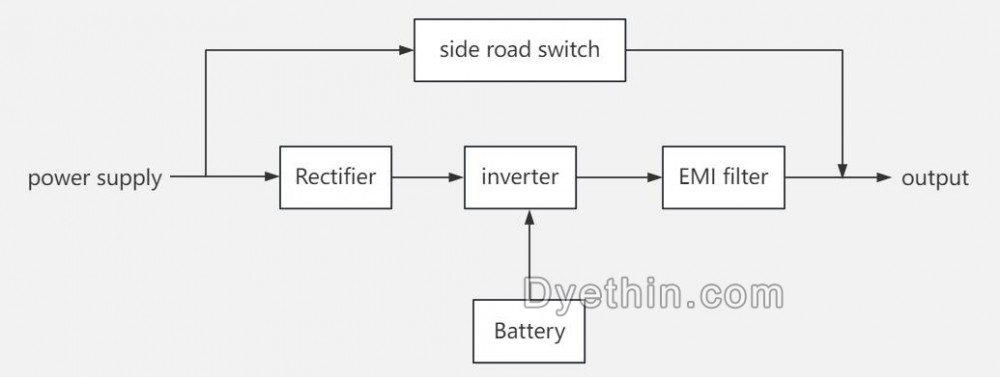
Online UPS principle
(2) Backup UPS:
A. The overall efficacy of the machine is greater than 95% when the power grid is operating normally.
B. There is no commotion when the power grid is operating normally
C. The switching time is less than 10 milliseconds
D. less expensive
(3) Intelligent UPS: It possesses the same characteristics as the backup power supply and incorporates the charger and inverter into a single dual UPS.
Although the cost of the system is reduced for the inverter, control becomes more complex.
Three solutions to improve the reliability of UPS power supply
The above schematic block diagram reveals that the UPS itself has a dual-channel power supply backup, which has high system reliability and can meet the power supply reliability requirements of general information equipment. However, with the rapid growth and high importance of information data over the past few years, a single UPS power supply is no longer sufficient in certain situations, such as power consumption environments such as bank data centres above the provincial level, communication data centres, and securities trading. Inability to satisfy the customer's requirements for power reliability necessitates a more effective power supply solution to safeguard these vital data and networks.
Following are three techniques that can effectively enhance the reliability of engineering applications: the series backup power supply mode, the output master-slave backup mode, and the redundant parallel backup power supply mode. The enhancement of the aforementioned three power supply schemes will increase the power supply system's reliability by an order of magnitude, exponentially increase the system's MTBF value, and effectively eliminate power failure in engineering applications. Consequently, when designing a high-reliability power supply system, users can select an appropriate high-reliability power supply solution based on the load's power supply requirements.
1. standby power supply mode in series (bypass master-slave backup mode):
As depicted in the figure above, the output of the standby (UPS2) is used as the bypass backup input of the master (UPS1), so that when the output of the master's main inverter fails and transfers to the bypass, the load remains under the reliable protection of the standby UPS dual backup power supply mode.
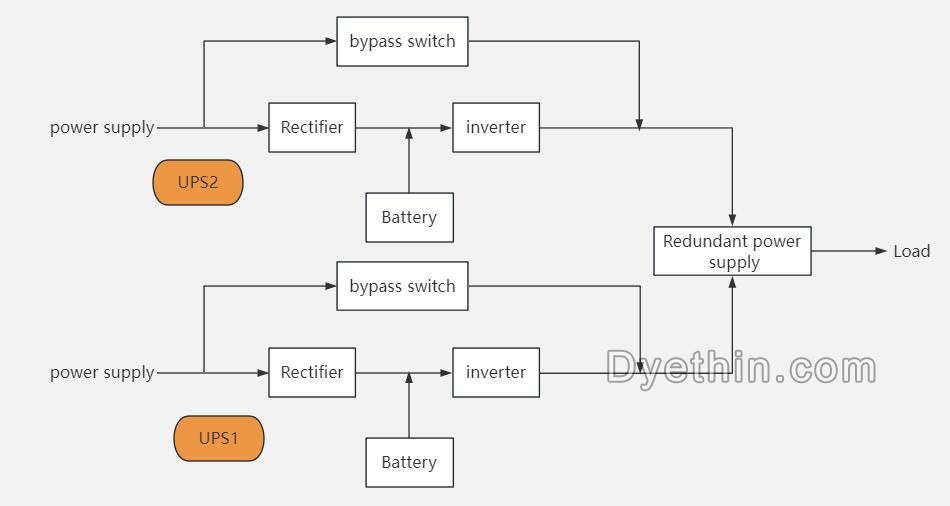
2. Master-slave output fallback mode
As depicted in the figure above, the outputs of two UPSs or inverters are simultaneously sent to the redundant converter, which then supplies power to the load; normally, the redundant converter ensures that the primary input power (for example, UPS1) supplies power to the load. When the main input power fails, the redundant converter quickly transfers the load to the backup input power supply to complete the redundant power supply of the load; once the main input power is repaired and input to the redundant converter, Redundant converters transfer the load back to being powered by the main input power. Any conversion procedure is uninterrupted, ensuring the load equipment's stable and secure operation.
3. Parallel redundant power supply mode
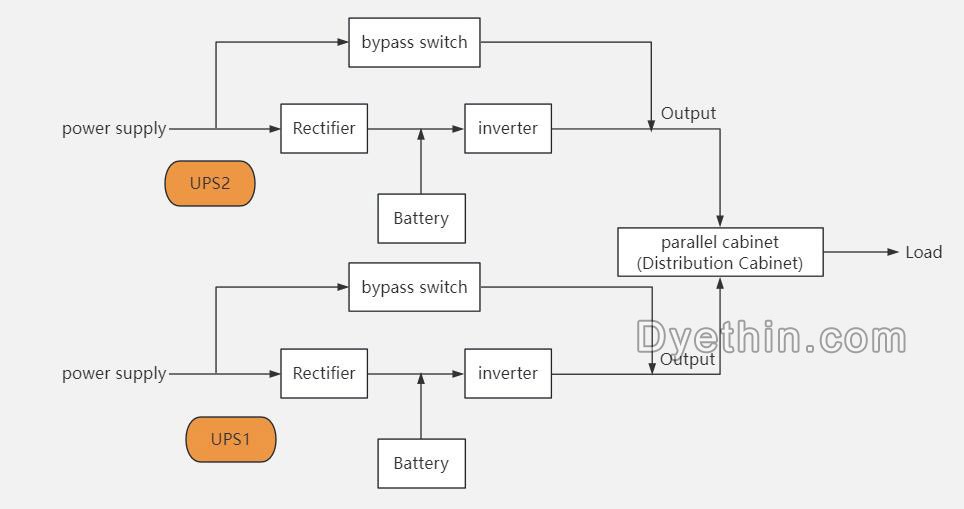
As depicted in the preceding diagram, the outputs of the two UPSs are simultaneously sent to the parallel distribution cabinet for direct parallel connection, with the load current being shared equally, and there is no master-slave relationship. When an uninterruptible power supply (UPS) fails, it will automatically depart the parallel system, and the remaining UPS will supply 100% of the load current with uninterrupted output; once the faulty UPS unit has been repaired, it can be merged back into the parallel system. Provide redundant power to applications and perform online maintenance on parallel systems.
Comparison of three strategies for improving reliability
Comparative Objects Mode for Series Backup Power Supply The output Master-Slave Mode for Backup Parallel Redundant Power Supply
Typically high dependability
There is a master-slave logic relationship, and it is not easy to replace. It needs to be completed by the manufacturer. Yes, it is easy to replace and can be completed by the user. It depends on the parallel control method;
Load switching time 10ms5ms0ms
Intercommunication is not required for wired parallel operation; it is required for wireless parallel debugging and can be canceled after work
Scalability No Scale No Scale No Scale Can Scale Scale
The overload capacity of the system remains unchanged, and the proportion of short-term overload capacity increases; especially the start-up capacity for impact loads is enhanced.
The aging degree of the product is inconsistent with the aging of the master and slave machines The aging of the master and slave machines is inconsistent
Load sharing 100% uneven distribution 100% uneven distribution, general current imbalance is less than 5%
The battery life generally needs to be replaced regularly. Generally, the battery or the host needs to be replaced regularly to ensure that the battery life does not need to be replaced.
The maintainability is poor. Generally, it needs to be shut down for maintenance. Online thermal maintenance can be done well. Online thermal maintenance is possible.
The backup mode is generally in the form of 1+1, and there is no practical meaning when adding more. Generally, the form of 1+1 or 1+2 can be in the form of N+m, which is more flexible
Low system cost generally high
Applicable occasions load 3-10KVA load 0.5-3KVA load above 10KVA
Uninterruptible power supply UPS is a reliable power supply solution for digital construction. Through the design of different UPS power supply schemes, the reliability of the AC power supply system can be improved to a new level, and it can meet any requirements of digital construction for the quality of AC power supply.
Articles you may also like
What is a waveform? What types of waveforms are there? And the characteristics of the waveform
PIC microcontroller technology and application foresight
Measurement of Air Ionic Conductivity with Double Darlington Tubes
CC2530 integrated circuit IC to design an intelligent agricultural control system