














- Home
- Featured Products
- STMicroelectronics
- P75NF75 Mosfet Datasheet, Pinout, Equivalent, Voltage, Circuit and Uses
P75NF75 Mosfet Datasheet, Pinout, Equivalent, Voltage, Circuit and Uses
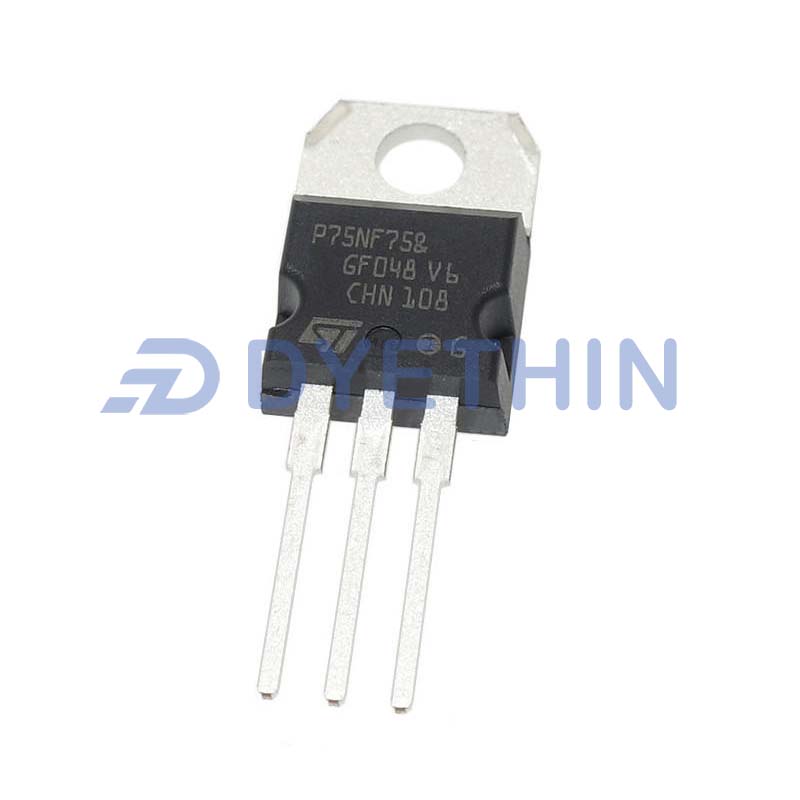
P75NF75 is a cost-effective N-channel MOSFET transistor used in a wide variety of circuits for efficient current control and voltage conversion. This article will introduce the P75NF75 datasheet, pin distribution, equivalent values, voltage characteristics, circuit applications, and its main uses in detail, so that engineers can better use this effect tube in circuit layout.
What is the P75NF75 MOSFET?
P75NF75 is an N-channel MOSFET with high current carrying capacity (typically tens of amps) and low on-resistance. Using advanced semiconductor manufacturing technology, it can work stably in high voltage and high frequency environment, suitable for power electronic conversion, motor drive, inverter design and other scenarios.
P75NF75 Voltage characteristics
Drain-source voltage (VDS) : The maximum drain-source voltage of the P75NF75 is up to 75V +, increasing reliability in high-voltage circuits.
Gate-source voltage (VGS) : The gate-to-source control voltage range determines whether the MOSFET is on or off, and the gate-source voltage of the P75NF75 is normally within ±20V.
P75NF75 Pinout
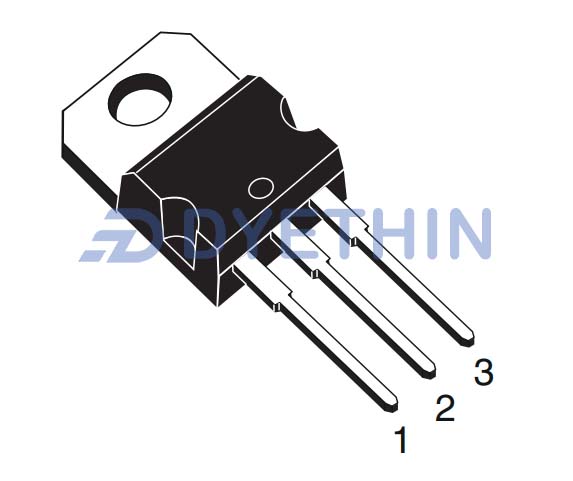
Pin Description:
| Pin | Function |
| 1 | Gate |
| 2 | Drain |
| 3 | Source |
G (gate) : Indicates the input pin that the MOSFET turns on or off.
D (drain) : Connected to the positive terminal of the load or power supply, current flows out of the pin.
S (source) : The negative end of the ground or power supply, where current flows into the pin.
P75NF75 Function
The main function of P75NF75 is to adjust the resistance between the drain and the source by controlling the grid voltage to achieve the purpose of controlling the on-off and size of the current. When used as a switch in the circuit, it can quickly respond to the control signal and achieve efficient current switching.
Internal schematic diagram
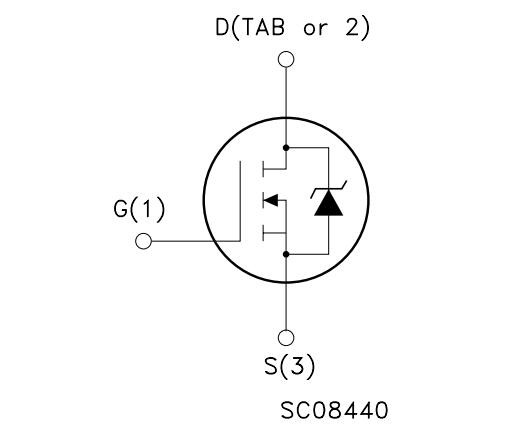
For more information, please refer to the P75NF75 Datasheet
P75NF75 Usage
Power conversion: Switching elements in DC-DC converters and inverters.
Motor control: Motor driver circuit, precise control of the motor.
Power management: Protects the circuit of the power board as a protective or switching element.
Industrial automation: Control of various executive elements in automated production line systems.
P75NF75 MOSFET make Voltage Regulator
Advantages and disadvantages of P75NF75
Advantages:
High switching speed
Low on-resistance
High voltage tolerance
Good thermal stability
Disadvantage:
Electrostatic isolation is required because it is sensitive to static electricity
High switching loss will occur in unreasonable application schemes
How to test P75NF75?
Checking Appearance
The P75NF75 MOSFET are initially determined by visual inspection whether there is obvious physical damage or burn out. For example, whether there is damage, deformation, oxidation and so on.
Test with a multimeter
Use a multimeter to test the normal working status of the P75NF75 MOSFET. Pay attention to the following two aspects when testing:
Detect the conduction between diodes: Adjust the multimeter to the diode test gear, and connect the positive and negative electrodes to the gate and source respectively. If the multimeter shows conduction, the tube is damaged.
Test the drain resistance of the MOSFET: Adjust the multimeter to the resistance gear, the positive connection to the drain, the negative connection to the source, at this time the multimeter reading is infinite, and then the test pen is connected to the drain and grid, then the multimeter should display the resistance value, if the display is infinite, it indicates that the pipe is damaged.
The above test method is for reference only, if you need accurate results, you need to use a professional test MOSFET instrument to detect the P75NF75 field effect tube.
P75NF75 MOSFET Equivalent/Substitute/Replacement
80NF70: From the Datasheet, we can know that the 80NF70 carries a current of 80A, which is higher than the 75A of the P75NF75, while the voltage tolerance is close.
IRF3205: with the P75NF75 belongs to the same N-Channel, and has a low on-resistance, high switching speed common characteristics.
IRFZ44N: Although it has a slightly higher voltage than the P75NF75, it is compatible in most programs.
Factors to consider when choosing a P75NF75 replacement
On-resistance (Rds(on)): try to choose a low one, which can reduce power loss and heat generation.
Current carrying capacity: the selected alternative must carry more current than the circuit requires.
Voltage rating (Vds): close to the voltage of the P75NF75 to ensure that the circuit board will not be destroyed.
Gate drive voltage (Vgs): compatible with the original circuit scheme, in order to ensure that the MOSFET in the circuit to work properly.
Others: pinout order, volume and size need to be the same in order to completely replace on the original circuit board.
Related parts
Conclusion
P75NF75 is a cost-effective field effect tube that performs very well in various circuit applications such as power electronics, motor control and other solutions. After reading its Datasheet, pinout, voltage and circuit applications, DIYers can use this MOSFET better and design a more perfect circuit solution.
Related articles
Logic IC CD4052 Comprehensive understanding and usage guide
MAX485 is an RS 485/RS422 transceiver integrated circuit IC produced
P75NF75 Mosfet Datasheet, Pinout, Equivalent, Voltage, Circuit and Uses
CAN Transceiver Texas Instruments SN65HVD230D Datasheet Applications
BC547 NPN transistor usage case and explanation of BC547 Datasheet and BC547 pinout

Articles you may also like
STM32H743IIT6 Most commonly used Cortex MCUs
L9369 Common Voltage Regulators ICs

-
-
-
-
-
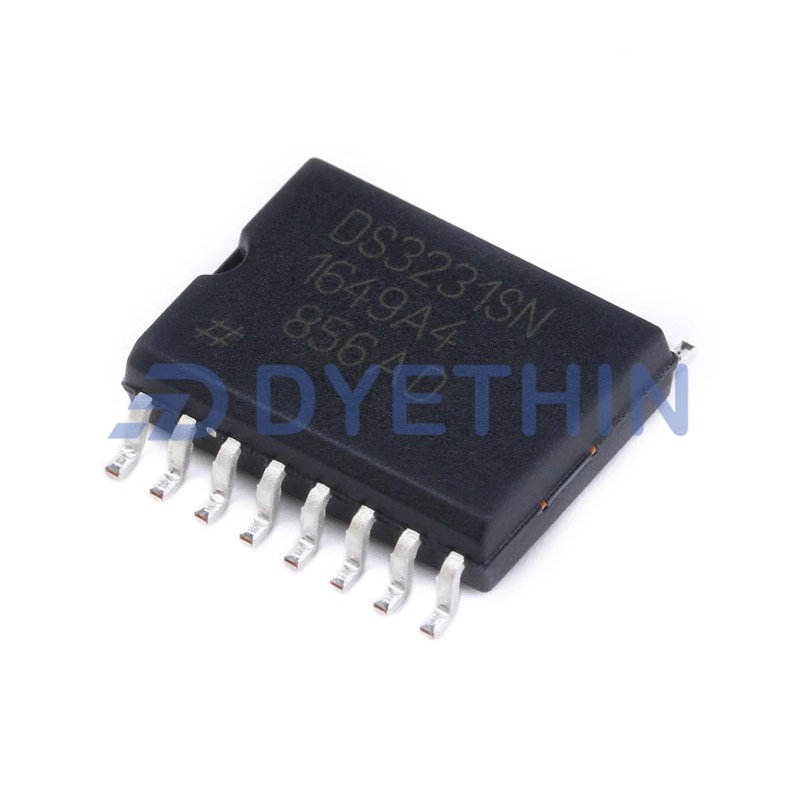
maxim-integrated
I2C, 2-Wire Serial Real-Time Clock IC with Battery-Backed SRAM and EEPROM
-
-
-
-
stmicroelectronics
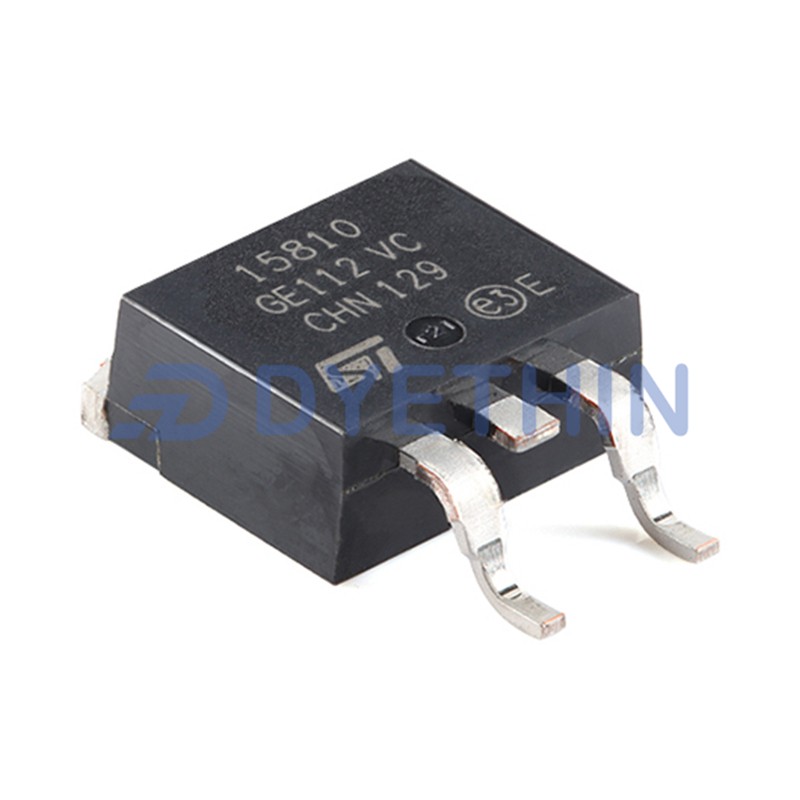
N-channel 100 V, 3.4 mΩ typ., 110 A, STripFET™ F7 Power MOSFET in a D²PAK package