Introduction: The Challenge of Reading SMD Capacitor Codes
In today’s fast-paced electronics industry, SMD (Surface Mount Device) capacitors are an essential component in nearly every circuit design, valued for their compact size and reliability. However, while their miniature form factor is ideal for high-density PCBs, it comes with a notable drawback—decoding SMD capacitor codes.
Unlike through-hole capacitors that often display full specifications, surface mount capacitor codes typically consist of brief numerical or alphanumeric markings. These limited identifiers can vary by manufacturer and often require engineers to reference datasheets or decoding charts just to determine basic parameters like capacitance value or voltage rating.
For many engineers working under tight deadlines, this can become a time-consuming and error-prone task. That’s where SMD component codes lookup tools prove invaluable—helping engineers quickly interpret markings and ensure accurate part selection during PCB design or troubleshooting. Understanding and decoding these codes correctly is critical for optimizing circuit performance and avoiding costly mistakes.
What Are SMD Capacitor Codes and Why Are They Important?
Surface mount technology capacitors are widely used across modern electronic systems due to their small footprint and high reliability. However, their compact design limits the space available for labeling, leading to the use of abbreviated marking systems—commonly known as SMD capacitor codes.
These codes typically follow standardized formats, such as the three-digit EIA capacitor codes, which represent capacitance values in picofarads. For example, a code like “104” translates to 100,000 pF (or 0.1 µF). Understanding how to decode these markings is essential for accurate component identification and application.
A reliable capacitor code chart can help engineers translate these markings efficiently, avoiding the need to guess values or consult datasheets repeatedly. These charts often include variations in tolerance, temperature coefficients, and voltage ratings—all critical factors in performance-sensitive designs.
Incorrect interpretation of capacitor markings can lead to serious engineering issues. A misidentified capacitor may result in circuit instability, reduced lifespan, or even device failure, especially in high-frequency or high-voltage applications. That's why having a solid understanding of capacitor markings explanation is vital for any engineer working with surface-mount devices.
Properly reading and interpreting these codes isn’t just a convenience—it’s a critical part of reliable PCB design and system validation.
How to Decode Capacitor Markings Manually (and Why It's Tedious)
When engineers encounter unknown components during PCB analysis or repair, the ability to decode capacitor markings becomes essential. While this process can be done manually, it often proves to be both time-consuming and error-prone. Below is a step-by-step breakdown of how the manual decoding process works—and why it can quickly become a bottleneck in your workflow.
Step 1: Identify the Marking Code
Start by locating the printed code on the capacitor. In the case of ceramic capacitor codes, you'll typically find a three-digit or alphanumeric value (e.g., “103” or “1A4”). These markings usually follow capacitor labeling standards established by the EIA.
Step 2: Translate the Code Using the EIA Format
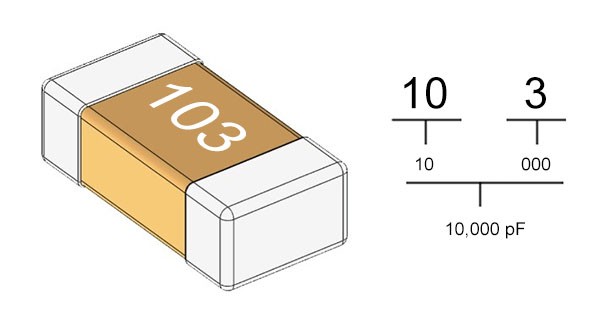
For numeric codes:
The first two digits represent significant figures.
The third digit is the multiplier in powers of ten.
Example: “103” = 10 × 10³ = 10,000 pF or 0.01 µF.
For alphanumeric codes:
Refer to manufacturer-specific charts or capacitor code standards, as these may denote voltage, tolerance, or temperature characteristics.
Step 3: Determine Tolerance
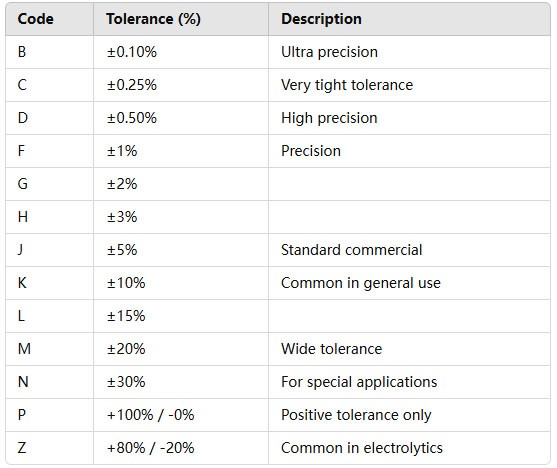
Many capacitors include a letter to denote tolerance (e.g., “K” for ±10%, “J” for ±5%). This uses capacitor tolerance codes, which must be cross-checked using a tolerance chart.
Step 4: Verify with Datasheets (If Available)
Even after decoding, it’s best practice to validate the information with a datasheet, especially for high-precision or mission-critical applications.
While this process is feasible, it’s far from ideal. Manual decoding is susceptible to human error, especially under time pressure or when markings are faded. Additionally, ceramic capacitor codes from different manufacturers may vary, making universal interpretation difficult. This creates challenges in maintenance, debugging, or reverse-engineering unknown PCBs.
For engineers working on tight deadlines, a more reliable solution is using automated decoding tools that reduce the guesswork and improve accuracy.
Introducing the SMD Capacitor Code Calculator Tool
For engineers who frequently work with SMD capacitor markings, manually interpreting codes can be both inefficient and error-prone. To streamline this process, we’re introducing the SMD Capacitor Code Calculator—a practical tool designed to help you quickly and accurately identify capacitor values without needing to cross-reference charts or datasheets.
The SMD Capacitor Code Calculator takes the guesswork out of decoding. Simply input the alphanumeric or numeric code printed on the surface of the capacitor, and the tool will instantly calculate capacitor values, including capacitance in microfarads or picofarads. It also provides supporting details such as tolerance and voltage rating when applicable. This is especially useful when working with SMD capacitor markings that follow EIA-198 or other industry-standard labeling systems.
Whether you are designing, maintaining, or reverse-engineering a PCB, this capacitor code calculator can significantly improve workflow efficiency. It is ideal for use in production testing, quick field diagnostics, or lab-based development, where precision and speed are equally critical.
By automating the interpretation of capacitor codes, the tool helps minimize human error—ensuring that you select the correct component every time. This is crucial in high-frequency and high-reliability applications where even a small mistake in component selection can lead to significant performance issues.
With its user-friendly interface and support for a wide range of SMD capacitor markings, the SMD Capacitor Code Calculator empowers engineers to work smarter, not harder. Instead of wasting time decoding by hand, you can focus on what really matters: building and optimizing high-performance electronic systems.
How to Use the SMD Capacitor Code Calculator (Step-by-Step Guide)
The SMD Capacitor Code Calculator is engineered to simplify the decoding process for engineers working with surface-mount devices. Whether you're debugging a prototype or analyzing an existing PCB, the tool offers a fast and reliable way to interpret SMD capacitor values and other critical specifications. Below is a simple step-by-step guide to help you get started.
Step 1: Locate the Capacitor Code
Identify the three-digit or alphanumeric marking on the surface of the capacitor. This could be something like “104” or “4R7.”
Step 2: Enter the Code
Open the calculator tool and input the code into the designated field. You don’t need to convert units manually—the tool handles that for you.
Step 3: Get the Results
Click “Calculate” or press enter. The tool will instantly calculate capacitor values and return the full capacitor specifications, including:
Capacitance value (in pF, nF, or µF)
Capacitor voltage ratings
Tolerance code (e.g., ±10%)
Temperature coefficient (if available)
Step 4: Use the Data
Use the decoded values to cross-reference with your BOM, verify replacements, or troubleshoot design inconsistencies.
With this step-by-step process, engineers can significantly reduce the time spent manually decoding SMD components. Whether you're verifying capacitor voltage ratings or interpreting unfamiliar codes, this tool delivers accurate results—fast. It’s an essential resource for any engineer looking to streamline their workflow and avoid costly component selection errors.
Advanced Features: Supporting MLCC, Tolerance Codes, and Package Sizes
While basic capacitor decoding is useful, engineers working on complex or high-precision systems require more than just capacitance values. The SMD Capacitor Code Calculator goes beyond the basics by offering advanced functionalities designed for experienced users and professional engineering environments. Here’s how the tool supports a deeper level of SMT capacitor identification:
1. Support for MLCC (Multilayer Ceramic Capacitors)
The calculator is optimized for decoding codes used on MLCC components, which are prevalent in RF, automotive, and high-speed digital applications. These capacitors often use compact codes that include capacitance, tolerance, and voltage ratings, all of which the tool can interpret accurately.
2. Interpretation of Capacitor Tolerance Codes
Different manufacturers use various capacitor tolerance codes, such as “J” for ±5% or “K” for ±10%. The tool automatically detects and decodes these letters, helping engineers select components with the right performance margins for high-reliability circuits.
3. Identification of Capacitor Package Sizes
Understanding capacitor package sizes is critical when working with PCB layouts or replacements. The calculator includes a database of standard SMT footprints—such as 0402, 0603, and 0805—ensuring the decoded part matches physical design constraints.
4. Voltage Rating Matching
The tool also provides estimated capacitor voltage ratings based on industry standards or manufacturer patterns, allowing you to verify whether a component meets your application’s voltage demands.
5. Cross-Manufacturer Compatibility
Because SMT capacitor identification methods can differ between manufacturers, the tool is designed to support multiple coding systems and flag ambiguous results, minimizing the risk of incorrect identification.
Applications in Real-World PCB Analysis and Reverse Engineering
In professional electronics development and maintenance, the ability to quickly and accurately identify components is critical. This is especially true during failure diagnostics, system optimization, or reverse engineering projects. The SMD Capacitor Code Calculator proves to be an essential asset in these scenarios, offering engineers a fast and dependable method for electronic component decoding.
When working with aged or undocumented circuit boards, component labels are often partially worn or ambiguous. Manually identifying surface mount capacitors in PCB design can slow down the entire analysis process and introduce uncertainty. By automating code interpretation, the tool enables engineers to verify capacitor values, voltage ratings, tolerances, and package sizes with minimal effort, improving turnaround times during repairs or design audits.
In reverse engineering, where engineers often reconstruct circuit schematics from a physical PCB, accurate component identification is paramount. The calculator allows users to systematically decode and catalog surface mount capacitors in PCB design, ensuring that replicas or redesigns match the original performance characteristics.
This accuracy directly contributes to capacitor reliability and performance, especially in high-frequency or thermally stressed environments. Selecting the wrong capacitance or tolerance can lead to circuit instability, noise issues, or premature failure. The tool mitigates these risks by providing a reliable reference that reduces human error and improves confidence in every decoded value.
In failure analysis scenarios, engineers can use the tool to cross-verify components in potentially damaged sections of a board. By comparing decoded values with expected design specifications, it becomes easier to pinpoint suspect parts and streamline root-cause investigations.
Whether you're troubleshooting legacy hardware, rebuilding obsolete designs, or verifying third-party boards, the SMD Capacitor Code Calculator enhances the precision and speed of electronic component decoding—making it a must-have tool for modern electronics professionals.
Conclusion: Save Time and Reduce Errors in SMD Capacitor Identification
As engineers navigate the complexity of modern PCB design, testing, and repair, efficiency and precision are more important than ever. The SMD Capacitor Code Calculator brings a new level of speed and accuracy to the task of decoding surface-mount components—helping professionals work smarter and avoid costly mistakes.
Here’s why this tool should be a part of every engineer’s workflow:
✅ Fast and Accurate Decoding
Eliminate the need to manually decode capacitor markings with an intelligent tool that instantly delivers values, voltage ratings, tolerance codes, and package size.
✅ Supports Advanced Identification
Designed for professionals, this capacitor marking calculator handles MLCCs, tolerance codes, and even package footprints for high-reliability applications.
✅ Ideal for Repair, Reverse Engineering, and Analysis
Whether you're troubleshooting legacy boards or rebuilding circuit layouts, the calculator simplifies SMD capacitor identification under pressure.
✅ Minimizes Human Error
By automating the decoding process, engineers can significantly reduce misinterpretation and enhance circuit reliability.
✅ Boosts Productivity Across Teams
Sharing this tool within your design or maintenance team helps standardize workflows and increase project efficiency.
We encourage you to try the SMD Capacitor Code Calculator today and see how it fits into your engineering toolkit. Bookmark it for future use, share it with colleagues, and contribute to raising the standard of electronic component identification across the industry.
Downloadable SMD Capacitor Code Chart (PDF)
To further support engineers working with surface-mount components, we’re offering a free, high-quality resource: a downloadable SMD Capacitor Code Chart (PDF). This reference guide complements the SMD Capacitor Code Calculator, providing a quick visual lookup for common EIA capacitor codes, tolerance indicators, and multiplier values.
Whether you’re offline, working in the lab, or need a fast cross-reference tool during PCB analysis, this capacitor code chart helps you stay efficient without relying solely on digital tools. It also includes a handy capacitor conversion chart for converting between pF, nF, and µF—ideal for BOM checks, legacy design reviews, or troubleshooting mixed-system schematics.
Download your copy now and keep it bookmarked or printed for regular use:
SMD Capacitor Code Chart PDF
We encourage you to share this resource with your team or network. It’s a simple way to boost accuracy and consistency in your component identification process.